
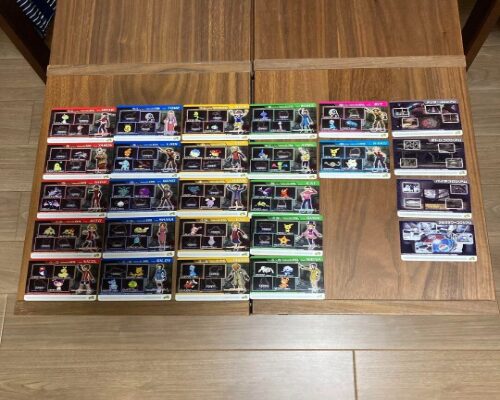
In the era of the Nintendo GameCube, Pokémon Colosseum offered a unique type of additional content that is almost unthinkable today—physical cards that expanded the game itself.
These special cards were part of the e-Reader+ compatible “Pokémon Colosseum Double Battle e+” series.
Using cutting-edge technology of the time, players could scan these cards to add new trainers and new double battles into the game—an experimental and extremely rare product by today’s standards.
Due to their very limited distribution, a full complete set has become a premium collector’s item.
This article explains the charm, function, and rising value of this ultra-rare card set.
- Product Details: What Is Double Battle e+?
- Card List by Pack
- How Do You Use Them? (Scanning System)
- What Is Pokémon Colosseum?
- Why Is This Product So Valuable?
- Spin-off Pokémon Games (Beyond the Main Series)
- Voices from Overseas Fans
- Conclusion
Product Details: What Is Double Battle e+?
Linked Additional Battle Cards for the e-Reader+
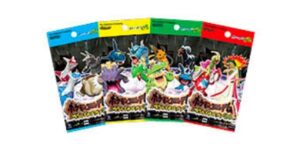
Source: Pokémon Official Website
“Pokémon Colosseum Double Battle e+” is a series of additional battle cards released in Japan in 2004.
These were designed to extend the content of the Nintendo GameCube title Pokémon Colosseum, allowing new trainers and new double battles to appear in-game when scanned using compatible hardware.
Product Overview
Release Date: December 25, 2003 (Japan)
Overseas Release: None — Japan exclusive → extremely rare today
Contents:
4 color-coded packs + additional promo cards
→ 24 cards form the standard set
(20 Trainer Cards + 4 Stage Cards)By scanning a physical “e+ card,” the game loads additional content
Each card contains:
Trainer
Pokémon lineup
Battle structure
Stage information
Each scan adds a new battle to the game
→ A highly advanced system for its time:
“Scan a card to expand the game itself.”
Card List by Pack
🟥 Red Pack
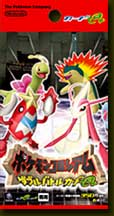
Source: Nintendo
| Card ID | Trainer (JP/EN) | Representative Pokémon (Normal Rank) | Stage |
|---|---|---|---|
| 13-A001 | Chaser Draw | Kirlia, Togetic, Furret, Crawdaunt | Pyrite Colosseum |
| 13-A002 | Fun Old Man Yamon | Milotic, Anorith, Cradily, Bayleef | Same |
| 13-A003 | Rider Hipp | Rhyhorn, Manectric, Pelipper, Golbat | Same |
| 13-A004 | Rich Boy Aito | Shroomish, Quilava, Vibrava, Marill | Same |
| 13-A005 | Cooltrainer Nicol | Swellow, Hariyama, Delcatty, Ninetales | Same |
| 13-M001 | Stage Card (Pyrite Colosseum) | — | Pyrite Colosseum (Red Pack Stage) |
Features of the Pyrite Colosseum Stage Card
Pyrite Colosseum is a battle arena located in the desert slum town Pyrite Town, which appears early in Pokémon Colosseum.
Its rough, lawless atmosphere makes it an iconic setting closely tied to the story.
It functions as a central “battle arena” where many trainers gather to test their strength through continuous double battles.
When the Stage Card is scanned, the e-Reader+ enables these Red Pack trainer battles to be played within this Pyrite-themed stage.
🟦 Blue Pack(青)
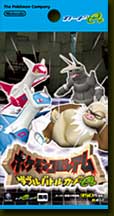
Source: Nintendo
| Card ID | Trainer (JP/EN) | Representative Pokémon (Normal Rank) | Stage |
|---|---|---|---|
| 13-A006 | Fun Old Lady Tome | Octillery, Lairon, Gloom, Sunflora | Under Colosseum |
| 13-A007 | Hunter Lios | Combusken, Linoone, Yanma, Numel | Same |
| 13-A008 | Rider Seno | Sudowoodo, Weezing, Muk, Magneton | Same |
| 13-A009 | Lady in Suit Shana | Nosepass, Mawile, Tentacruel, Graveler | Same |
| 13-A010 | Cooltrainer Sildy | Vigoroth, Kadabra, Xatu, Croconaw | Same |
| 13-M002 | Stage Card (Under Colosseum) | Stage only | Under Colosseum |
Features of the Under Colosseum Stage Card
The Under Colosseum is located beneath the underground city The Under, appearing as a dangerous arena filled with neon signs, metallic structures, and an overall lawless atmosphere.
Bright lights illuminate the darkness, giving battles a distinctly cyberpunk mood.
Scanning this Stage Card switches the battle field in the e-Reader room to the Under Colosseum setting, enhancing immersion and reinforcing the unique charm of the Orre Region.
As this location plays an important role in the main story, it is especially beloved by fans of Pokémon Colosseum.
🟨 Yellow Pack(黄)
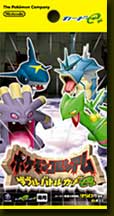
Source: Nintendo
| Card ID | Trainer (JP/EN) | Representative Pokémon (Normal Rank) | Stage |
|---|---|---|---|
| 13-A011 | Athlete Kilk | Grovyle, Delibird, Lanturn, Sharpedo | Bottom/Deep Colosseum |
| 13-A012 | Guy Hank | Misdreavus, Wobbuffet, Loudred, Jigglypuff | Same |
| 13-A013 | Roller Boy Cut | Sealeo, Ledian, Whiscash, Goldeen | Same |
| 13-A014 | Lady Cal | Spinda, Cacturne, Grumpig, Smeargle | Same |
| 13-A015 | Worker Orren | Granbull, Shelgon, Mightyena, Gyarados | Same |
| 13-M003 | Stage Card (Bottom Colosseum) | Stage only | Bottom/Deep Colosseum |
※ In-game name: Deep Colosseum
※ Printed on the card: Bottom Colosseum
Features of the Bottom/Deep Colosseum Stage Card
The Deep Colosseum lies far beneath The Under, serving as an endgame, high-difficulty battle facility.
Its design features massive ventilation fans, exposed pipes, and heavy machinery—giving it the feeling of a secret industrial underworld.
Appearing only after the main story is cleared, it houses powerful trainers and bosses, leading overseas fans to call it “the hardest battles in Colosseum.”
The Stage Card recreates this intense atmosphere within the e-Reader battle mode, offering an advanced challenge for experienced players.
🟩 Green Pack(緑)

Source: Nintendo
| Card ID | Trainer (JP/EN) | Representative Pokémon (Normal Rank) | Stage |
|---|---|---|---|
| 13-A016 | Athlete Ariel | Marshtomp, Girafarig, Seviper, Flaaffy | Realgam Tower Colosseum |
| 13-A017 | Bandana Guy Wamoo | Banette, Noctowl, Chimecho, Kecleon | Same |
| 13-A018 | Glasses Man Kai | Skarmory, Magcargo, Sandslash, Ariados | Same |
| 13-A019 | St. Performer Susie | Ludicolo, Pikachu, Starmie, Quagsire | Same |
| 13-A020 | Teacher Niena | Ninjask, Aipom, Shedinja, Machoke | Same |
| 13-M004 | Stage Card (Realgam Tower Colosseum) | Stage only | Realgam Tower Colosseum |
Features of the Realgam Tower Colosseum Stage Card
The Realgam Tower Colosseum is attached to the enormous tower rising from the Orre Region’s desert.
Its dazzling dome-shaped battle arena, complete with a giant Poké Ball emblem on the floor and surrounding spectator stands, establishes it as the “final battle stage” of the game.
In the main story, the tower serves as the headquarters of the villainous organization Cipher, marking the climax of Pokémon Colosseum.
Scanning this Stage Card transforms the e-Reader battle room into a dramatic, final-showdown battlefield beloved by long-time fans.
Promo-Exclusive Virtual Trainer Cards
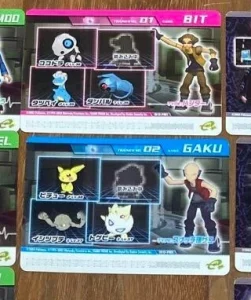
The two cards placed at the center of the set—
Hunter BIT and Team Snagem GAKU—
are promo-only virtual trainer cards not included in any standard pack.
BIT (13-P001)
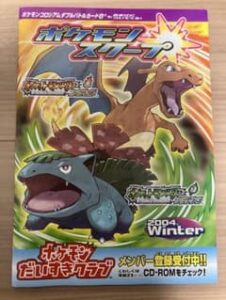
Source:Mercari
“Hunter BIT” was distributed as a bound-in bonus within the free mini-magazine Pokémon Scoop 2004 Winter, released in early 2004.
This booklet was handed out at locations such as:
McDonald’s
Ito-Yokado
Toys “R” Us
Jusco
Daiei
Hello Mac
Pokémon Center stores
World Hobby Fair (Winter 2004)
Because it was a free booklet and easily discarded, very few intact copies survive today—making BIT’s card extremely rare.
Scanning the card unlocks BIT’s special double battle in the e-Reader room.
GAKU (13-P002)
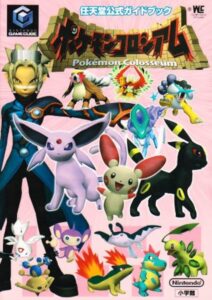
Source:Amazon
“Team Snagem GAKU” was included exclusively as a tear-out bonus item in the official Japanese strategy guide,
Pokémon Colosseum Nintendo Official Guide Book (Wonder Life Special), published by Shogakukan.
This guidebook contained three major bound-in extras:
Pokémon stickers
Type chart and data materials
The Double Battle e+ card: GAKU
Because only those who purchased this guidebook ever possessed the card—and many copies had the card removed—complete sets containing both the guidebook and an unused GAKU card are exceptionally rare.
How Do You Use Them? (Scanning System)
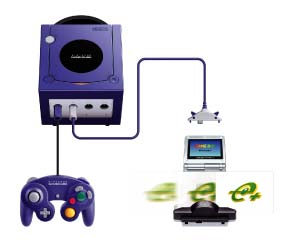
Scan a “Double Battle e+” card using the e-Reader+ (Card e+).
Connect the e-Reader+ to a Game Boy Advance (GBA).
Use the GBA–GameCube link cable to connect the GBA to the Nintendo GameCube.
When launched, Pokémon Colosseum expands, and new special double battles become available.
This three-tier system—
“Card → GBA → GameCube”—
allowed the game to evolve through physical card interaction.
Required Hardware (What You Need to Use These Cards)
To play Double Battle e+, the following equipment was required:
e-Reader+ (Card e+)
A dedicated device used to scan the e+ cards.
Game Boy Advance (GBA)
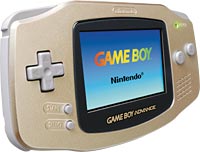
Source: Nintendo
The main hardware used to mount the e-Reader+.
Nintendo GameCube (GC)
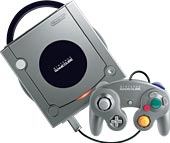
Source: Nintendo
The console running Pokémon Colosseum.
GBA–GC Link Cable
A special cable used to connect the GBA to the GameCube.
→ Because this full setup was complex and expensive for the time, very few players actually had the complete environment, which is one major reason why today’s card population is extremely limited.
Why Is This Product Special?
A rare system for its time: “Scanning physical cards to expand the game.”
High entry barrier → only a small number of people ever used it.
No overseas release → demand from international collectors is extremely high.
Very few complete sets survive → full sets are exceptionally rare.
Represents Nintendo’s experimental era in the early 2000s.
→ Scarcity × Uniqueness × Historical significance
make this a truly premium collector’s item.
What Is Pokémon Colosseum?
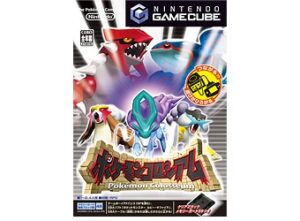
Source:Amazon
Pokémon Colosseum is a stylish and dark Pokémon RPG representing the GameCube era.
It was released on:
November 21, 2003 (Japan)
March 2004 (North America)
Unlike the bright, adventurous worlds typical of Pokémon at the time,
Colosseum boldly introduced a darker, more mature world—a major departure from the series’ norm.
Sales Performance: Japan & Overseas
Japan
Approx. 340,000 units sold in the first week
Total sales around 750,000 units
Among the top sellers for GameCube titles
Gained attention for being the “first full-scale Pokémon RPG on a home console”
North America / Europe
Over 1 million units sold in North America
Shadow Pokémon concept resonated extremely well overseas
Widely praised as “one of the coolest Pokémon series”
Second-hand prices continue surging in the retro market
Rediscovered as a cult-classic title in recent years
What Kind of Game Is It?
1. A protagonist who is a former villain—an unusual premise
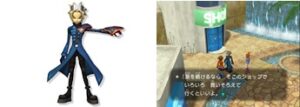
Source: Pokémon Official Website
The protagonist Wes is a defector from the villainous team Snagem.
His cool, shadowy persona was a huge hit among Western fans who loved more serious storytelling.
2. A story about “saving” Shadow Pokémon
The key element of Colosseum is the Shadow Pokémon concept—
Pokémon whose hearts were artificially sealed by the villain organization.
Players must:
Snag (capture) Shadow Pokémon from enemies
Purify them to restore their true selves
This narrative—rescuing corrupted Pokémon—became one of the series’ most dramatic storylines.
3. Every battle is a Double Battle
All main battles are 2 vs 2 double battles, providing deeper strategy and synergy.
This system influenced future Pokémon titles, helping popularize double battles in the main series.
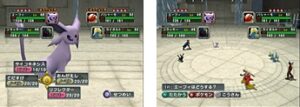
4. Fully 3D Pokémon battles
Source: Pokémon Official Website
In 2003, real-time 3D battle animation was groundbreaking:
Detailed attack animations
Stylish character designs
Cinematic camera work
Overseas fans often describe Colosseum’s visuals as “god-tier” for its era.
5. A Connected Series: Followed by Pokémon XD Gale of Darkness
The success of Colosseum led to the release of its full sequel:

Source:Amazon
Featuring:
Expanded story
New Shadow Pokémon
Improved game systems
Its iconic “Shadow Lugia” remains one of the most beloved designs in Pokémon history.
Relationship to Double Battle e+
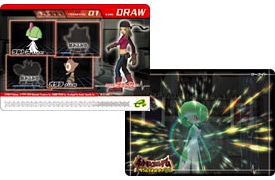
One feature that enriched Colosseum’s popularity was its expandability through the e-Reader+.
Source: Nintendo
Scanning Double Battle e+ cards allowed players to access:
Special new trainer battles
Stage variations
Unique rewards
This physical-to-digital connection gave Colosseum an identity as
“the Pokémon game that evolves through real cards.”
Overseas fans often say:
“Colosseum marked Pokémon’s first step into a more mature world—
and Double Battle e+ was the secret key that expanded that world.”
Why Is This Product So Valuable?
① Extremely hard to obtain even at launch
Source: Nintendo
To use these cards, players needed:
e-Reader+
Game Boy Advance
GameCube
GBA–GC Link Cable
Because the full setup was expensive and complicated, the number of active users was extremely small.
As a result, the total print and survival rate of the cards is exceptionally low.
② Very few mint-condition cards remain
Because the cards are made of paper, they are prone to:
bending
surface scratches
scanning marks
Finding clean, unused, or lightly used cards is extremely difficult.
③ A full complete set has “miracle-level” rarity
Collectors consider complete sets to be the highest tier of rarity,
and overseas buyers actively search for them.
④ Overseas re-evaluation is booming (especially in North America)
Source:Amazon
While Pokémon Colosseum has strong global popularity,
the e-Reader system was discontinued early overseas.
This means the Double Battle e+ cards never released outside Japan,
making them “phantom extra content” for Western players.
This exclusivity has caused demand—and prices—to surge rapidly.
⑤ Boost from the retro gaming boom
Recent trends:
Nintendo retro boom
Renewed attention on GameCube titles
Rising interest in obscure physical add-ons
All of these contribute to the growing demand for this product.
Spin-off Pokémon Games (Beyond the Main Series)
Below is the translated section introducing spin-off Pokémon games.
Console-Based Side RPGs (Colosseum-type Titles)
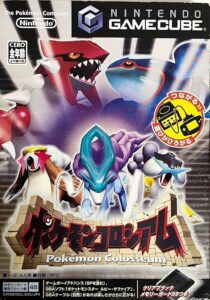
Pokémon Colosseum (GameCube)
Source:Amazon
Released in 2003 (Japan) / 2004 (overseas),
this was the first full-fledged Pokémon RPG on a home console.
Players rescue Shadow Pokémon by “purifying” them,
and the game features all double battles with a darker storyline.
Its bold, experimental tone continues to have cult popularity overseas.
Pokémon XD: Gale of Darkness (GameCube)

Source:Amazon
The direct sequel released in 2005.
It expanded the world, added new Shadow Pokémon,
and refined gameplay and character presentation.
Shadow Lugia became an iconic symbol beloved worldwide.
Battle-Focused Titles (Stadium Series)
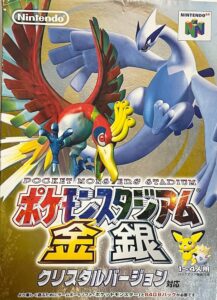
Pokémon Stadium 1/2/Gold & Silver (N64)
Source:Amazon
Released from 1998–2000.
These titles let players battle with their GB Pokémon in full 3D.
Their mini-games became especially popular, making them beloved party games.
They remain landmark titles that showcased Pokémon’s 3D potential.
Pokémon Battle Revolution (Wii)

Source:Amazon
Released in 2006/2007.
Featured DS connectivity, letting players import their Pokémon for 3D battles.
With vivid visuals and online play, it earned strong overseas support.
Pokémon Mystery Dungeon Series (Dungeon-Crawling RPG)
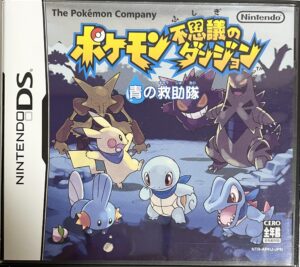
Red/Blue Rescue Team (GBA/DS)
Source:Amazon
Released in 2005.
The origin of the “You become a Pokémon” storyline.
Emotionally rich narratives and rescue missions captivated fans.
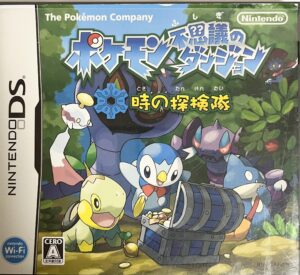
Explorers of Time/Darkness/Sky (DS)
Source:Amazon
Released 2007–2008.
Considered the peak of the series, with dramatic storytelling and deep partner bonds.
Often called “the most emotional Pokémon series” worldwide.
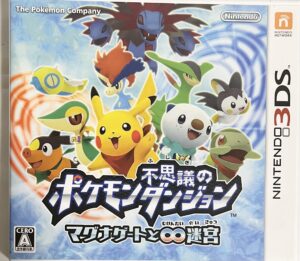
Gates to Infinity (3DS)
Source:Amazon
Released in 2012.
Introduced AR-generated dungeons using the 3DS camera.
Brought new gameplay innovations and expanded the series’ possibilities.
Super Mystery Dungeon (3DS)
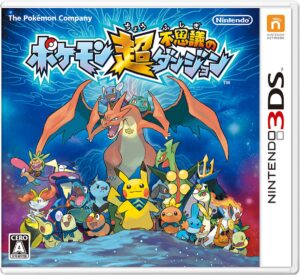
Source:Amazon
Released in 2015.
Allowed all Pokémon to become partners—series’ largest roster.
Rescue Team DX (Switch)
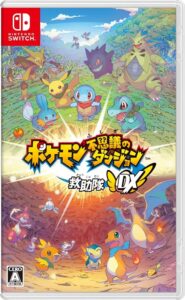
Source:Amazon
Released in 2020.
A high-quality remake of Red/Blue Rescue Team using beautiful 3D watercolor-like graphics.
Pokémon Snap (Photography Games)
Pokémon Snap (N64)
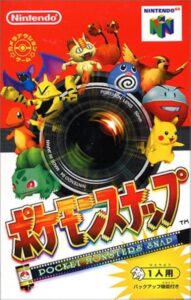
Source:Amazon
Released 1999.
Revolutionary for letting players photograph Pokémon in the wild.
New Pokémon Snap (Switch)
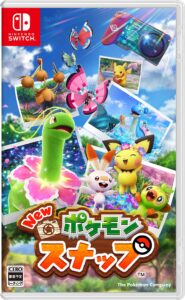
Source:Amazon
Released 2021.
Delivers breathtaking immersion and became a dream come true for fans.
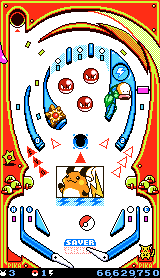
Pokémon Pinball (Action + Collection)
Red/Blue (GB)
Source: Nintendo
Released 1999.
A creative fusion of pinball gameplay with Pokémon catching.
Ruby/Sapphire (GBA)

Source: Nintendo
Released 2003.
Improved visuals and deeper collection mechanics made it highly regarded.
Communication / Life-Sim Titles
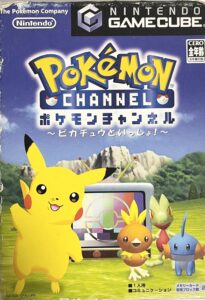
Pokémon Channel (GC)
Source:Amazon
Released 2003.
A relaxing communication game where players enjoy TV programming with Pikachu.
PokéPark Wii Series (Wii)

Source:Amazon
Released 2009/2011.
A 3D adventure series where players explore a theme-park-like Pokémon world.
Detective Pikachu (3DS/Switch)

Source:Amazon
Released 2016 (3DS) / 2023 (Switch).
Features a deep-voiced Pikachu solving mysteries in a comedic yet serious narrative.
Mobile Titles
Pokémon GO
Source: Pokémon GO
Released 2016.
An AR phenomenon that changed global culture by getting people to explore outdoors.
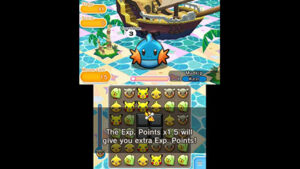
Pokémon Shuffle
Source: Pokémon Official Website
Released 2015.
A casual match-3 puzzle with worldwide longevity.
Pokémon Quest

Source: Pokémon Official Website
Released 2018.
A charming cube-style action RPG appealing to all ages.
Voices from Overseas Fans
“Anything from the e-Reader era is insanely rare. I’ve been hunting these forever!”
“Scanning a card to unlock new battles? That’s genius.”
“Since they were Japan-only, finding them overseas is almost impossible.”
“A full set is miracle-tier. Buy it instantly if you see it.”
“The designs capture that early-2000s Pokémon vibe perfectly.”
“These will only increase in value.”
“This is peak Nintendo experimentation.”
“A must-have for any Colosseum fan.”
Conclusion
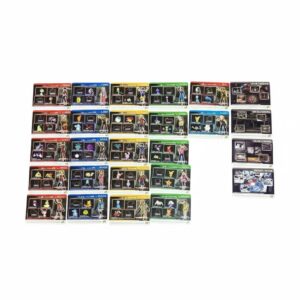
The Pokémon Colosseum Double Battle e+ cards perfectly embody the bold experimental spirit of early-2000s Nintendo.
Their unique physical–digital linkage, limited availability, and deep connection to one of the most stylistically daring Pokémon titles make them a truly special collectible.
A full complete set, especially in good condition, is incredibly rare—
a once-in-a-lifetime opportunity for Pokémon or Nintendo collectors.
If you’re building a premium retro Pokémon collection,
this set isn’t just an item—it’s a centerpiece.
▼ HD Toys Store▼
Pokémon Colosseum Double Battle e+ Full Complete Reader Cards GameCube Nintendo


Shop Authentic Japanese Collectibles
Shipped directly from Japan. Each item carefully inspected.

コメント