Could anything draw a world this intricate?—the moment you turn the first page, that’s the thought this art book forces on you.
The tension of DEATH NOTE, the characters’ presence, and the sheer impact of each illustration feel fully alive on the page.
That book is Takeshi Obata’s art collection “blanc et noir.”
It’s not only for original-fans—anyone who wants to see “lines as direction,” beyond simply “great drawing,” will be hooked.
In this article, we’ll cover what’s inside, the highlights, and the background of the work.
Product Details
Release Date
May 31, 2006
“blanc et noir” is also sold overseas.
The Japanese edition itself is a domestically published art book, but an English-titled hardcover edition—“blanc et noir: Takeshi Obata Illustrations”—is distributed through overseas online retailers, making it obtainable from North America and other regions.
What’s Included
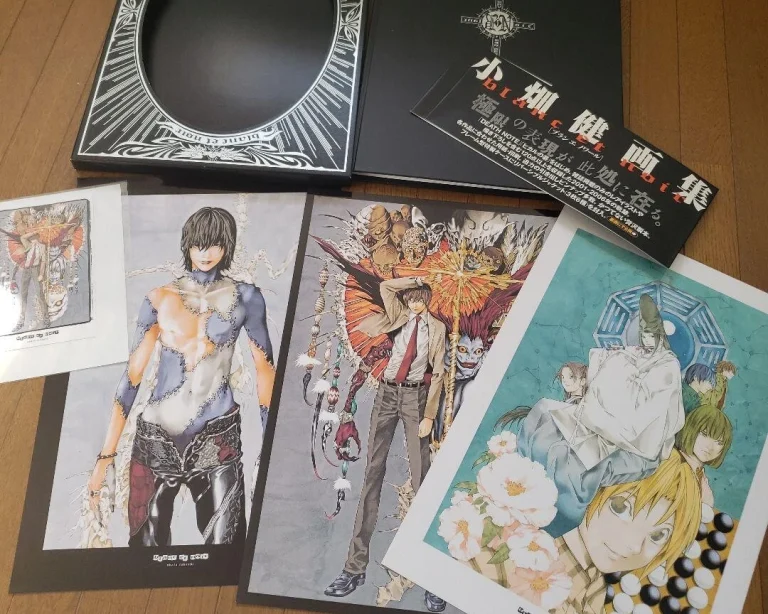
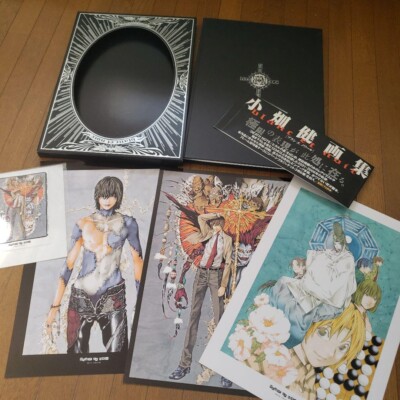
This item is known for its highly collectible configuration: “book + outer case + printed extras.”
Art Book (Main Volume)
It primarily features Takeshi Obata’s color and monochrome illustrations, with a large portion devoted to DEATH NOTE. It also includes illustrations from other works such as Hikaru no Go and Karakuri Sakon, along with newly drawn pieces and rare magazine-only artworks—120+ works in total.
Outer Case (Slipcase)
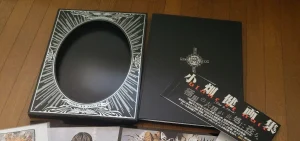
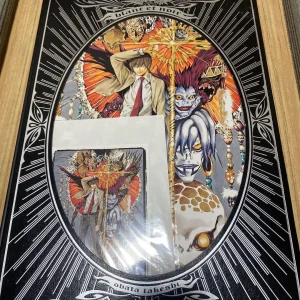
A displayable, frame-like case with an impressive, picture-frame presence, produced as a deluxe bound edition using special paper and special inks.
Bonus Items
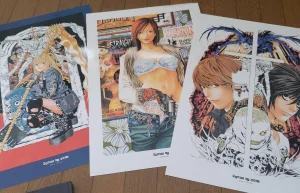
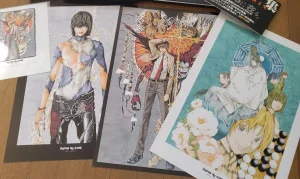
-
Reversible book covers (jackets) × 3 sheets (double-sided for 6 designs total)
-
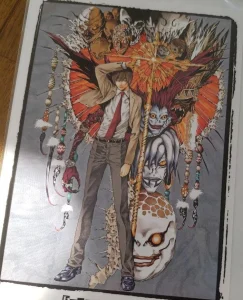
Pull-out pin-up
-
Postcard (as a first-print bonus)
Main Contents Included in the Art Book
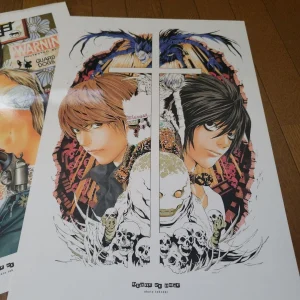
-
Many DEATH NOTE color illustrations (for tankōbon covers, Jump magazine pin-ups, illustrations made for goods, etc.)
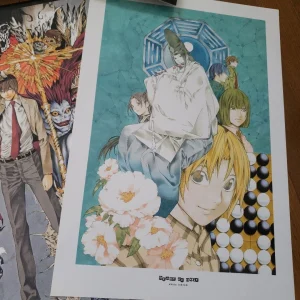
-
Color illustrations from Hikaru no Go (including pieces not included in the previous art book)
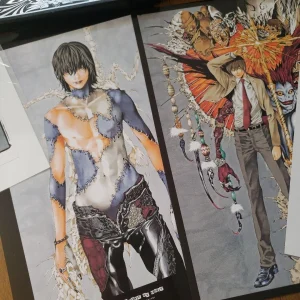
-
Color illustrations from other works such as Karakuri Sakon and Yoshitsune
-
Special-format pages such as rare magazine-only illustrations, newly drawn works, and pull-out pin-ups
-
End-of-book content including a making-of section (showing the process of creating color illustrations), creator comments, interviews, and other text pages
Highlights
The Beauty of Linework, Composition, and Shading

Source:Amazon
The appeal of Takeshi Obata’s work begins with the density of information in his lines.
With fine strokes, he differentiates material textures and builds up facial expressions, fabric detail, and even the “temperature” of the air.
His compositions are also exceptionally strong—his eye-leading is so effective that even a single illustration can feel like a story is moving forward.
The black-and-white shading is equally powerful: the way shadows are placed becomes tension itself—this book lets you savor that fully.
DEATH NOTE’s Visual Strength (Light / L / Shinigami)
Source:Amazon
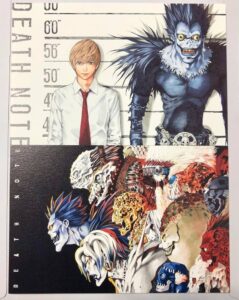
DEATH NOTE is a series that “wins” from the stage of character design.
Light captures you with a gradient of intelligence and madness; L hooks you with strangeness that still feels convincing; and the Shinigami seize readers with their uncanny, otherworldly design power.
In this art book, that “emotion conveyed by face, eyes, and posture alone” remains vividly present as standalone illustrations.
In particular, the ornamentation and alien texture around the Shinigami are incredibly dense as artwork—making it easy to feel satisfied just by looking.
About Takeshi Obata

Source:The Asahi Shimbun
Takeshi Obata is a manga artist and illustrator known for his precise linework and dramatic image-making.
He excels at letting characters “speak” psychologically through expressions and eye lines, creating tension even in quiet scenes.
That strength is fully leveraged in a title like DEATH NOTE, where mind games and psychological warfare are central.
Major Works
Source:Shueisha
-
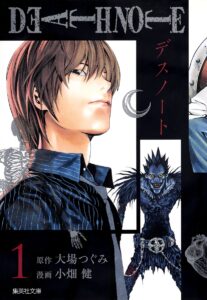
DEATH NOTE: A representative work depicting psychological battles and the collapse of “justice.”
Source:Shueisha
-
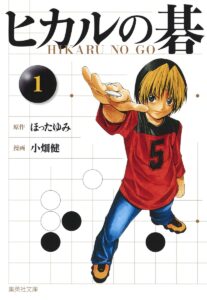
Hikaru no Go: A masterpiece that turns competition on the board into a coming-of-age drama.
Source:Shueisha
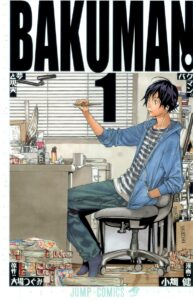
- Bakuman.: A growth story about boys aiming to become manga creators.
About DEATH NOTE
Source:Shueisha
Synopsis
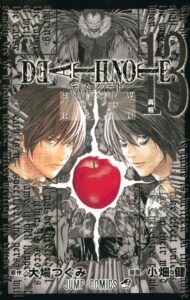
The story begins when a genius-level protagonist accidentally obtains a notebook that kills anyone whose name is written in it.
Can the world truly be “corrected” with such power?—before long, he steps onto a path he can’t turn back from to prove his own justice.
Standing in his way is a detective with an extraordinary level of deductive ability.
What starts quietly expands into psychological warfare that ultimately draws in society at large.
Anime and Movies
Source:Amazon
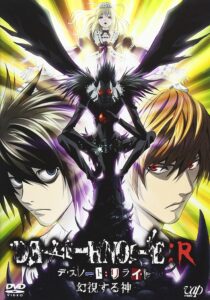
DEATH NOTE is not only a manga—it has been adapted into anime and live-action films, creating multiple entry points across generations and countries.
Overseas as well, it has strong recognition as a “Japanese suspense title,” and one of its strengths is that long-term fans tend to remain.
Related Goods
DEATH NOTE Short Stories
Source:Shueisha
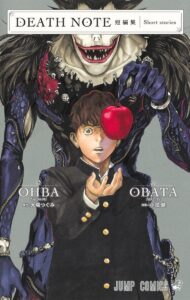
A book collecting one-shot short stories by Takeshi Obata and Tsugumi Ohba, including episodes set before and after the main series.
Key contents include the “C-Kira” story (a new Kira incident after the conclusion between Light and Near), the “a-Kira” story (the ambition of a man who meets Ryuk), and the “Mirror Taro” story (a prototype for the first explanation of Death Note rules), along with depictions of L’s daily life and past.
Published as a collected volume in 2021, it has been highly rated as an “if-story” for dedicated fans.
Nendoroid Light Yagami
Source:Good Smile Company
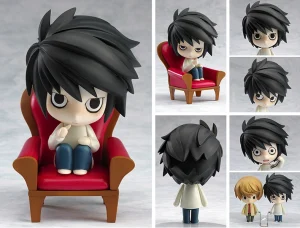
Nendoroid Light Yagami is a chibi-style articulated figure of Light from DEATH NOTE, released by Good Smile Company, about 10 cm tall.
It includes three interchangeable face plates—“normal,” “surprised,” and the famous “just as planned” expression—plus accessories like the Death Note and a pen, allowing you to recreate iconic scenes.
There is an original 2006 release and a renewed “2.0” version released in 2019.
30th Anniversary Exhibition: Takeshi Obata Exhibition “NEVER COMPLETE”

Source:Manga Museum
“Takeshi Obata Exhibition NEVER COMPLETE” is a traveling exhibition celebrating the 30th anniversary of Obata’s debut, showcasing around 500 original drawings and materials selected from an archive of more than 15,000 pieces.
Structured into three sections—“Manga,” “Illustration,” and “Never Complete”—it displayed originals from DEATH NOTE and Hikaru no Go, as well as newly drawn works and a completely new DEATH NOTE one-shot revealed for the first time in about 10 years.
The tour began in 2020 at the Kitakyushu Manga Museum and traveled nationwide to venues such as Takasaki Museum of Art and Arts Chiyoda 3331, with limited goods (reproduction prints, stickers, etc.) also sold.
Summary
“blanc et noir” is a collection book that lets you keep the tension of DEATH NOTE in your hands as art.
Takeshi Obata’s linework, composition, and shading hit with the completeness of standalone illustrations—that is the book’s greatest value.
When the case and bonus items are all present, the satisfaction the moment you open it is on another level, and it also shines as a display piece.
Because used copies vary widely in completeness and condition, finding a good-condition set is the kind of chance that gives you very few reasons to hesitate.
The more you love DEATH NOTE, the more this book becomes the definitive way to “place the memory of the work on your shelf.”
▼ HD Toys Store ▼
DEATH NOTE Blanc et noir Takeshi Obata Art Book Collection Sketches

コメント