
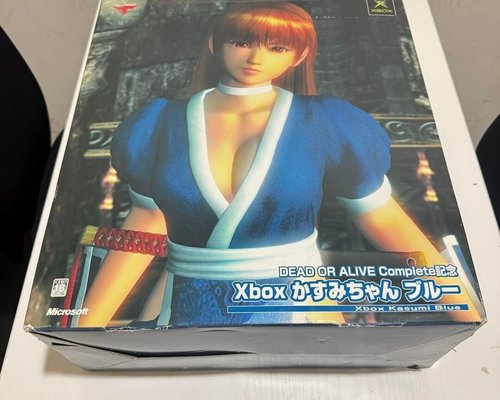
For collectors of fighting game history and Microsoft hardware oddities, few items capture the early-2000s spirit of bold console branding quite like the Dead or Alive Complete Commemoration Xbox Kasumi Edition. This was a Japan-exclusive variant that combined the original Xbox console with Team Ninja’s flagship fighter, packaged in a way that turned a console into a shrine to one specific character. For Western collectors who only know the standard black Xbox, this release represents an entire alternate universe of how Microsoft tried to court the Japanese market.
Japanese video game releases consistently differ from their international counterparts in ways that matter to serious collectors. Special editions like this one were often produced in small print runs intended only for the domestic market, featuring unique artwork, exclusive packaging, and bundled content that never reached Western shores. Microsoft, in particular, leaned heavily on partnerships with Tecmo and other Japanese publishers to win over a notoriously console-loyal audience, producing some of the most visually striking hardware variants in Xbox history.

About This Item
The Dead or Alive Complete Commemoration Xbox is a special bundle Microsoft released in Japan to coincide with the launch and ongoing celebration of the Dead or Alive series on the original Xbox platform. The set centers around a custom-decorated Xbox console featuring Kasumi, the iconic kunoichi protagonist of the franchise, prominently displayed on the chassis in a striking blue colorway that distinguishes it instantly from the standard matte-black retail Xbox. The bundle was produced in limited quantities for the Japanese market and was never officially exported, making it a true regional exclusive.
The “Complete Commemoration” branding refers to the celebration of the Dead or Alive series’ arrival on Microsoft’s then-new platform, which was a major coup for the Xbox in Japan. Team Ninja’s Tomonobu Itagaki famously aligned the franchise with Xbox during this era, and Microsoft rewarded that loyalty with promotional hardware like this. The console typically shipped with controllers and accessories that share the themed aesthetic, and the packaging itself is considered as collectible as the hardware inside. This pre-owned example has been carefully inspected and is shipped from Japan with tracking, ensuring it arrives documented and authenticated.
Key Details
- Manufacturer: Microsoft (in partnership with Tecmo/Team Ninja)
- Series/Franchise: Dead or Alive
- Type: Video Games / Console Hardware
- Condition: Pre-owned, inspected before shipping
- Origin: Japan (region-exclusive release)

The Dead or Alive Franchise: Why Collectors Care
Dead or Alive launched in arcades in 1996 and quickly became one of Tecmo’s defining franchises. Created by Tomonobu Itagaki and Team Ninja, the series distinguished itself from contemporaries like Tekken and Virtua Fighter through its fluid counter-based combat system, environmental hazards, and unmistakably stylized character designs. Kasumi, the runaway shinobi princess, became the face of the entire series and one of the most recognizable female characters in fighting game history.
The franchise’s transition to the original Xbox was a watershed moment for both the series and the platform. Dead or Alive 3 was an Xbox launch title in 2001, and its visual fidelity was unprecedented for a console fighter at the time. Itagaki’s vocal support of Microsoft hardware aligned the entire Dead or Alive brand with Xbox during a period when Sony dominated Japan, making promotional items like this commemorative console a symbol of an unusual cultural and commercial alliance. Subsequent releases including Dead or Alive Ultimate, Dead or Alive 4, and the Xtreme volleyball spin-offs continued to cement the Xbox connection. Today, items from this era carry strong appeal for fighting game historians, Xbox hardware collectors, and Team Ninja enthusiasts alike, especially those interested in the brief golden window when Japanese developers championed Microsoft’s platform.
Rarity and Value Factors
Special-edition consoles like the Kasumi Blue Xbox are inherently rare because they were produced in limited quantities for promotional purposes, often tied to retailer campaigns or magazine giveaways in Japan. Unlike standard retail hardware that was manufactured in the millions, commemorative variants typically saw production runs measured in the thousands or even hundreds. Surviving examples with intact box art, manuals, inserts, and original accessories represent a fraction of what was originally distributed.
Condition is the single biggest value driver. The custom Kasumi artwork on the console shell is vulnerable to scratches, fading, and yellowing over twenty-plus years, so examples with crisp graphics command significant premiums. Completeness of the bundle — including any themed controllers, manuals, and the outer box — further amplifies value. Functional condition matters too: original Xbox clock capacitors and disc drives are known failure points, so working units are increasingly scarce.

Looking for this item? Every item at HD Toys Store Japan is:
- Shipped directly from Japan with tracking
- Carefully inspected for condition and authenticity
- Pre-owned condition documented with detailed photos
Collector’s Guide: What to Look For
When evaluating a special-edition Xbox like this one, approach it as both a piece of hardware and a piece of printed memorabilia. The console shell is the focal point — examine the Kasumi artwork carefully under good lighting for scuffs, edge wear, and color fading. Because this is a printed/decorated surface, even minor abrasion can significantly impact display value. Next, check the standard Xbox failure points: the disc drive (Thomson and Samsung drives behave differently), the internal clock capacitor (which can leak and damage the motherboard if neglected), and the power supply. A console that has been recently serviced and recapped is more valuable to a long-term collector than an “untouched” unit that may need urgent work.
Cables, AV connectors, and especially any included themed controllers should be inventoried against original release photos. The outer box, inner trays, and any paper inserts are critical to complete-in-box value. Smell-test the packaging for smoke or mildew exposure, both of which can permanently affect cardboard. For more detailed advice across different categories, browse more collector guides on our blog.
Condition Checklist
- Console Artwork: Inspect the Kasumi graphic for scratches, fading, and peeling
- Internal Health: Confirm the clock capacitor has not leaked and the disc drive reads media
- Accessories: Verify themed controllers, AV cable, and power brick are present and functional
- Serial and Region: Confirm Japanese region coding and matching serial labels
- Packaging: Original box, inner foam, manuals, and inserts dramatically affect value
Price Guide
Loose console only, with visible wear and no box, typically ranges from $300 to $500 depending on cosmetic condition. A working unit in good cosmetic shape with original accessories but no box generally sits in the $500 to $800 range. Complete-in-box examples with all paperwork, themed controllers, and minimal wear can command $1,000 to $1,800 or more, with sealed or near-mint examples occasionally exceeding that ceiling at auction. The biggest price multipliers are box condition, completeness of accessories, and confirmed working hardware that has been recently serviced.
Similar Items Worth Exploring
Collectors drawn to this console will likely appreciate other Japan-exclusive Xbox variants such as the Crystal Xbox, the Halo Special Edition Xbox, and the Panzer Dragoon Orta limited bundles, all of which represent Microsoft’s aggressive courting of Japanese gamers during the original Xbox era. On the software side, sealed Japanese copies of Dead or Alive 3, Dead or Alive Ultimate, Dead or Alive Xtreme Beach Volleyball, and the eventual Dead or Alive 4 round out a complete Team Ninja Xbox library. Kasumi-themed figures, art books like the Dead or Alive Master Guide, and soundtrack CDs released by Tecmo also pair naturally with this console. Ninja Gaiden Black and Ninja Gaiden 2 — also Itagaki-directed Team Ninja titles — appeal to the same collector profile and frequently surface in the same Japanese collections.
Why Buy Japanese Collectibles from Japan?
Japanese collector culture places enormous value on preservation. It is common to find decades-old hardware with original packaging, plastic wrap, and even retailer receipts still intact — something that is exceedingly rare in Western secondary markets. Japan-exclusive editions like this Kasumi Xbox simply do not exist in meaningful numbers outside the country, and importing directly ensures you receive an authentic regional release rather than a counterfeit shell or aftermarket reproduction. Specialist sellers in Japan also tend to grade condition conservatively and document items thoroughly with detailed photos, which protects buyers making significant investments in rare hardware.


Summary
The Dead or Alive Complete Commemoration Kasumi Xbox stands as one of the more visually arresting console variants of the sixth generation and a tangible reminder of Microsoft’s Japan-first promotional push. For fighting game fans, Team Ninja loyalists, and Xbox hardware historians, it occupies a unique intersection of franchise reverence and platform pride. With careful inspection, attention to condition, and verified Japanese provenance, an example like this is the kind of piece that anchors a serious collection for decades.
Explore related collections
Never Miss New Arrivals from Japan
We add new pre-owned figures, toys, and collectibles every week. Sign up to get notified about new items, collector guides, and exclusive updates.
Free · No spam · Unsubscribe anytime


コメント