
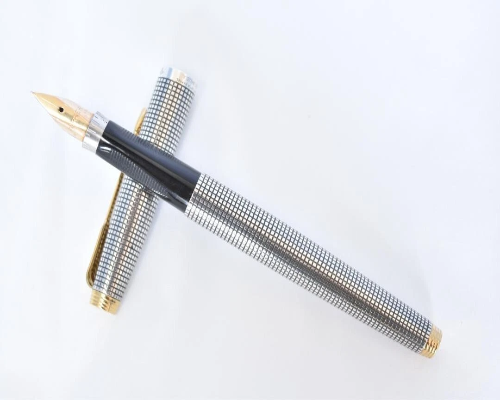
Among countless fountain pens, there are a few that go beyond being “beautiful” to truly define an era.
One of these legendary pens is the Parker 75 Sterling Silver “Ciselé”.
Even more than half a century after its debut, it continues to fascinate collectors and writers worldwide.
- Product Details
- About Parker Pen Company
- A History of Parker: Over a Century of Innovation & Iconic Pens
- 1. Founding Era (1888–1920s)
- 2. Golden Age (1930s–1950s)
- 3. Modernization (1950s–1970s)
- 4. Transformation & Global Expansion (1980s–2000s)
- 5. Today (2010s–Present)
- 8 Iconic Parker Models
- 1. Parker 51(1941)
- 2. Parker 75(1964)
- 3. Parker Duofold(1921)
- 4. Parker Vacumatic(1933)
- 5. Parker 61(1956)
- 6. Parker Sonnet(1994)
- 7. Parker 45(1960)
- 8. Parker Jotter(1954)
- Conclusion
Product Details
Model Background
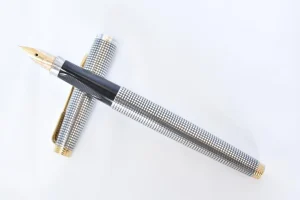
Model: Parker 75
Release: 1964 (commemorating Parker’s 75th anniversary → hence the “75”)
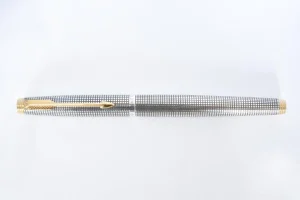
Design Signature: Sterling Silver Ciselé cross-hatch pattern, the emblematic Parker finish
Production: Initially manufactured in the USA, later mainly in France. Discontinued in the mid-1990s.
Positioning: An upper-tier dress pen. With its light size and perfect balance of practicality and luxury, it has been embraced by both collectors and daily users.
Key Specifications & Features
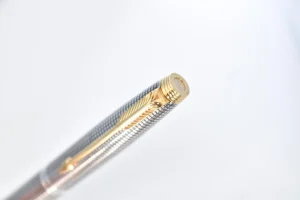
Material: .925 Sterling Silver (engraved with STERLING SILVER or Ag925 / hallmark marks)
Pattern: Ciselé = fine square guilloché grid. Resistant to scratches, develops an elegant silver patina over time.
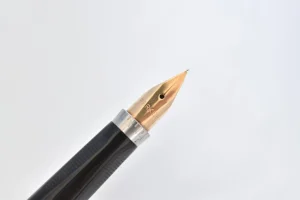
Nib: 14K gold (585). The engraving “14K 585” indicates 58.5% gold content. This piece features an XF (Extra Fine) nib—rare compared to F or M, sought-after by collectors.
Grip: Triangular section with an adjustable nib-angle ring (with degree markings). This feature allows writers to fine-tune nib orientation to their natural writing angle—one of the hallmarks of the Parker 75.
Clip & Trim: Parker’s signature arrow clip. Cap and barrel ends fitted with gold-plated accents (with slight color variations depending on production era).
Filling System: Cartridge/Converter dual system. Compatible with current Parker converters and QUINK cartridges.
Dimensions: ~128 mm capped / ~145–148 mm posted; barrel diameter ~11 mm; weight in the low 20 g range. Light and well-balanced, perfect for daily writing.
The combination of a compact size, balanced weight, and the tactile feel of sterling silver makes it a pen suited for both everyday use and fine collecting.
Value and Rarity
- Iconic Finish: Sterling Silver Ciselé is the signature look of the Parker 75.
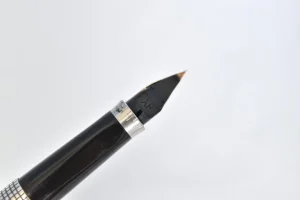
Rare Nib Width: XF (Extra Fine) nibs are far less common than F or M, making them especially desirable among collectors.
Vintage Presence: Though in production since the 1960s, it has been discontinued for decades. Well-preserved specimens are becoming increasingly scarce.
Aging Beauty: Sterling silver develops a unique patina over time, celebrated as a mark of character and authenticity.
About Parker Pen Company
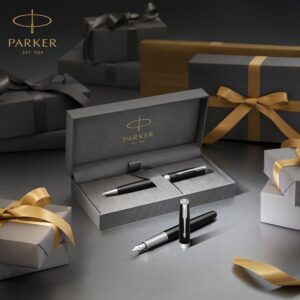
Source:Amazon
Founded in the United States in 1888, Parker began with George Safford Parker’s philosophy:
“If there’s no good pen, let’s make one.”
A Traditional Writing Instrument Brand
Official Name: Parker Pen Company
Founded: 1888
Founder: George Safford Parker
Current Headquarters: France (after production relocation)
Parent Company: Newell Brands (formerly Newell Rubbermaid)
Brand Value & Reputation
Technological Innovations:
“Lucky Curve” anti-backflow feed (1894)
“Quink” quick-drying ink (1931)
Iconic Creations: Parker 51, Duofold, Vacumatic—20th century masterpieces.
Tradition & Legacy: Established in 1888, with over 100 years of continuous heritage.
Innovation Leadership: Always at the forefront of writing technology with breakthroughs like Lucky Curve, Quink, and Parker 51.
Recognized Icons: Particularly Parker 75 and Parker 51 are universally acknowledged by fountain pen enthusiasts.
Premium Craftsmanship: Sterling silver, intricate metal engravings, and refined design aesthetics.
Gift Appeal: Parker pens are a classic choice for milestones—graduations, promotions, and commemorations.
Collector Impact: Limited editions and rare variants often trade at premium prices.
Royal Warrant: Parker has long held a Royal Warrant of Appointment, certifying its quality by the British royal family.
In May 2024, King Charles III renewed Parker’s Royal Warrant, reaffirming its prestige.
A History of Parker: Over a Century of Innovation & Iconic Pens
1. Founding Era (1888–1920s)
Founder: George Safford Parker
Established in 1888 under the principle: “If there’s no good pen, let’s make one.”
1894: Lucky Curve Patent — a revolutionary anti-backflow feed system that returned excess ink to the nib, preventing leaks in pockets. Early Parker pens proudly bore the “Lucky Curve” imprint, now a collector’s mark.
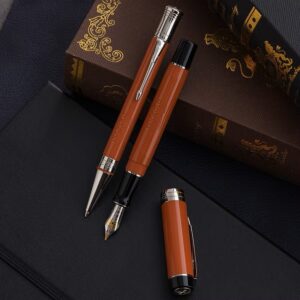
1921: Duofold Released — nicknamed the “Big Red,” a large orange pen that remains a cornerstone for collectors.
2. Golden Age (1930s–1950s)
1933: Vacumatic — vacuum filling system with translucent ink window, combined with beautiful striped celluloid.
Source:PARKER
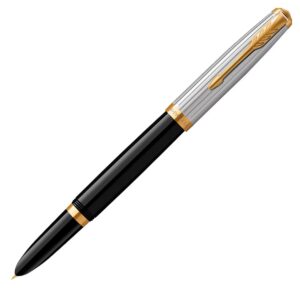
- 1941: Parker 51 — streamlined like an aircraft, hooded nib and airtight cap. Dubbed “the world’s most sold fountain pen.” Used by soldiers and pilots during WWII, cementing its legendary status.
3. Modernization (1950s–1970s)
1954: Jotter — the archetypal click ballpoint. Still in production with billions sold.
1956: Parker 61 — introduced a capillary-filling system using capillary action, a bold experiment adored by enthusiasts.
- 1964: Parker 75 — 75th anniversary model. Sterling silver Ciselé pattern, adjustable nib ring—a perfect daily luxury pen.
4. Transformation & Global Expansion (1980s–2000s)
Headquarters relocated from the US to the UK, later to France as the main production site.
Source:PARKER
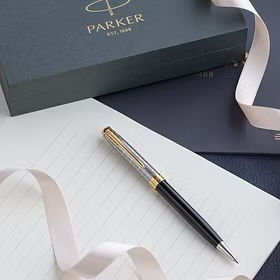
1994: Sonnet Released — Parker’s modern flagship, balancing classic design with practicality.
2000s: Parent company shifted from Gillette to Newell Brands, marking Parker’s global integration.
5. Today (2010s–Present)
Production consolidated in Nantes, France.
Current lineup includes: Duofold (revival), Sonnet, IM, Urban, Jotter.
2024: King Charles III renews the Royal Warrant, reaffirming Parker as a brand of royal prestige.
8 Iconic Parker Models
1. Parker 51(1941)
Source:PARKER
Features: Streamlined hooded nib, airtight cap, Aerometric filling system.
Impact: An icon of postwar America, beloved by businessmen and servicemen alike.
2. Parker 75(1964)
Anniversary luxury model with sterling silver Ciselé, triangular grip, adjustable nib ring.
Known as “the ultimate daily-use luxury pen.”
3. Parker Duofold(1921)
Source:PARKER
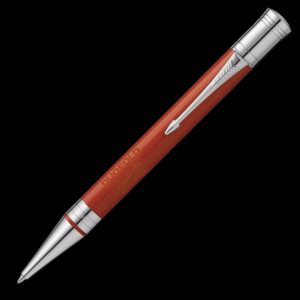
- “Big Red” large orange celluloid pen.
- Defined the 1920s luxury pen market; continues in modern reissues.
4. Parker Vacumatic(1933)
Source:PARKER
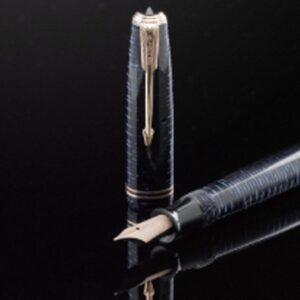
Striped transparency with ink window, vacuum filling system.
Popular Art Deco design, still coveted by collectors.
5. Parker 61(1956)
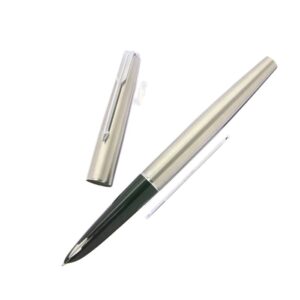
Source:KINGDOM NOTE
Capillary filling system, colorful arrow inlays.
Known for its bold design, adored by collectors today.
6. Parker Sonnet(1994)
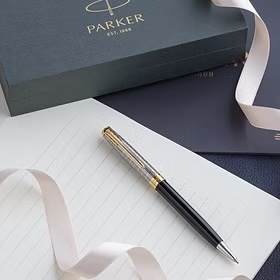
Source:PARKER
- Modern flagship. Classic silhouette, diverse finishes, reliable daily writing.
7. Parker 45(1960)
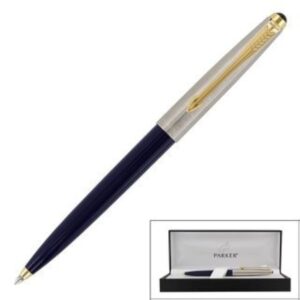
Source:Amazon
Affordable, durable cartridge pen with steel nib.
Introduced many students and professionals to Parker.
8. Parker Jotter(1954)
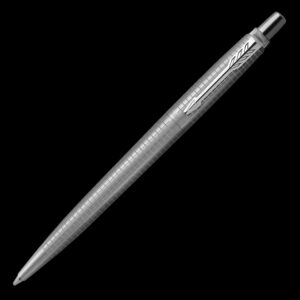
Source:PARKER
- Click ballpoint with inverted-V clip.
- Billions sold worldwide; still in production today.
Conclusion
The Parker 75 Sterling Silver “Ciselé” distills Parker’s long history of heritage and innovation into one pen.
In daily use, its XF nib delivers precision and the silver body provides unmatched tactility.
In a collection, it radiates presence that speaks across generations.
This is not “just a fountain pen,” but truly a piece of writing history you can hold in your hand.
▼ HD Toys Store ▼
Parker 75 Sterling Silver Fountain Pen 14K Nib XF 585 Limited Edition


Shop Authentic Japanese Collectibles
Shipped directly from Japan. Each item carefully inspected.

コメント