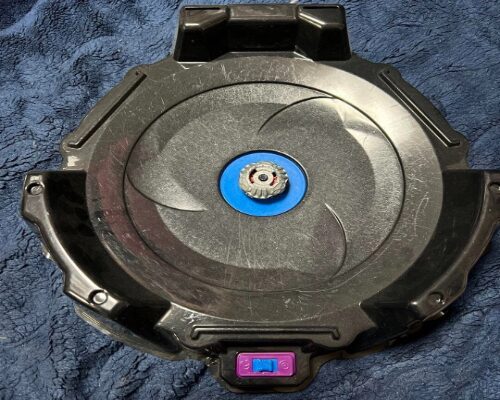
The BB-120 Ultimate Beyta Stadium remains one of the most theatrical accessories Takara Tomy ever produced for the Metal Fight Beyblade line, and more than a decade after its release it is finally getting the collector attention it deserves. Launched on October 22, 2011, this stadium broke from the usual passive plastic bowl by integrating a motorized center disc, a hidden magnet system, and an exclusive Prototype Nemesis bey that was never sold on its own. The result was a home version of the arcade-style boss battles fans associated with the Bey Ta cabinet and the 4D anime arc known overseas as Metal Fury. Today, complete units with working electronics are becoming genuinely scarce, and prices reflect that scarcity, which makes accurate information essential before buying, selling, or restoring one. The sections ahead lay out the official specifications, including JAN code, physical dimensions, and battery requirements, then explain how the motorized boss mechanic actually behaves during a match and why the magnetic lock-in changes the rhythm of play compared with a standard BeyStadium. Authentication tips, the historical link to the original arcade cabinet, and a realistic look at current market value by condition are all covered in plain terms. Whether the aim is to anchor a Metal Fight display, recover a piece from childhood, or simply understand the design choices behind this unusual release, the breakdown below offers a clear reference grounded in verifiable detail.
Beyblade is not just a spinning top. It’s a hobby filled with strategy, customization, and the thrill of battle. Among the countless products released, one item stands out as a unique and unforgettable arena: Takara Tomy’s BB-120 Ultimate Beyta Stadium.
Released in 2011, this product gave fans the chance to enjoy a true “boss battle” experience at home, making it one of the most memorable items in Beyblade history.
- Ultimate Beyta Stadium (BB-120) Details
- What is Beyblade?
- Metal Fight Beyblade 4D – Basic Information
- Representative Beyblade Stadiums
- Conclusion
- Collector FAQ
- What makes the BB-120 Ultimate Beyta Stadium with Prototype Nemesis so unique?
- How does the Prototype Nemesis variant affect the BB-120 Stadium’s collector value?
- What are key indicators for identifying an authentic BB-120 Prototype Nemesis?
- Are there any gameplay differences when using the Prototype Nemesis compared to its standard release?
- Related collector guides
Ultimate Beyta Stadium (BB-120) Details
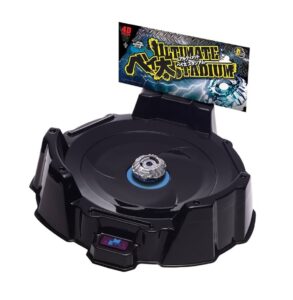
Source:Amazon
Basic Information
Official Name: Ultimate Beyta Stadium
Series: Metal Fight Beyblade 4D (overseas: Metal Fury)
Release Date: October 22, 2011 (Japan)
Manufacturer: Takara Tomy / JAN: 4904810428008 (Package size: 46.5×44.5×12 cm, approx. 1.16 kg)
Contents: Stadium body (black bowl + motorized blue center disc), exclusive Bey: Prototype Nemesis (not sold separately)
Power Supply: 3×AAA batteries (sold separately) / Center disc with left–right spin switch
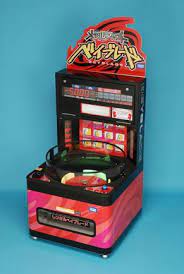
Concept: A home version of the arcade “Bey Ta” machine, reproducing the “boss battle” experience.
Source:TAKARA TOMY
Note: The name “Beyta” comes from the arcade machine “Bey Ta”. This stadium recreated the experience of challenging the ultimate enemy (Nemesis) at home.
System and How to Play (Practical Use)
Motorized Center Disc: Spins left or right, with built-in magnet that locks the exclusive Bey into the center, creating a “boss battle” scenario.
Defeat Prototype Nemesis: Players launch their own Beys with the goal of stopping or knocking out Nemesis. It is a challenge mode, not a standard head-to-head match.
Two-Stage Height Adjustment (Difficulty Setting): Prototype Nemesis can be adjusted to two different heights (approx. 170 / 195). A higher setting makes it harder to defeat.
Outer Tornado Ridge: Designed so Beys can speed up along the outer ridge before charging into the center for an attack.
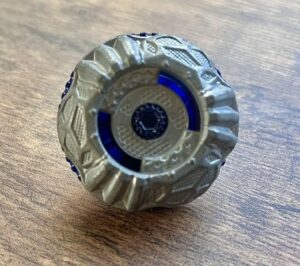
[Exclusive Bey] Complete Guide to Prototype Nemesis
Source:Amazon
Released together with the BB-120 Ultimate Beyta Stadium in 2011, Prototype Nemesis is an exclusive Beyblade that could only be obtained through this set.
It was never sold separately, which makes it a rare collector’s item today.
Basic Information
Name: Prototype Nemesis
Release Date: October 22, 2011 (with BB-120)
Exclusive to: BB-120 Ultimate Beyta Stadium
Role in Anime: Modeled after the “prototype” of Nemesis, the ultimate villain Bey.
Features and Gimmicks
One-Piece Construction
Unlike regular Metal Fight Beyblades, which can be disassembled into Face, Energy Ring, Fusion Wheel, Track, and Bottom, Prototype Nemesis is a fixed one-piece model.
No customization or part swapping possible.
Magnetic Gimmick
A magnet is embedded in the bottom of the Bey.
This interacts with the motorized center disc magnet, keeping the Bey locked in the center.
This ensures it remains a “boss” waiting for the player’s attack.
Height Adjustment
Fixed with a triangular screw, allowing two adjustable heights.
Changes battle difficulty depending on the setting.
No Face Bolt
Unlike standard Beyblades, there is no Face Bolt, emphasizing its exclusive design.
Connection to the Anime
In Metal Fight Beyblade 4D, the forbidden Bey “Nemesis” appears as the final boss.
Prototype Nemesis is designed as the preliminary form leading to Diablo Nemesis, making it a piece that allows fans to relive the anime’s story.
Fan Reactions and Current Evaluation
At release: highly talked about as “a chance to fight Nemesis at home.”
Since it cannot be used in standard competitive battles, its value is more collectible than practical.
Today: Many collectors seek Prototype Nemesis even more than the stadium itself, and it continues to command high demand in the secondary market.
What is Beyblade?
Source:TAKARA TOMY
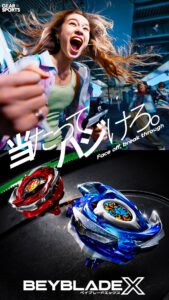
Origin: Launched in 1999 by Takara (now Takara Tomy).
Rules: Customize Beys, launch them into a stadium, and win by knocking out or outspinning the opponent.
Development: Linked with anime and manga, Beyblade became a global phenomenon.
Generational Evolution
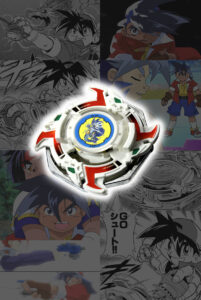
Bakuten Shoot Beyblade (2000–2004)
Source:TAKARA TOMY
The original series. Both the brand and anime title.
Anime seasons included Bakuten Shoot Beyblade, Beyblade 2002, and G-Revolution.
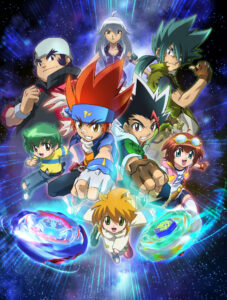
Metal Fight Beyblade (2008–2012)
Source:BAYBLADE WORLD
The original series. Both the brand and anime title.
Anime seasons included Bakuten Shoot Beyblade, Beyblade 2002, and G-Revolution.
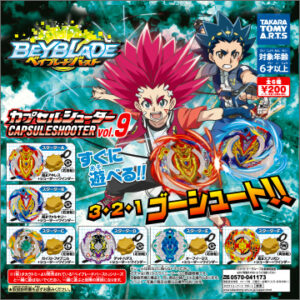
Beyblade Burst (2015–present)
Source:TAKARA TOMY ARTS
Third generation, still ongoing.
Anime seasons include Burst, God, Cho-Z, GT, Sparking, Dynamite Battle, and more.
Beyblade has always connected anime and toys, fusing story with real-life battle experiences.
Metal Fight Beyblade 4D – Basic Information
Source:TSUTAYA DISCAS
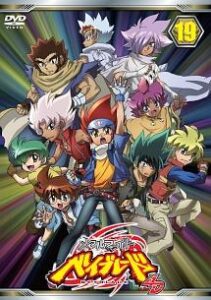
Title: Metal Fight Beyblade 4D
Broadcast: April 2011 – March 2012 (52 episodes)
Position in Series: 3rd entry in the Metal Fight saga (after Metal Fight and Explosion, before Zero-G)
Overseas Title: Beyblade: Metal Fury
Story Overview
Successors of the Legendary Beasts: Legendary bladers around the world gather with their divine Beys. Protagonist Gingka Hagane continues his journey with Big Bang Pegasus.
Nemesis – The Final Boss: The forbidden Bey Nemesis revives, threatening to destroy the world. In the climax, Gingka and global bladers unite to face Diablo Nemesis.
Unique Battles: The 4D System introduces multi-mode Beys with structural gimmicks, reflected in both toys and anime battles.
Main Characters and Beys

Source:BAYBLADE WORLD
Source:Amazon
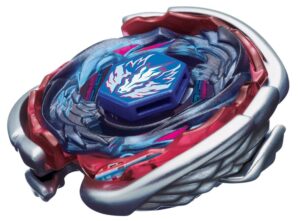
- Gingka Hagane – Big Bang Pegasus
Source:Amazon
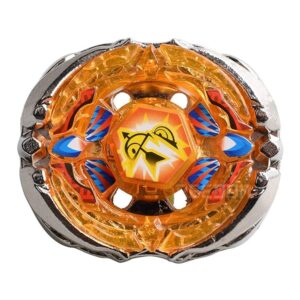
- Masamune Kadoya – Flash Sagittario
Ryuga – L-Drago Destructor
Chris – Phantom Orion (legendary stamina)
Others – VariAres, Fang Leone, etc.
Source:BAYBLADE WORLD
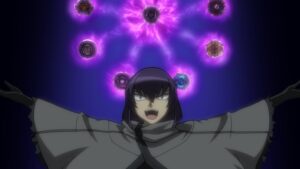
- Final Boss – Nemesis (Prototype → Diablo Nemesis)
Popularity and Features at the Time
Strong tie between anime and toys through the 4D System.
Excitement from “Legendary Bladers uniting” and “Final Boss Nemesis battle.”
The Nemesis arc left a deep impression, boosting demand for limited products like Prototype Nemesis and Diablo Nemesis.
Representative Beyblade Stadiums
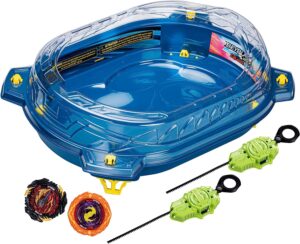
First Generation (Early 2000s)
Source:Amazon
Thunder Stadium (2001) – with central hole.
Magne Stadium (2002) – used magnets to alter movement.
Metal Fight Era (2008–2012)
- BB-09 Attack Type Stadium (Aug 2008)
- BB-10 Standard Type Stadium (Aug 2008) – tournament standard.
- BB-33 Stamina Type Stadium (2009)
Source:yodobashi
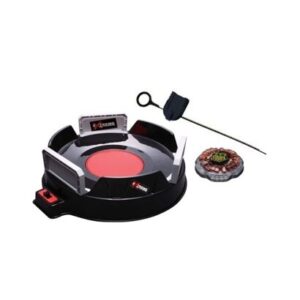
- BB-51 Super Bey Stadium (2009) – large size.
Source:Amazon
- BB-120 Ultimate Beyta Stadium (Oct 2011) – boss battle concept.
Beyblade Burst Era (2015–present)
Source:Amazon
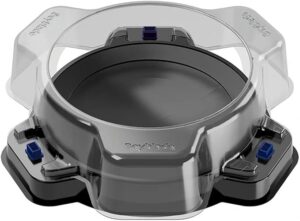
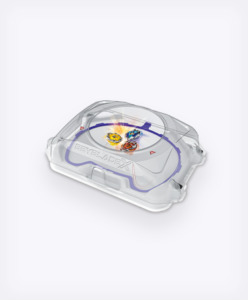
B-33 Standard Stadium (July 2016) – widely used in tournaments.
Source:TAKARA TOMY
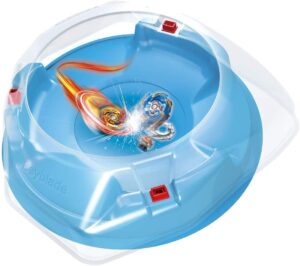
- B-64 Wide Stadium (Dec 2016) – supports multi-player battles.
Source:Amazon
B-174 Standard Stadium (Dec 2020) – updated official model.
Conclusion
The BB-120 Ultimate Beyta Stadium is not just another Beyblade stadium. It is a “home version boss battle arena” that combined anime (Metal Fight 4D) and arcade (Bey Ta) elements.
With its exclusive Prototype Nemesis, this set remains one of the most distinctive and collectible Beyblade products ever made.
It’s more than just a stadium – it’s the stage to challenge Nemesis.
▼ HD Toys Store ▼
Beyblade BB-120 Ultimate Beyta Stadium Takara Tomy Metal Fight Prototype Nemesis


Shop Authentic Japanese Collectibles
Shipped directly from Japan. Each item carefully inspected.
Collector FAQ
What makes the BB-120 Ultimate Beyta Stadium with Prototype Nemesis so unique?
The BB-120 Ultimate Beyta Stadium featuring Prototype Nemesis is exceptionally rare due to its limited production as a special promotional item. The “Prototype Nemesis” itself is a pre-release version of the popular Beyblade, often exhibiting subtle design variations, different color schemes, or unique mold details compared to its standard retail counterpart. These distinctions elevate its status beyond a typical release, making it a highly coveted piece for serious collectors who value its historical significance in the Beyblade Metal Fight series and the glimpse it offers into the development process of iconic Beyblades.
How does the Prototype Nemesis variant affect the BB-120 Stadium’s collector value?
The inclusion of the Prototype Nemesis significantly escalates the BB-120 Ultimate Beyta Stadium’s collector value. Its extreme scarcity, coupled with the allure of owning a preliminary design, makes it one of the most sought-after items in the Beyblade collecting community. Collectors are willing to pay a premium for such a unique piece, as it represents a tangible slice of Beyblade history. Factors like condition (new in box versus loose), completeness of the set, and verified authenticity further impact its market value, often placing it among the highest-priced items for serious enthusiasts.
What are key indicators for identifying an authentic BB-120 Prototype Nemesis?
Authenticating a BB-120 Prototype Nemesis requires careful attention to detail. Look for specific mold variations on the Fusion Wheel or Energy Ring that differ from the mass-produced Nemesis. Often, prototype versions may have slightly different plastic compositions, unique internal markings, or unreleased color palettes. Packaging, if available, would also carry specific promotional labels or codes indicating its special status. Consulting reputable collector forums or expert resources with side-by-side comparisons of known authentic prototypes is crucial to verify its legitimacy and avoid counterfeits.
Are there any gameplay differences when using the Prototype Nemesis compared to its standard release?
While the Prototype Nemesis is primarily a collector’s item, any gameplay differences compared to the standard release are typically minor and not intended to confer a competitive advantage. Subtle variations in plastic density, weight distribution, or mold precision inherent in prototype manufacturing *could* theoretically lead to minute performance shifts in spin time or attack patterns. However, these are generally negligible in practical play. Its true value lies in its rarity and historical significance, rather than any perceived superior battling capabilities.
Related collector guides
- Dive Deeper into the Collector’s Corner
- Explore Takara Tomy: A Maker’s Legacy
- Discover More Anime-Inspired Collectibles
Looking to expand your collection? Check out these exclusive offerings:


コメント