Since the first film premiered in 1954, the Godzilla series has been loved for generations. Across the Showa, Heisei, and Millennium eras, each film has brought its own take on Godzilla and a different lineup of monsters.
The Godzilla Final Box, released in 2005 to celebrate Godzilla’s 50th anniversary, lets you enjoy that history all in one set. It contains 27 films, from the original “Godzilla” to “Godzilla: Tokyo S.O.S.”
In this article, we take a closer look at what makes the Godzilla Final Box special, covering the films it includes along with their directors and cast.
- What Is the Godzilla Final Box 50th Anniversary 30 Disc DVD Set
- What Is the Godzilla Film Series
- The Godzilla Final Box on the Secondhand Market
- Films Included in the Godzilla Final Box
- Directors Behind the Godzilla Final Box Films
- Actors Who Shaped the Godzilla Final Box Films
- Other Godzilla Home Video Releases to Compare
- The Appeal of the Godzilla Final Box
What Is the Godzilla Final Box 50th Anniversary 30 Disc DVD Set
The Godzilla Final Box 50th Anniversary 30 Disc DVD Set is a DVD box released by Toho to mark the 50th anniversary of Godzilla. It collects the series from the original “Godzilla” of 1954 through “Godzilla: Tokyo S.O.S.” released in 2003. Beyond the films themselves, it includes bonus discs of Godzilla-related footage and exclusive accessories, making it a highly collectible set that covers 50 years of Godzilla history.
Product Information
The Godzilla Final Box 50th Anniversary 30 Disc DVD Set was produced in limited numbers for pre-order only. The product details at the time of release are as follows.
| Item | Details |
|---|---|
| Product Name | Godzilla Final Box 50th Anniversary 30 Disc DVD Set |
| English Title | GODZILLA FINAL BOX |
| Distributor | Toho |
| Release Date | April 22, 2005 |
| Number of Discs | 30 DVDs |
| Films Included | 27 Godzilla films |
| Bonus Discs | 3 discs of “Godzilla Special Archives” |
| Original Retail Price | 99,750 yen (tax included) |
| Product Code | TDV-15001D |
| Sales Format | Limited production, pre-order only |
Contents and Accessories
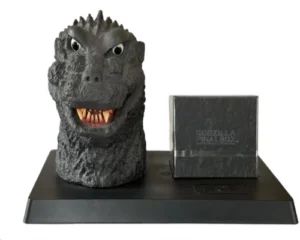
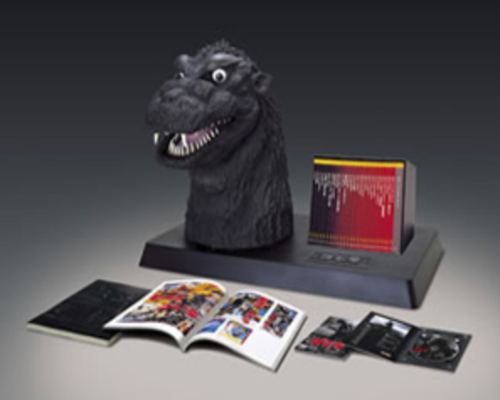
This set includes not only the Godzilla films but also bonus discs of related footage and a large accessory recreating Godzilla. The contents at the time of release are as follows.
(Intended for the DVD released later; the DVD itself is not included.)
| Item | Details |
|---|---|
| Godzilla Films | 27 Godzilla films |
| Bonus Discs | 3 discs of “Godzilla Special Archives” |
| Godzilla Head | A painted soft vinyl replica of the original Godzilla’s head, at full suit size |
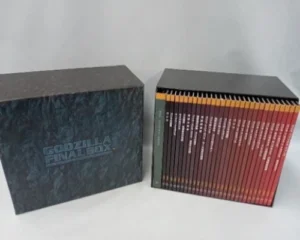
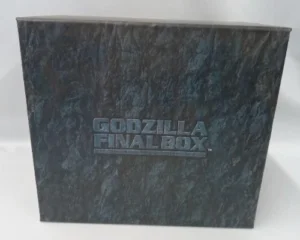
| DVD Storage Box | A dedicated carton box for storing the DVDs |
| Case for “Godzilla: Final Wars” | A dedicated disc case with jacket for storing the DVD |
| Booklet | A booklet of reference material on Godzilla |
What Is the Godzilla Film Series
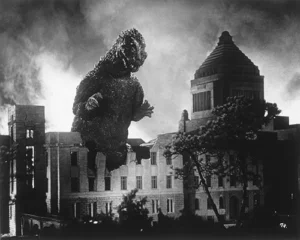
The Godzilla film series began with “Godzilla” in 1954 and has become Japan’s best-known monster movie franchise. Centered on the giant monster Godzilla, the films tell stories of battles with other monsters and with humanity, often drawing on social issues and science and technology.
Toho’s Japanese Godzilla films span the Showa, Heisei, and Millennium eras. Godzilla’s design and backstory, the monsters that appear, and the themes of the stories differ from film to film, so comparing them era by era is a great way to see how the series has changed.
The Birth of Godzilla and the History of the Series
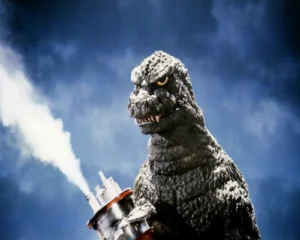
Godzilla began with the Toho film “Godzilla,” released on November 3, 1954. Portrayed as a giant monster that appeared before humanity against the backdrop of the fear of nuclear weapons, Godzilla went on to expand into a series depicting its encounters with many other monsters and with people.
In the Showa era, many monsters such as Mothra, Rodan, King Ghidorah, and Mechagodzilla appeared, and the films came to feature not only battles with humans but also clashes between monsters. At the same time, films such as “All Monsters Attack” and “Godzilla vs. Hedorah” brought in different themes and styles.
The Heisei era, which began with “The Return of Godzilla” in 1984, introduced Biollante, King Ghidorah, Mothra, Mechagodzilla, SpaceGodzilla, Destoroyah, and more, with a range of stories built around Godzilla’s battles against other monsters.
In the Millennium era, starting with “Godzilla 2000: Millennium” in 1999, each film adopted its own setting and world. Some films continue the story of the previous one, such as “Godzilla Against Mechagodzilla” in 2002 and “Godzilla: Tokyo S.O.S.” in 2003.
Because the Godzilla Final Box collects films from the Showa, Heisei, and Millennium eras, you can enjoy nearly 50 years of change in Godzilla films in chronological order.
The Godzilla Final Box on the Secondhand Market
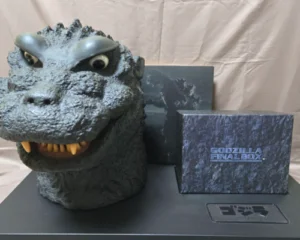
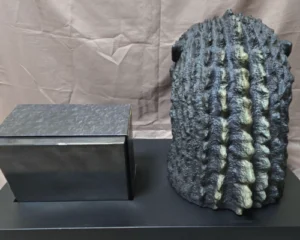
The “GODZILLA FINAL BOX,” released in 2005 to mark Godzilla’s 50th anniversary, was originally sold as a set combining 30 DVDs with the Godzilla Head, a storage carton box, a booklet, and more.
However, many years after its release, on today’s secondhand market what was originally sold as a single set is often found split up and sold as DVDs and accessories separately. While some listings offer all 30 DVDs together, in other cases the Godzilla Head is listed on its own, or the storage box and booklet are sold separately.
For this reason, even an item listed as “GODZILLA FINAL BOX” on the secondhand market may not be the complete original set; the DVDs, the Godzilla Head, and the accessories may each be circulating as separate items.
Films Included in the Godzilla Final Box
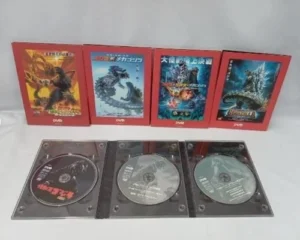
The Godzilla Final Box contains 27 Godzilla films, from the original “Godzilla” released in 1954 to “Godzilla: Tokyo S.O.S.” released in 2003.
The films come from the Showa, Heisei, and Millennium eras, so you can enjoy the different looks of Godzilla, the monsters that appear, and the story settings of each era.
| Era | Films Included |
|---|---|
| Showa | ① Godzilla ② Godzilla Raids Again ③ King Kong vs. Godzilla ④ Mothra vs. Godzilla ⑤ Ghidorah, the Three-Headed Monster ⑥ Invasion of Astro-Monster ⑦ Ebirah, Horror of the Deep ⑧ Son of Godzilla ⑨ Destroy All Monsters ⑩ All Monsters Attack ⑪ Godzilla vs. Hedorah ⑫ Godzilla vs. Gigan ⑬ Godzilla vs. Megalon ⑭ Godzilla vs. Mechagodzilla ⑮ Terror of Mechagodzilla |
| Heisei | ⑯ The Return of Godzilla (1984) ⑰ Godzilla vs. Biollante ⑱ Godzilla vs. King Ghidorah ⑲ Godzilla vs. Mothra ⑳ Godzilla vs. Mechagodzilla II ㉑ Godzilla vs. SpaceGodzilla ㉒ Godzilla vs. Destoroyah |
| Millennium | ㉓ Godzilla 2000: Millennium ㉔ Godzilla vs. Megaguirus ㉕ Godzilla, Mothra and King Ghidorah: Giant Monsters All-Out Attack ㉖ Godzilla Against Mechagodzilla ㉗ Godzilla: Tokyo S.O.S. |
Discs 1 to 15 Showa Era Godzilla Films
Disc 1: Godzilla (1954)
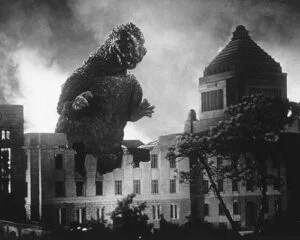
The first film in the series, released in 1954. Set in postwar Japan against the backdrop of the fear of nuclear weapons, it shows the giant monster Godzilla attacking Tokyo. Directed by Ishiro Honda, starring Akira Takarada, Momoko Kochi, Akihiko Hirata, and Takashi Shimura. This is the film where the entire Godzilla series began.
Disc 2: Godzilla Raids Again (1955)
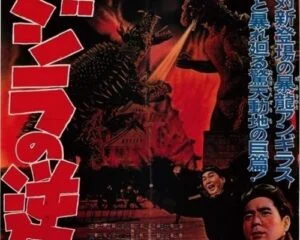
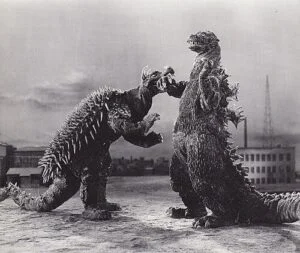
The second film in the series, released in 1955. Set in Osaka, it pits Godzilla against a newly introduced monster, Anguirus. Directed by Motoyoshi Oda, starring Hiroshi Koizumi, Minoru Chiaki, Takashi Shimura, and Setsuko Wakayama. Unlike the first film, it puts the battle between monsters front and center.
Disc 3: King Kong vs. Godzilla (1962)
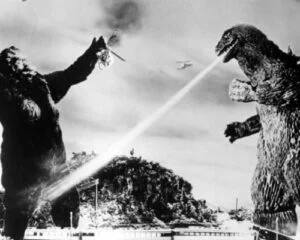
Released in 1962, this film brings Godzilla face to face with the world-famous monster King Kong. One of the best-known monster showdowns in the series, it was directed by Ishiro Honda with special effects by Eiji Tsuburaya. The cast includes Tadao Takashima, Mie Hama, Kenji Sahara, Yu Fujiki, and Ichiro Arishima.
Disc 4: Mothra vs. Godzilla (1964)
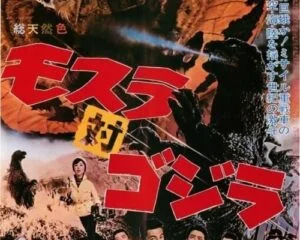
Released in 1964. Godzilla faces Mothra, one of Toho’s signature monsters. Directed by Ishiro Honda with special effects by Eiji Tsuburaya, starring Akira Takarada, Yuriko Hoshi, and Hiroshi Koizumi, with The Peanuts playing the Shobijin, the tiny twin fairies who serve Mothra.
Disc 5: Ghidorah, the Three-Headed Monster (1964)
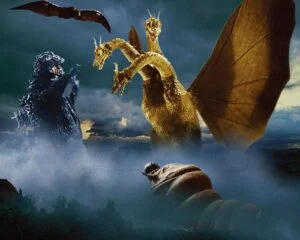
Released in 1964. The space monster King Ghidorah makes its first appearance, and Godzilla, Rodan, and Mothra rise to face the threat to Earth. A notable feature is Godzilla and Rodan joining forces on humanity’s side. Directed by Ishiro Honda, starring Yosuke Natsuki, Yuriko Hoshi, Akiko Wakabayashi, Hiroshi Koizumi, The Peanuts, and Takashi Shimura.
Disc 6: Invasion of Astro-Monster (1965)
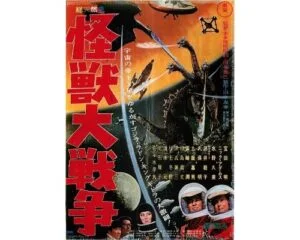
Released in 1965. A strongly science fiction film in which aliens from Planet X use Godzilla and Rodan to fight King Ghidorah. Directed by Ishiro Honda with special effects by Eiji Tsuburaya, starring Akira Takarada, Kumi Mizuno, Nick Adams, and Yoshio Tsuchiya.
Disc 7: Ebirah, Horror of the Deep (1966)
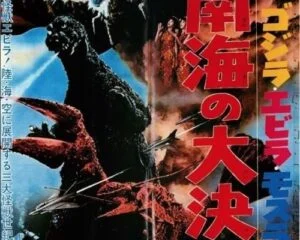
Released in 1966. Set on a remote island in the South Seas, it features Godzilla, the giant shrimp monster Ebirah, and Mothra. Unlike earlier films set in cities, it plays out like an adventure movie on a tropical island. Directed by Jun Fukuda, starring Akira Takarada, Kumi Mizuno, and Akihiko Hirata.
Disc 8: Son of Godzilla (1967)
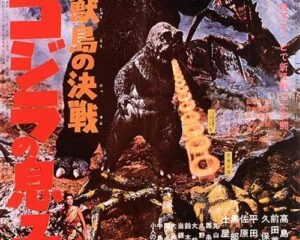
Released in 1967. Set on Monster Island in the South Seas, it features Godzilla and the baby monster Minilla. Showing Godzilla raising Minilla, the film highlights Godzilla’s side as a parent. Directed by Jun Fukuda, starring Tadao Takashima, Beverly Maeda, Akira Kubo, and Akihiko Hirata.
Disc 9: Destroy All Monsters (1968)
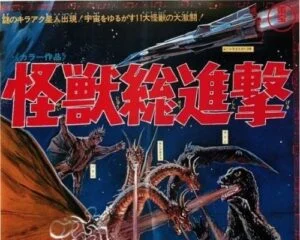
Released in 1968. Many of the series’ signature monsters appear, including Godzilla, Mothra, Rodan, Anguirus, and King Ghidorah. Known for bringing the monsters together in one film, it is one of the defining monster movies of the Showa era. Directed by Ishiro Honda, starring Akira Kubo, Jun Tazaki, and Yoshio Tsuchiya.
Disc 10: All Monsters Attack (1969)
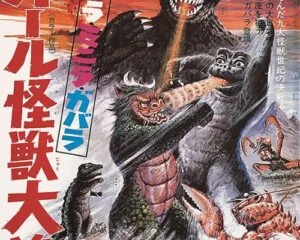
Released in 1969. Told from a young boy’s point of view, the story blends reality and imagination. Minilla and Gabara appear, and its approach sets it apart from earlier Godzilla films. Directed by Ishiro Honda, starring Tomonori Yazaki, Machiko Naka, and Kenji Sahara.
Disc 11: Godzilla vs. Hedorah (1971)
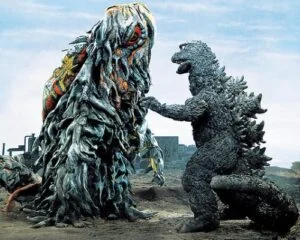
Released in 1971. Godzilla battles Hedorah, a monster born from pollution. The film takes on the pollution problems of Japan’s period of rapid economic growth and is also known for its distinctive visual style. Directed by Yoshimitsu Banno, starring Akira Yamauchi, Toshio Shiba, Hiroyuki Kawase, and Toshie Kimura.
Disc 12: Godzilla vs. Gigan (1972)
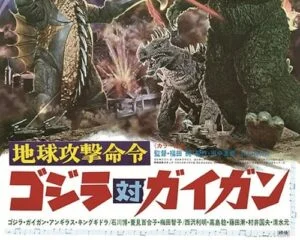
Released in 1972. The cyborg monster Gigan appears, and Godzilla and Anguirus fight Gigan and King Ghidorah. In this film, Godzilla fights other monsters as an ally of humanity. Directed by Jun Fukuda, starring Hiroshi Ishikawa, Yuriko Hishimi, Tomoko Umeda, and Toshiaki Nishizawa.
Disc 13: Godzilla vs. Megalon (1973)
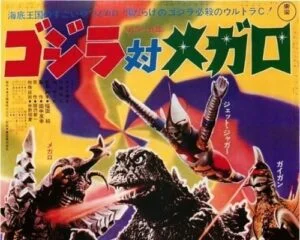
Released in 1973. Godzilla takes on Megalon, a monster sent by the underground civilization of Seatopia. The robot hero Jet Jaguar also appears and fights Megalon alongside Godzilla. Directed by Jun Fukuda, starring Katsuhiko Sasaki, Yutaka Hayashi, Hiroyuki Kawase, and Kotaro Tomita.
Disc 14: Godzilla vs. Mechagodzilla (1974)
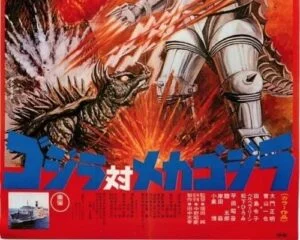
Released in 1974. The robot monster Mechagodzilla, built in Godzilla’s image, makes its first appearance. The highlight is the showdown between the real Godzilla and Mechagodzilla, which at first hides its true identity by posing as Godzilla. Directed by Jun Fukuda, starring Masaaki Daimon, Kazuya Aoyama, Akihiko Hirata, Hiroshi Koizumi, and Kenji Sahara.
Disc 15: Terror of Mechagodzilla (1975)
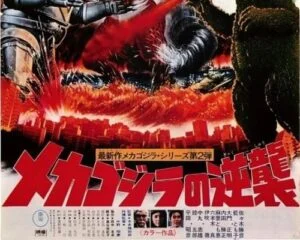
Released in 1975. Mechagodzilla returns from the previous film and fights Godzilla together with the sea monster Titanosaurus. This film closed out the Showa era of the Godzilla series and was directed by Ishiro Honda, starring Katsuhiko Sasaki, Akihiko Hirata, Tomoko Ai, Masaaki Daimon, and Kenji Sahara.
Discs 16 to 22 Heisei Era Godzilla Films
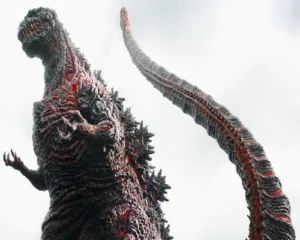
Disc 16: The Return of Godzilla (1984)
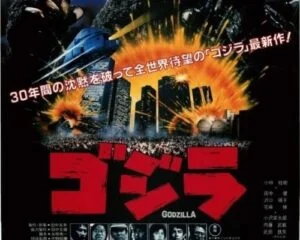
Released in 1984. Positioned as a direct sequel to the 1954 original, it once again portrays Godzilla as a threat to humanity. Rather than continuing the Showa series, it was made as a reset of the films that followed the 1954 version. Directed by Koji Hashimoto, starring Keiju Kobayashi, Ken Tanaka, Yasuko Sawaguchi, Shin Takuma, and Yosuke Natsuki.
Disc 17: Godzilla vs. Biollante (1989)
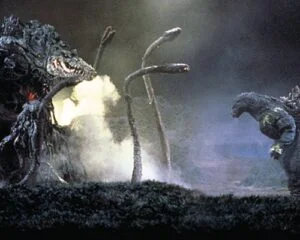
Released in 1989. It introduces Biollante, a monster created through research combining Godzilla’s cells with plant and human genes. The film takes biotechnology and genetic engineering as its theme and was written and directed by Kazuki Omori. The cast includes Kunihiko Mitamura, Yoshiko Tanaka, Masanobu Takashima, Megumi Odaka, and Yasuko Sawaguchi.
Disc 18: Godzilla vs. King Ghidorah (1991)
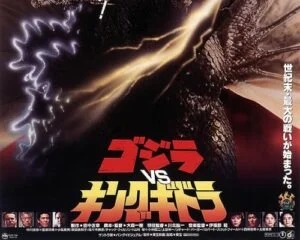
Released in 1991. Built around a plot by people from the future and time travel, the story deals with the origins of Godzilla and King Ghidorah. A science fiction film that moves between past and future, it was written and directed by Kazuki Omori. The cast includes Anna Nakagawa, Kosuke Toyohara, Megumi Odaka, and Yoshio Tsuchiya.
Disc 19: Godzilla vs. Mothra (1992)
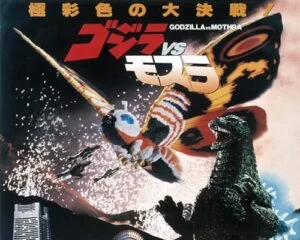
Released in 1992. Godzilla, Mothra, and Mothra’s rival Battra clash. Against the backdrop of Earth’s environment, the film also explores the origins of Mothra and Battra. Directed by Takao Okawara, starring Tetsuya Bessho, Satomi Kobayashi, Takehiro Murata, Megumi Odaka, and Akira Takarada.
Disc 20: Godzilla vs. Mechagodzilla II (1993)
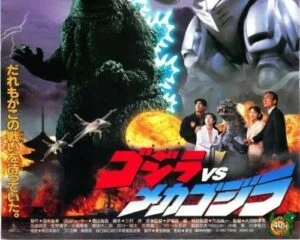
Released in 1993. Mechagodzilla appears as a robot weapon developed by humanity to counter Godzilla. The story also involves Baby Godzilla, and centers on the relationship between Godzilla, humanity, and Mechagodzilla. Directed by Takao Okawara, starring Masahiro Takashima, Ryoko Sano, Megumi Odaka, Daijiro Harada, and Kenji Sahara.
Disc 21: Godzilla vs. SpaceGodzilla (1994)
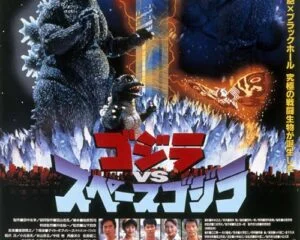
Released in 1994. SpaceGodzilla, a monster born in outer space, arrives on Earth to face Godzilla. Along with SpaceGodzilla, depicted as a being formed from Godzilla’s cells and cosmic energy, Little Godzilla and MOGERA also appear. Directed by Kensho Yamashita, starring Jun Hashizume, Megumi Odaka, Zenkichi Yoneyama, Akira Emoto, and Akira Nakao.
Disc 22: Godzilla vs. Destoroyah (1995)
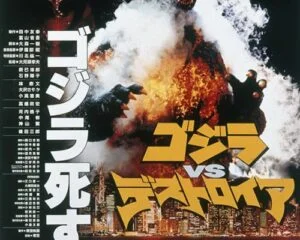
Released in 1995. It introduces Destoroyah, a monster born in connection with the Oxygen Destroyer, the weapon that killed Godzilla in the 1954 original. The story revolves around Godzilla’s very life, and the film brought the Heisei series to a close. Directed by Takao Okawara, starring Takuro Tatsumi, Yoko Ishino, Yasufumi Hayashi, and Megumi Odaka.
Discs 23 to 27 Millennium Era Godzilla Films
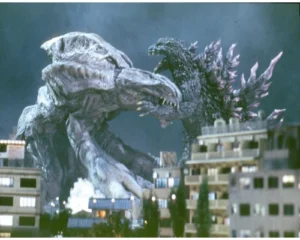
Disc 23: Godzilla 2000: Millennium (1999)
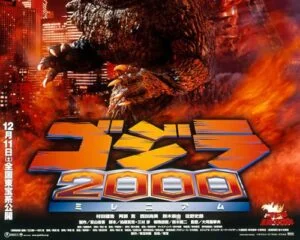
Released in 1999. The first film in the Millennium series, which reimagined Godzilla with a new setting. It depicts Godzilla’s battle with Orga, a life form that arrived from space. Directed by Takao Okawara, starring Takehiro Murata, Hiroshi Abe, Naomi Nishida, and Shiro Sano.
Disc 24: Godzilla vs. Megaguirus (2000)
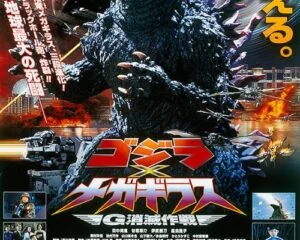
Released in 2000. The story revolves around the Dimension Tide, a weapon designed to erase Godzilla, and features the giant insect monster Megaguirus. Another key element is humanity developing new weapons to fight Godzilla. Directed by Masaaki Tezuka, starring Misato Tanaka, Shosuke Tanihara, Masato Ibu, and Yuriko Hoshi.
Disc 25: Godzilla, Mothra and King Ghidorah: Giant Monsters All-Out Attack (2001)
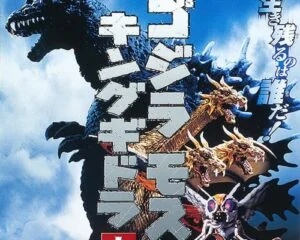
Released in 2001. Godzilla, Mothra, King Ghidorah, and Baragon appear in a battle between monsters. A distinctive feature of this film is that Godzilla is portrayed as carrying the vengeful spirits of those who died in Japan’s wars. Written and directed by Shusuke Kaneko, starring Chiharu Niiyama, Ryudo Uzaki, Shiro Sano, and Hideyo Amamoto.
Disc 26: Godzilla Against Mechagodzilla (2002)
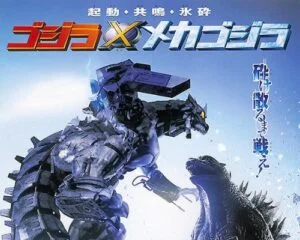
Released in 2002. It depicts the battle between Godzilla and the anti-Godzilla weapon Type-3 Kiryu, better known as Mechagodzilla. Yumiko Shaku plays the lead, Akane Yashiro, with Shin Takuma, Ko Takasugi, Kumi Mizuno, and Akira Nakao in the cast. Directed by Masaaki Tezuka.
Disc 27: Godzilla: Tokyo S.O.S. (2003)
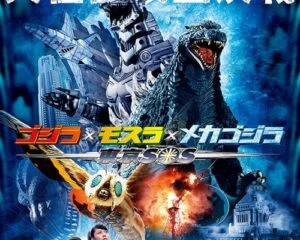
Released in 2003. A sequel to “Godzilla Against Mechagodzilla,” it features Mothra and Type-3 Kiryu alongside Godzilla. The film also ties back to earlier works, including the original 1954 Godzilla and Mothra’s Shobijin. Directed by Masaaki Tezuka, starring Noboru Kaneko, Miho Yoshioka, Masami Nagasawa, Chihiro Otsuka, Hiroshi Koizumi, Akira Nakao, and Yumiko Shaku.
Discs 28 to 30 Godzilla Special Archives
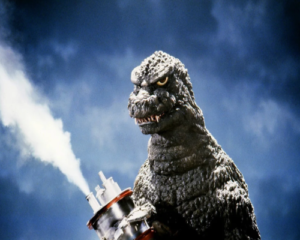
Discs 28 to 30: Godzilla Special Archives
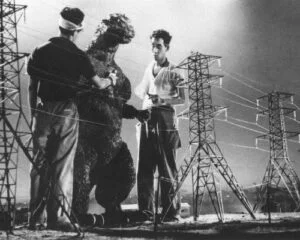
Separate from the 27 feature films, Discs 28 to 30 contain rare Godzilla-related footage under the title “Godzilla Special Archives.” They include the overseas version “Godzilla, King of the Monsters!”, Godzilla music footage, never-before-used film, attraction footage, and an examination of the composite shots in the 1954 “Godzilla,” offering material of great archival value beyond the films themselves.
The discs also include material on the making of Godzilla films and their special effects techniques, such as how the Godzilla suit was built, pictorial sketches, production diaries, making-of films, and design comparisons of monsters across the series. These bonus discs are highly collectible, showing not only the films but also how Godzilla came to life.
Directors Behind the Godzilla Final Box Films
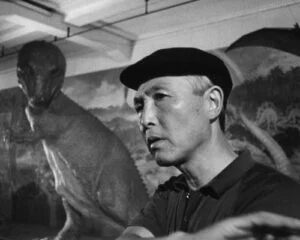
The 27 films in the set were directed by different filmmakers in each era. Here we look at six directors and special effects directors who shaped the course of the series.
Ishiro Honda and Eiji Tsuburaya
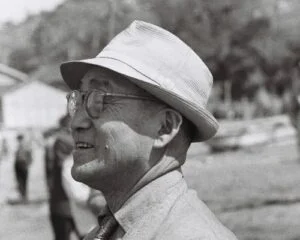
Ishiro Honda (1911 to 1993) was a film director from Yamagata Prefecture. He joined P.C.L. (later Toho) as an assistant director, and fellow assistant director Akira Kurosawa became his lifelong friend. When he was chosen to direct the first “Godzilla,” at a studio where some looked down on monster movies, he is said to have told his crew that anyone who could not take the work seriously was free to leave. He directed eight films in the Final Box, from the original through “Terror of Mechagodzilla,” and in his later years served as directorial adviser on Kurosawa’s “Ran” and “Dreams.”
Eiji Tsuburaya (1901 to 1970) was a special effects director from Sukagawa, Fukushima Prefecture, often called the father of tokusatsu. Inspired by the American film “King Kong” (1933), he began studying special effects photography and refined his techniques in miniatures and compositing. After gaining worldwide acclaim with “Godzilla,” he founded Tsuburaya Special Effects Productions in 1963 and pioneered television special effects with shows such as “Ultra Q” and “Ultraman.” The partnership of Honda and Tsuburaya became the foundation of the Showa era Godzilla films.
Jun Fukuda
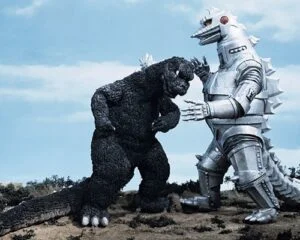
Jun Fukuda (1923 to 2000) became a director after working as an assistant director under Hiroshi Inagaki and Ishiro Honda. He made his first Toho special effects film with “The Secret of the Telegian” in 1960, and directed five Godzilla films, from “Ebirah, Horror of the Deep” to “Godzilla vs. Mechagodzilla.” A craftsman of entertainment films who also made spy movies starring Akira Takarada, he was known for putting monster battles front and center. In later years he was harsh on his own Godzilla films, saying the only truly successful one was Honda’s original.
Kazuki Omori and Koichi Kawakita
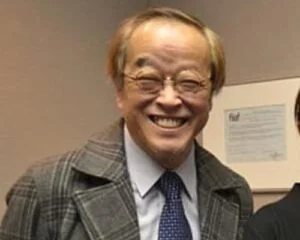
Kazuki Omori (1952 to 2022) was born in Osaka. He made independent films while studying at Kyoto Prefectural University of Medicine, won the Kido Award in 1977 for his screenplay “Orange Road Express,” and made his commercial debut the following year. For “Godzilla vs. Biollante,” he wrote and directed a story based on a public submission, turning it into a mature film about genetic engineering. He also wrote and directed “Godzilla vs. King Ghidorah,” making him one of the people who set the direction of the Heisei series.
Koichi Kawakita (1942 to 2014) learned special effects under Eiji Tsuburaya and served as special effects director on all six Heisei era films in the set, from “Godzilla vs. Biollante” to “Godzilla vs. Destoroyah.” One story tells how, for “Godzilla vs. King Ghidorah,” he prepared larger miniatures in an attempt to recreate the Fukuoka scene Tsuburaya had filmed for “Rodan.”
Masaaki Tezuka
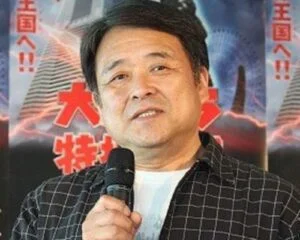
Masaaki Tezuka is a director who openly calls himself a huge Godzilla fan. He made his directorial debut with “Godzilla vs. Megaguirus” in 2000, then directed “Godzilla Against Mechagodzilla” in 2002 and “Godzilla: Tokyo S.O.S.” in 2003. Three of the five Millennium era films in the box are his. The last two, centered on Type-3 Kiryu built from the bones of the original Godzilla, are known as the Kiryu duology.
Actors Who Shaped the Godzilla Final Box Films
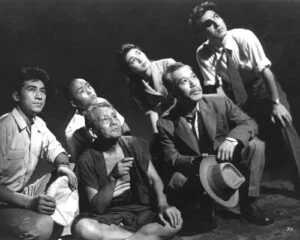
Next, we introduce six actors who are essential to the films in the set.
Akira Takarada and Akihiko Hirata
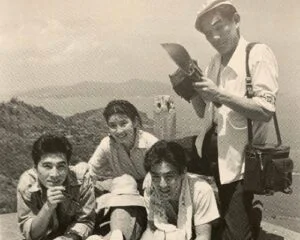
Akira Takarada (1934 to 2022) played Hideto Ogata, an engineer with a South Seas salvage company, in the original “Godzilla,” which was his first leading role in a film. Having spent his childhood in Harbin in former Manchuria and been shot by a Soviet soldier just after the war ended, he later devoted himself to a stage reading that shared his wartime experiences. In the box, he also played the lead in “Mothra vs. Godzilla,” “Invasion of Astro-Monster,” and “Ebirah, Horror of the Deep,” making him the face of Showa era Godzilla.
Akihiko Hirata (1927 to 1984) had an unusual background: he graduated from the Faculty of Law at the University of Tokyo and worked at a trading company before joining Toho in 1953 as one of its New Face actors. In the original film, he played Dr. Daisuke Serizawa, the inventor of the Oxygen Destroyer, the weapon that defeats Godzilla. His intelligent, composed presence led to many scientist roles, and he also appeared in “King Kong vs. Godzilla” and “Terror of Mechagodzilla.”
Kenji Sahara and Hiroshi Koizumi
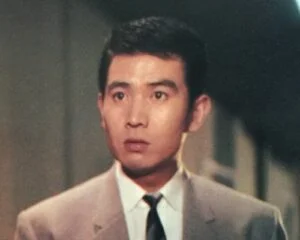
Kenji Sahara signed an exclusive contract with Toho in 1954 and appeared in the original “Godzilla” in roles such as a newspaper reporter. He appeared in 13 films from the original through “Godzilla: Final Wars” in 2004, more than any other actor in the series, and is known as Mr. Toho Tokusatsu. In the box, he plays major roles in films such as “King Kong vs. Godzilla.”
Hiroshi Koizumi played Tsukioka, the seaplane pilot who is the hero of the second film, “Godzilla Raids Again.” He also appeared in “Mothra vs. Godzilla” and “Ghidorah, the Three-Headed Monster,” and in “Godzilla: Tokyo S.O.S.” in 2003 he returned, more than 40 years later, to the role of Shinichi Chujo that he had played in the 1961 film “Mothra.” He appears in both the earliest and the final films in the box.
Megumi Odaka and Yumiko Shaku

Megumi Odaka (born 1972) entered show business after winning the grand prize at the 2nd Toho Cinderella Audition. She first appeared as Miki Saegusa, a girl with psychic powers, in “Godzilla vs. Biollante,” and went on to play the same role in all six Heisei era films through “Godzilla vs. Destoroyah.” In 2023, she returned to film for the first time in 28 years in “HOSHI 35 Hoshikuzu,” a monster movie made to celebrate the 35th anniversary of her debut.
Yumiko Shaku played the lead, Akane Yashiro, in “Godzilla Against Mechagodzilla” in 2002. Her character carries the guilt of a mistake that cost her superior officer his life, and faces Godzilla as the operator of Kiryu. She returned to the same role in “Tokyo S.O.S.” and left a strong impression as the heroine of the Millennium era.
Other Godzilla Home Video Releases to Compare
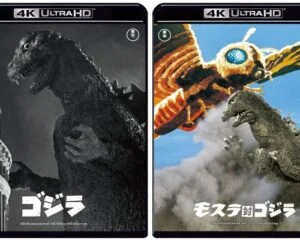
Besides the Final Box, other releases also let you enjoy Showa and Heisei era Godzilla films together. The main ones are listed below in order of release.
| Title | Publisher | Release Period | Format | Key Features |
| Godzilla DVD Collection I to V | Toho | Released in stages from January 2008 | DVD box sets, 5 volumes | Box sets divided by era. Vol. I has 5 discs and Vol. II has 7, with Vol. II also including a collection of unused Toho special effects footage |
| Toho Tokusatsu Blu-ray Selection | Toho | From September 2009 | Individual Blu-ray releases | Brought the original “Godzilla” and other titles to Blu-ray for the first time |
| Toho Tokusatsu Movie DVD Collection | DeAgostini Japan | ― | Biweekly magazine with DVD | Originally planned at 55 issues, covering Toho special effects films beyond Godzilla |
| 60th Anniversary Editions | Toho | 2014 | Individual DVD and Blu-ray releases | Added new extras such as audio commentary by director Masaaki Tezuka and Yumiko Shaku |
| Godzilla All Movie DVD Collector’s Box | Kodansha | July 2016 to October 2018 | Biweekly magazine with DVD, 61 volumes | Full-size reproductions of original pamphlets and posters; also includes Toho Champion Festival versions and overseas versions |
| 4K Remastered Editions | Toho | October to December 2023 | Individual 4K Ultra HD Blu-ray and Blu-ray releases | Seven films, including “Godzilla” and “Mothra vs. Godzilla,” remastered in 4K |
The 4K remastered “Godzilla” includes the never-before-used film and the composite shot examination from the Final Box bonus discs, upconverted to HD. Compared with these releases, the Final Box stands out for how much it brings together in one box: 27 films, three bonus discs, and the Godzilla Head.
The Appeal of the Godzilla Final Box
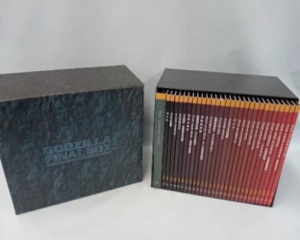
The Godzilla Final Box is a limited production DVD box released by Toho in 2005 to celebrate Godzilla’s 50th anniversary. It contains 27 films, from the original “Godzilla” of 1954 to “Godzilla: Tokyo S.O.S.” of 2003.
Along with films from the Showa, Heisei, and Millennium eras, it also includes three “Godzilla Special Archives” discs of Godzilla-related footage. It is a commemorative DVD box that lets you look back on nearly 50 years of Godzilla film history in one set.
▼ ▼HD POPIDOL STORE▼ ▼


コメント