Whether you are buying your first One Piece piece or valuing a collection, knowing how to research real market prices protects you from overpaying — and helps you recognize a genuinely good deal. This guide shows the research methods collectors actually use, with real examples from our own inventory.
- Understanding Market Value: Why Sold Prices Are Your Compass
- Step-by-Step Guide: Leveraging eBay’s Sold/Completed Listings
- Key Factors Influencing a Figure’s Market Value: Condition, Box, and Edition
- Common Pitfalls to Avoid in Your Value Research
- Useful Price Research Resources
- Real One Piece Examples From Our Inventory
- Frequently Asked Questions
Understanding Market Value: Why Sold Prices Are Your Compass

When diving into the world of One Piece figure collecting, whether you’re looking to acquire a new treasure or part with an old one, understanding true market value is paramount. Many collectors make the mistake of looking at active listings – figures currently for sale – and assuming those asking prices represent the actual value. However, an asking price is merely a seller’s hope; it doesn’t reflect what a buyer is willing to pay.
The real barometer of market value lies in *sold prices*. These are records of completed transactions, demonstrating what actual buyers have paid for specific One Piece figures. These completed sales reflect real supply and demand dynamics, giving you the most accurate snapshot of what a figure has recently commanded in the marketplace. Focusing on sold prices helps you make informed decisions, whether you’re setting a fair price for your own item or evaluating if a seller’s asking price is reasonable.
Step-by-Step Guide: Leveraging eBay’s Sold/Completed Listings

eBay is an invaluable resource for researching the market value of One Piece figures, thanks to its extensive archive of sold and completed listings. Here’s how to effectively use it:
- Navigate to eBay: Open your web browser and go to eBay.com (or your regional eBay site like ebay.jp).
- Search for Your Figure: In the search bar, type in the name of the specific One Piece figure you’re researching. Be as precise as possible, including the character name, figure line (e.g., P.O.P, Ichiban Kuji, Figuarts ZERO), and any specific edition details (e.g., “Luffy Gear 5 Megahouse P.O.P”).
- Apply the Filters: Once your search results appear, look for the filters section, usually located on the left-hand side of the page. Scroll down until you find the “Show only” or “Filter results” options.
- Select “Sold Items” and “Completed Items”: Check the boxes for both “Sold Items” and “Completed Items.” Applying these filters will narrow your results to only those listings that have recently ended, regardless of whether they sold or not.
- Analyze the Results: Listings with prices shown in green indicate items that successfully sold and show the price they sold for. Listings with prices in black indicate items that did not sell. Pay closest attention to the green prices, as these are your market value indicators. Review multiple recent sales to get a realistic average and identify trends.
- Refine Your Search: If you get too few results, try broadening your search terms. If you get too many, try adding more specific details. Remember to adjust for authenticity – ensure the items you’re comparing are authentic Japanese figures, not bootlegs.
Key Factors Influencing a Figure’s Market Value: Condition, Box, and Edition

When analyzing sold listings, it’s crucial to consider several factors that significantly impact a One Piece figure’s value. Not all figures are created equal, even if they depict the same character.
- Figure Condition: This is perhaps the most obvious factor. A figure that is new and factory sealed (NIB – New In Box) will almost always command a higher price than one that has been opened (MIB – Mint In Box, or CIB – Complete In Box), displayed, or shows signs of wear, dust, fading, or damage. Even minor scratches or missing accessories can drastically reduce value. Always compare figures of similar condition.
- Original Box and Packaging: For many collectors, the original box is nearly as important as the figure itself. A figure with its original, undamaged box and all inserts (CIB/MIB) is typically more desirable and valuable than a loose figure (without box). The condition of the box itself – whether it’s pristine, creased, or torn – also plays a role in the overall value.
- Edition and Rarity: One Piece figures come in various lines and editions, and some are inherently more valuable than others. Factors include: the manufacturer (e.g., MegaHouse P.O.P figures often differ significantly in price from Banpresto or Bandai Ichiban Kuji figures), whether it’s a first release or a re-release, limited-edition exclusives, or specific sculpt variations. Limited production runs or figures released for special events tend to be rarer and command higher prices. Always ensure you are comparing the exact same edition of a figure.
Common Pitfalls to Avoid in Your Value Research
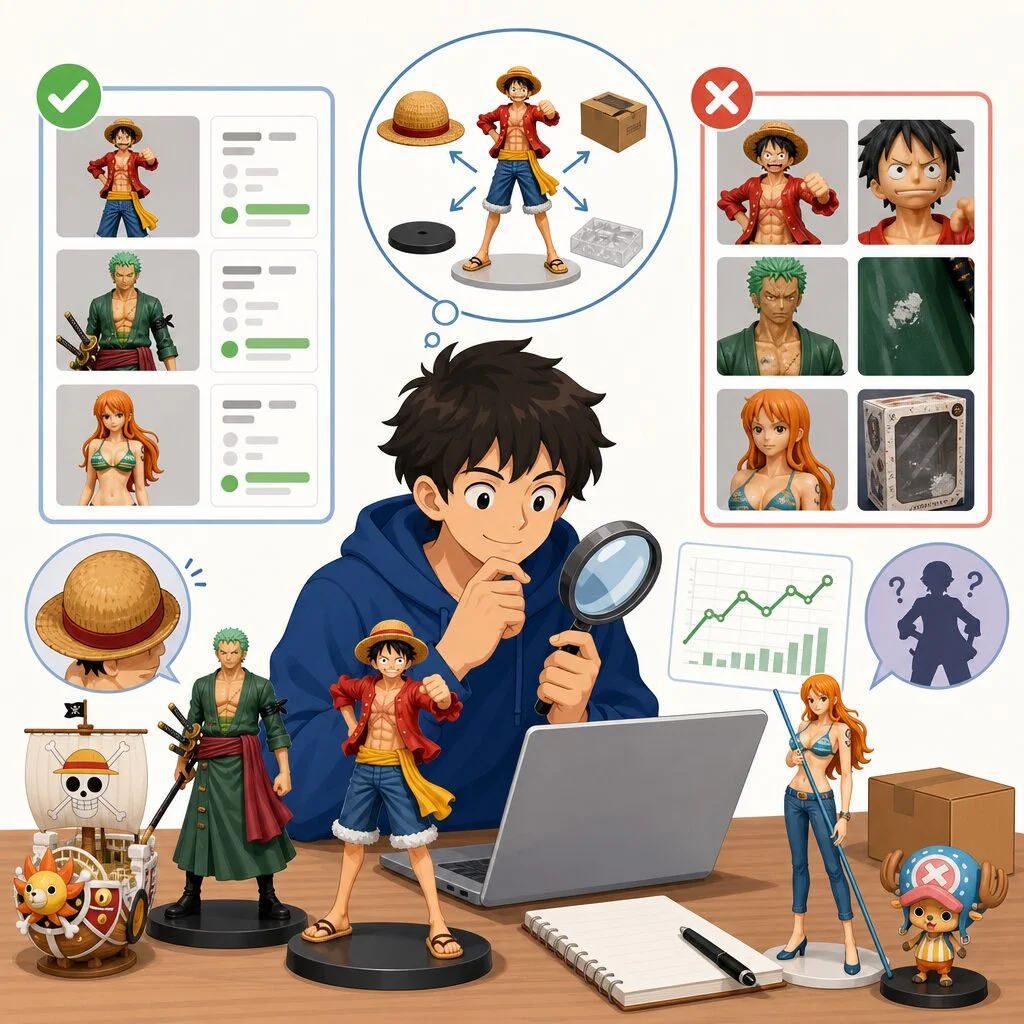
Even with access to sold data, misinterpretations can lead to inaccurate value assessments. Be mindful of these common mistakes:
- Comparing Different Editions or Manufacturers: This is a frequent error. A “One Piece Luffy” figure from one manufacturer (e.g., a Banpresto WCF or Ichiban Kuji prize figure) cannot be directly compared in value to a “One Piece Luffy” figure from a premium line by another manufacturer (e.g., a MegaHouse Portrait.Of.Pirates EX or Limited Edition). These are distinct products with different scales, sculpt quality, materials, and original price points, resulting in vastly different market values. Always ensure you are comparing identical products.
- Ignoring Shipping, Import Costs, and Taxes: The final price a buyer pays for an international purchase often includes more than just the figure’s listing price. Shipping costs, customs duties, and import taxes can add a significant percentage to the total. When looking at eBay’s sold prices, remember that the “sold for” amount usually reflects the figure’s price plus domestic shipping, but international buyers also incur additional charges that are not always transparent in the final sold price displayed to everyone. This means a figure may have cost an international buyer considerably more than the raw sold price suggests, which is an important consideration for both sellers and buyers, particularly when sourcing authentic figures directly from Japan.
Useful Price Research Resources
- PriceCharting — Historical price tracking for video games and trading cards.
- TCGplayer — Market prices for trading card games, updated from live marketplace sales.
- Mandarake — Japan’s largest secondhand collectible chain — useful as a Japanese market reference.
These are independent third-party resources; we are not affiliated with them.
Real One Piece Examples From Our Inventory
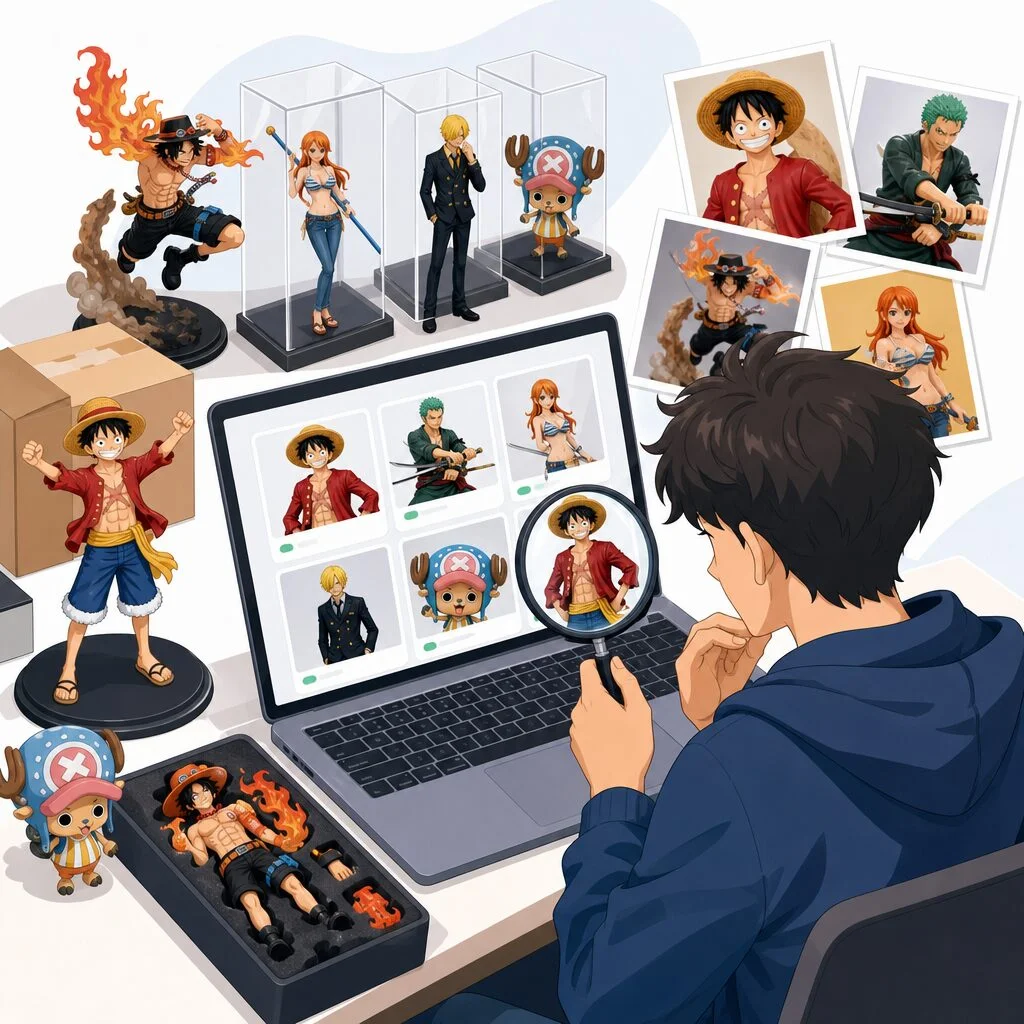
Below are current listings from our own stock — use the research methods above to compare them against recent sold prices yourself. Every item is inspected in Japan before shipping.
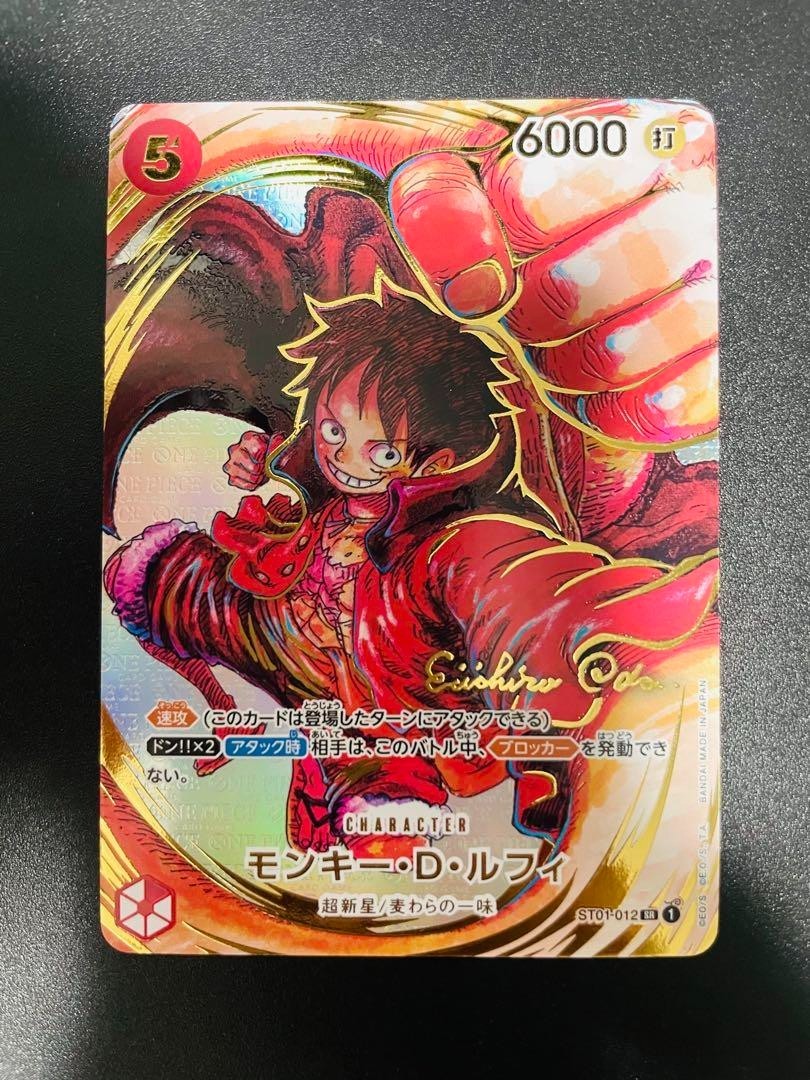
One Piece Card Game Monkey D. Luffy ST01-012 Signed by Eiichiro Oda OP-05 SR — current price $9124.00
One Piece Card Game Roronoa Zoro Parallel Rare Manga Art Comic OP06-118 BANDAI — current price $4491.00
One Piece Carddass Monkey D. Luffy Hyper Battle Pack vol.1 C01 Bandai 1999 Hobby — current price $3975.00
Prices shown are our current asking prices at the time of writing, not a statement of market value.
Frequently Asked Questions
How do I find out what a One Piece item is actually worth?
Look at completed, sold listings rather than current asking prices. Asking prices show what sellers hope for; sold prices show what buyers actually paid. Compare only the same edition and the same condition, and give more weight to recent sales.
How recent should the sold listings I compare be?
Prefer sales from the last few months. Collectible markets move with re-releases, anniversaries and new anime seasons, so a price from two years ago can be misleading in either direction.
Does the box matter when valuing One Piece collectibles?
Yes. An opened piece without its original box usually trades well below a sealed one, and later reissues usually trade below first releases. Confirm which version a sold listing actually was before using it as your reference.
Do sold prices include shipping from Japan?
Not necessarily — shipping and any import charges in your own country are usually on top of the sale price. Add them in before deciding whether a listing is a good deal.
コメント