
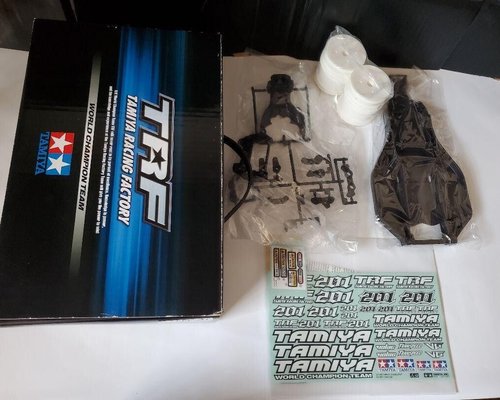
The Tamiya TRF201 chassis kit occupies a special place in the world of competitive R/C off-road racing — it represents Tamiya’s serious push into the pro-level 2WD buggy category, a segment long dominated by American brands. For collectors of vintage and modern Tamiya kits alike, the TRF201 is a milestone: a Japanese-engineered response to the demands of IFMAR-class racing, produced in relatively modest numbers compared to Tamiya’s mass-market lineup. Finding one as a complete chassis kit today, especially in pre-owned but well-preserved condition, is a genuine treat for hobbyists who appreciate engineering heritage.
Japanese scale R/C kits like this one differ meaningfully from their international counterparts. Tamiya’s domestic-market releases often include richer manual documentation, Japan-only decal sheets, and packaging that Japanese collectors preserve with obsessive care. Compared to overseas repackages, the original Japanese boxing often retains sharper printing, unmodified part trees, and factory-sealed hardware bags — all details serious collectors notice immediately when a kit is shipped from Japan.

About This Item
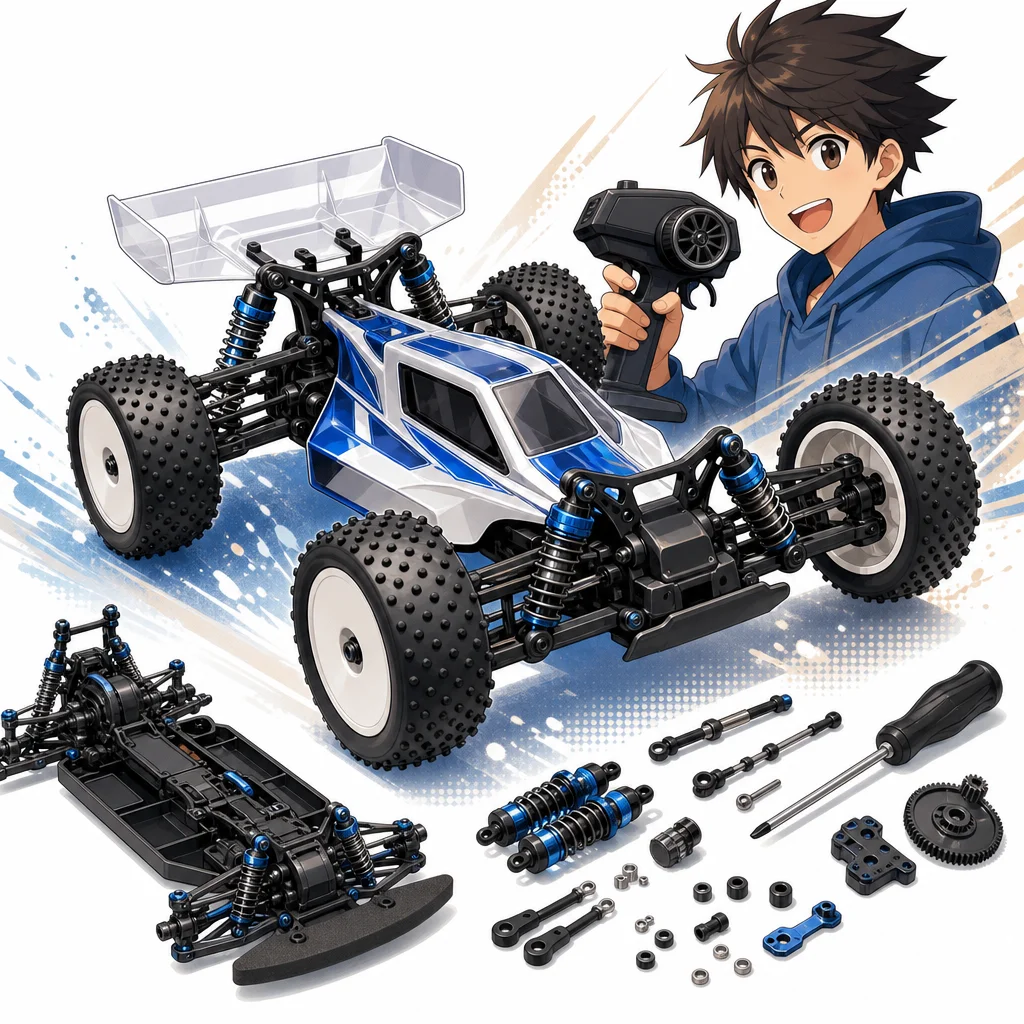
The Tamiya TRF201 is a 1/10 scale radio-controlled 2WD off-road racing buggy chassis kit, first released in 2010 under item number 42167. It belongs to Tamiya’s TRF (Tamiya Racing Factory) line — the company’s flagship competition series developed with direct input from Tamiya’s factory race team drivers. The TRF201 was designed by Tamiya’s in-house race engineering group under the guidance of longtime TRF team manager Tsutomu Ohno, whose fingerprints are on virtually every TRF release of that era.
Mechanically, the TRF201 features a rear-motor 2WD layout, a lightweight molded composite chassis tub, a three-gear transmission for improved rotation, and CVA-style oil-filled dampers tuned for high-speed off-road tracks. The kit ships as a builder’s chassis — meaning the buyer supplies radio gear, ESC, motor, battery, tires, and body. In our experience handling TRF-series kits, this “builder’s spec” format is exactly what serious racers want, since it allows full electronics customization. We inspected this particular example for parts completeness, decal integrity, and hardware bag condition before listing. It arrives pre-owned but carefully inspected, shipped from Japan with the original manual and box components where present.
Key Details
- Manufacturer: Tamiya Inc. (Shizuoka, Japan)
- Series/Franchise: TRF (Tamiya Racing Factory) — Item 42167
- Type: 1/10 Scale R/C 2WD Off-Road Buggy Chassis Kit
- Condition: Pre-owned condition, carefully inspected before shipping
- Origin: Japan

The 1/10 TRF Franchise: Why Collectors Care
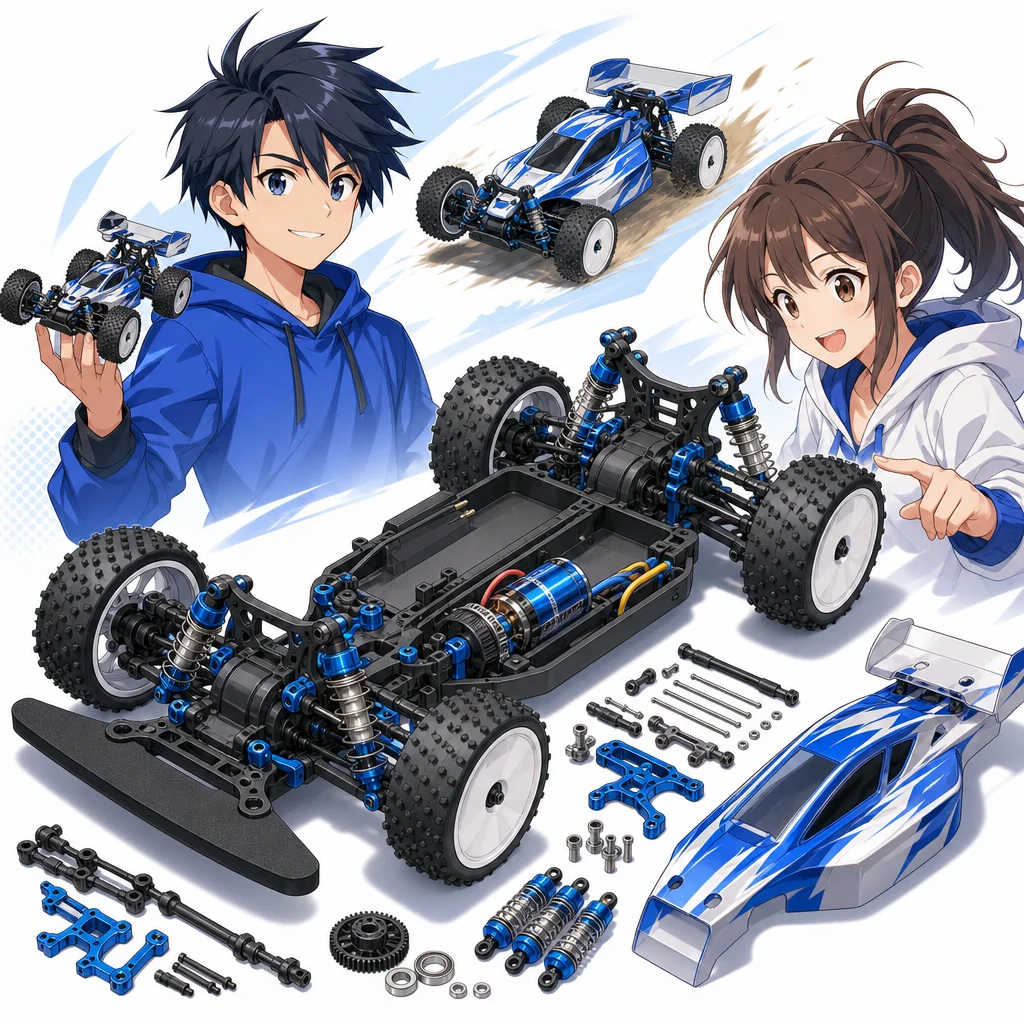
Tamiya founded the TRF sub-brand in the late 1990s, with the TRF414 touring car of 1998 widely regarded as the first true TRF-branded competition chassis. Since then, TRF has represented Tamiya’s uncompromised, race-first engineering philosophy — kits developed not for shelf appeal but for winning championships. According to Tamiya’s official product archive at tamiya.com, the TRF line has included touring cars, 1/8 on-road, and off-road buggies, with the TRF201 marking Tamiya’s serious re-entry into 2WD off-road after years of ceding that class to competitors.
The cultural weight of TRF within the Japanese R/C hobby cannot be overstated. In Japan, TRF drivers are treated with a reverence similar to factory motorsport teams — race results at events like the All Japan Championship directly influence retail interest in each kit. As reported by hobby publication RC World (a longstanding Japanese reference in the scene), the TRF201’s release generated significant enthusiasm because it gave amateur racers access to the same platform that TRF team drivers were campaigning internationally.
Rarity and Value Factors
The TRF201 was never a mass-produced kit in the way that Tamiya’s Grasshopper or Hornet were. Production numbers for TRF kits have historically run in the low thousands per production batch, and the TRF201 has been out of Tamiya’s active catalog for several years now. That scarcity, combined with the kit’s later evolutions (TRF201XR, TRF201XM), means an original TRF201 chassis kit in complete, unbuilt or lightly used condition commands respect on the secondary market. Factors that push value upward include: sealed hardware bags, unpunched decal sheet, original manual with no writing, intact box with minimal shelf wear, and the presence of the original inner tray. Kits that have been raced hard, even if functional, drop significantly in collector value — though they retain worth as spare-parts donors for owners maintaining a running TRF201.

Looking for this item? Every item at HD Toys Store Japan is:
- Shipped directly from Japan with tracking
- Carefully inspected for condition and authenticity
- Pre-owned condition documented with detailed photos
Collector’s Guide: What to Look For
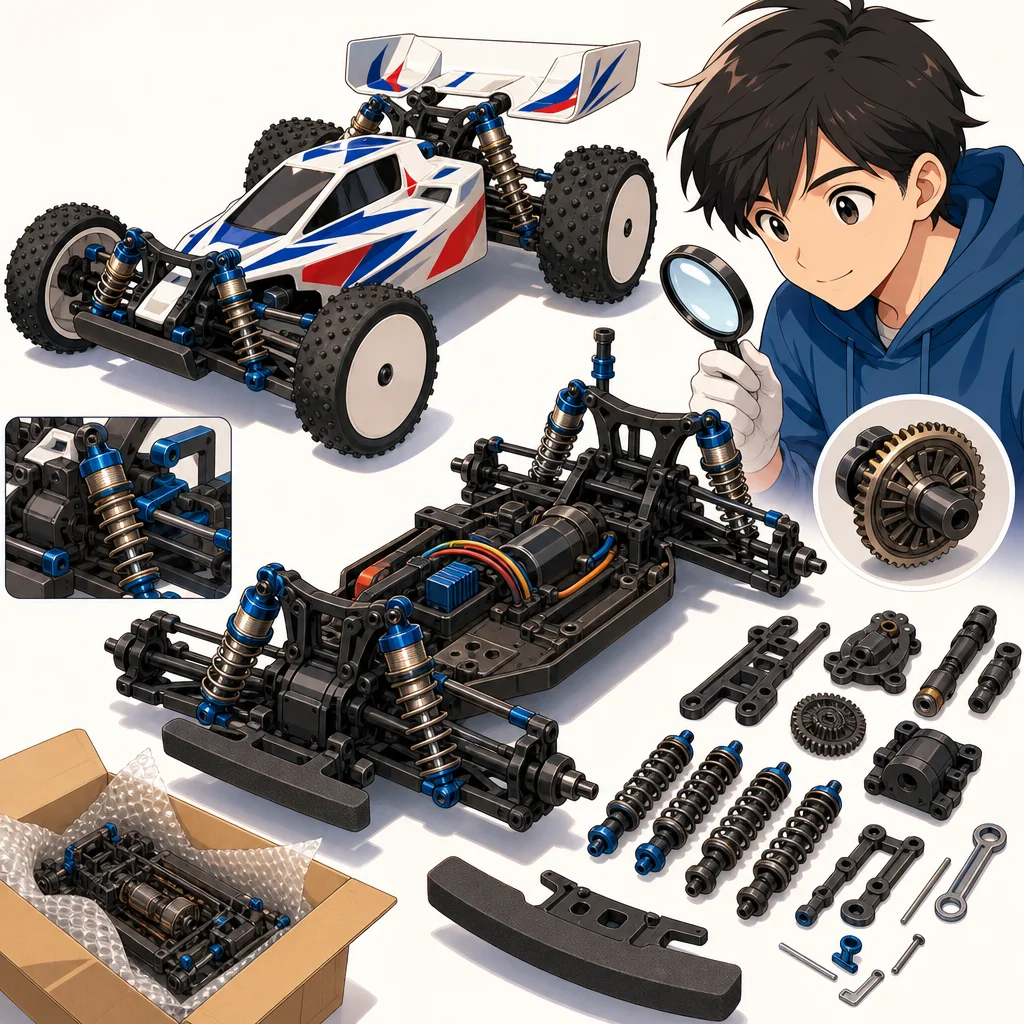
When evaluating a pre-owned TRF201 chassis kit, the inspection priorities differ from those of a display-only figure. This is a functional racing product, so both cosmetic and mechanical integrity matter. In my experience with TRF-series kits, the most common issues involve stripped screw threads in the composite chassis tub, worn ball differential shims, and dampers that have leaked and dried out during long storage. Always request photos of the chassis underside, the diff housing, and the shock towers before purchasing. If the kit is claimed as “new in box,” verify that the small parts bags are still factory-sealed — Tamiya uses distinctive clear polybags with printed part-tree numbers, and a resealed bag is usually obvious to a trained eye.
Also check that the manual — a substantial multi-page document in Japanese and English — is present and unmarked. Manuals for discontinued TRF kits are surprisingly hard to source separately, and their absence knocks 15–20% off resale value. For a helpful primer on evaluating Japanese R/C kits generally, browse more collector guides on our blog.
Condition Checklist
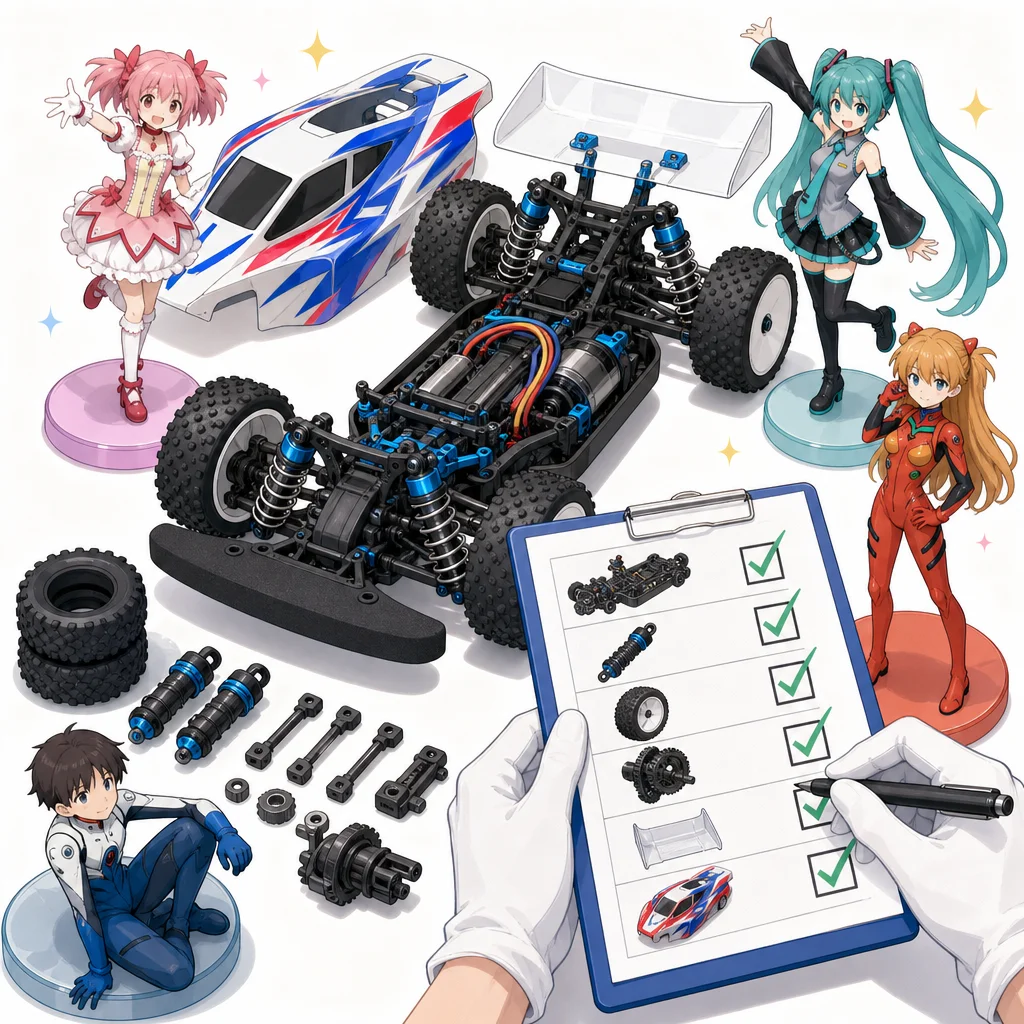
- Chassis Tub: Inspect for hairline stress cracks near the motor mount and battery strap posts.
- Suspension Arms: Check for whitening at the hinge pin bores, a sign of impact fatigue.
- Dampers: Confirm oil is present and shafts are not pitted or bent.
- Hardware Bags: Verify factory seals if sold as unbuilt; count screws against the manual BOM.
- Packaging: Original box, inner tray, manual, and decal sheet all significantly affect value.
Price Guide
Current market observation suggests the following ranges for the TRF201 chassis kit: heavily used or partial kits typically move at $120–180; complete built rollers in good working order sit around $220–320; unbuilt or lightly built kits with full documentation reach $380–500; and truly new-in-box, factory-sealed examples — genuinely rare at this point — can exceed $600 depending on buyer competition. The single largest price driver is completeness of the original box contents, followed closely by whether hop-up parts (aluminum bulkheads, carbon shock towers) are included. Regional pricing also matters: Japanese domestic listings tend to run 10–20% lower than U.S. or European auctions.
Similar Items Worth Exploring
Collectors drawn to the TRF201 typically also pursue several adjacent kits. The TRF211XM (2013) refined the mid-motor concept for slick tracks and represents the evolutionary next step; owning both makes a compelling display pairing. The Tamiya DB01 Durga shares suspension geometry philosophy but in a 4WD configuration, appealing to racers who want to compare platforms. Older collectors often hunt the Tamiya Dyna Storm (1992), a legendary Japanese-designed 2WD buggy whose competition DNA arguably paved the way for the TRF201 nearly two decades later. Finally, the TRF201XR — a factory hop-up variant with carbon fiber and aluminum upgrades — is the most sought-after descendant of this exact chassis. Building a small TRF-line collection tells a coherent engineering story that few other R/C manufacturers can match, and Tamiya’s parts backward-compatibility means many of these platforms remain runnable today.
Why Buy Japanese Collectibles from Japan?
Japanese collector culture places extraordinary value on preservation — original boxes, manuals, and even the tissue paper Tamiya wraps around chrome parts are commonly kept intact for decades. Japan-domestic releases also occasionally include serial-numbered team decals or promotional inserts that never reached export markets. Buying from Japanese specialist sellers means access to items handled by hobbyists who genuinely understand what they own. Authenticity is rarely an issue for TRF kits, but region-specific packaging variants, correct manual revisions, and unmodified factory hardware are all details a Japan-based seller can verify. Kits shipped from Japan also tend to arrive with superior internal packing — a small but meaningful courtesy.


Summary
The Tamiya TRF201 is more than a chassis — it’s a snapshot of Japanese race engineering at a specific competitive moment, and its scarcity today only strengthens its appeal. Whether you plan to build it, race it, or preserve it as a shelf piece within a broader TRF collection, this kit rewards careful ownership. Please contact our team if you have questions about authenticity or specific parts included with this listing, and refer to our returns policy for inspection guarantees.
Author: by Kenji Aramaki. Last reviewed: March 2025. Published: March 2025.
Never Miss New Arrivals from Japan
We add new pre-owned figures, toys, and collectibles every week. Sign up to get notified about new items, collector guides, and exclusive updates.
Free · No spam · Unsubscribe anytime

コメント