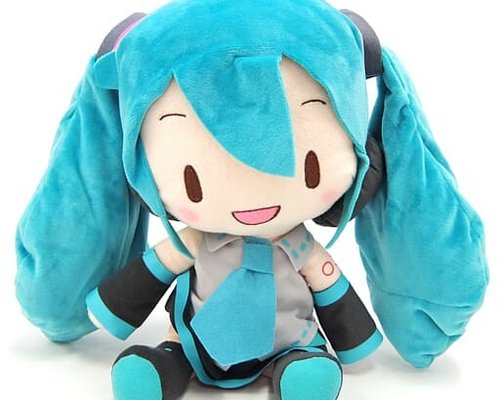
Every so often a piece of merchandise crosses the desk that reminds us why we fell for Japanese collectibles in the first place. This Hatsune Miku Big Jumbo Fuwa Fuwa Plush, produced by SEGA in 2016, is one of those items — a plush that feels less like a toy and more like a soft sculpture, capturing Miku’s silhouette at a scale most home displays rarely see. For plush collectors and Vocaloid fans, jumbo prize plushes from this era have quietly become sought-after pieces.
Japanese plush toys, particularly SEGA and Taito prize-line pieces, differ noticeably from Western character plush. The fabric selection tends toward brushed velour or “fuwa fuwa” (fluffy) fleece, stitching is tighter, printed details on the face are crisper, and tags carry precise catalog numbers tying the item to a specific release wave. That level of production discipline is why these prize-only items age gracefully and hold collector interest years after their arcade run.

About This Item
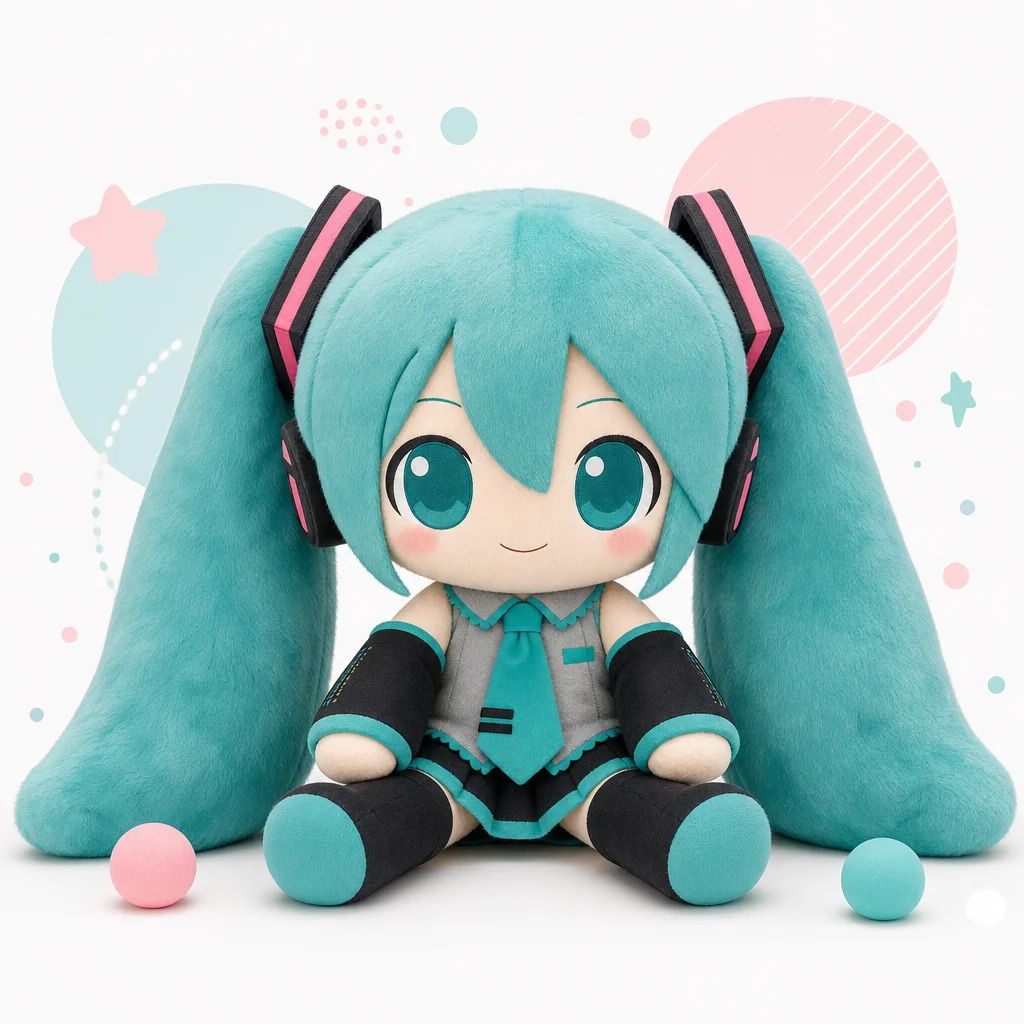
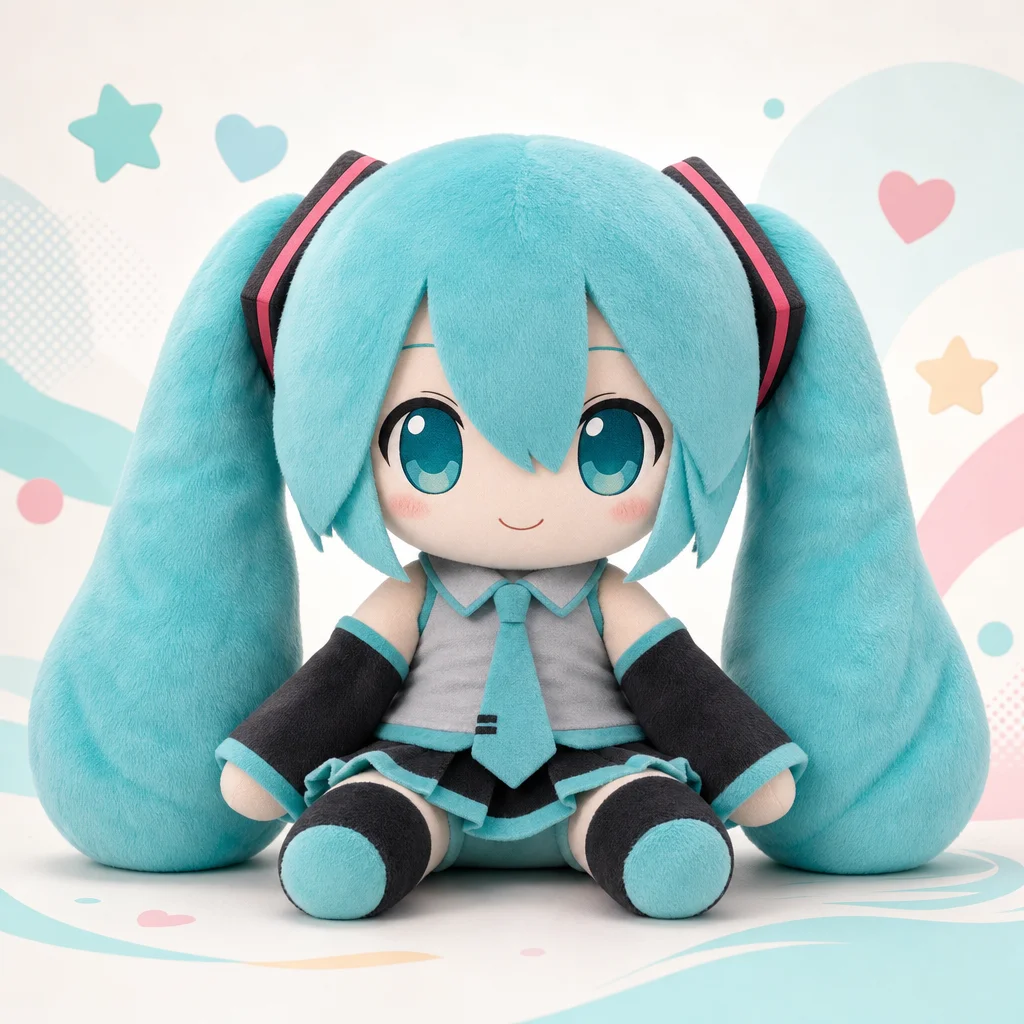
This is the Hatsune Miku Big Jumbo Fuwa Fuwa Plush Doll, manufactured by SEGA and distributed to Japanese arcades through the company’s prize (景品) network in 2016. It belongs to SEGA’s long-running Vocaloid plush line, which the company produced under official license from Crypton Future Media. The “Big Jumbo” designation refers to its oversized format — significantly larger than the standard nendoroid-scale or 20 cm prize plush most fans are familiar with — while “Fuwa Fuwa” describes the specific soft, brushed-fleece fabric SEGA reserved for its higher-tier plush releases.
Miku is depicted in her classic default outfit: teal twintails, black sleeveless top with tie, and the signature arm sleeves. Facial features are screen-printed rather than embroidered, which allows for the fine detail on her eyes and blush that fans recognize from official art. Because these were prize-only items, they were never sold at retail — the only way to obtain one originally was to win it from a UFO catcher (crane game) or purchase it second-hand after the arcade run concluded. This particular piece is offered in pre-owned condition, shipped from Japan, and was carefully inspected before listing.
Key Details
- Manufacturer: SEGA (official Crypton Future Media license)
- Series/Franchise: Hatsune Miku / Vocaloid
- Release Year: 2016, Japanese arcade prize distribution
- Type: Plush & Soft Toys — Big Jumbo Fuwa Fuwa format
- Condition: Pre-owned condition, inspected before shipping
- Origin: Japan (arcade prize exclusive)


The Hatsune Miku Franchise: Why Collectors Care
Hatsune Miku debuted on August 31, 2007 as the flagship voicebank of Crypton Future Media’s Character Vocal Series, powered by Yamaha’s VOCALOID2 engine. Her original character art was designed by illustrator KEI, and within months of release she had transformed from a piece of music software into a cultural phenomenon. According to Crypton Future Media’s official history (see crypton.co.jp), Miku’s design was intentionally left semi-open, which enabled the massive fan-creative ecosystem that followed — millions of songs, illustrations, and 3D models on platforms like Niconico and Piapro.
That creative openness is precisely what drives the collectibility of official Miku merchandise. Because so much Miku content is fan-made, officially licensed physical goods — particularly ones tied to a specific year or event — function as anchor points for collectors trying to document the character’s commercial history. SEGA’s involvement is especially significant: the company developed the Project DIVA rhythm game series (2009 onward) and, through that partnership, produced arcade prize merchandise for over a decade. In our experience handling these pieces, SEGA’s 2015–2017 prize plushes represent a peak-quality window before production later shifted to smaller, more cost-conscious formats.
Rarity and Value Factors
Prize-line plush have an unusual rarity curve. Production runs were often large — sometimes tens of thousands of units distributed to arcades nationwide — but attrition is severe. Most were won by casual players, kept briefly, then discarded or damaged. The survival rate for a 2016 jumbo plush in clean, tag-attached condition is a small fraction of the original run. Factors that push value upward include: the original paper hang-tag still attached (arcade prize tags are notoriously easy to lose), no fading on the teal hair (UV exposure is the most common defect), no compression flattening on the fluffy fabric nap, and clean printed facial features without rubbing. Jumbo-format Miku plush from the mid-2010s have appreciated modestly on the Japanese second-hand market, with tagged examples routinely outperforming untagged ones by a factor of two or more.


Looking for this item? Every item at HD Toys Store Japan is:
- Shipped directly from Japan with tracking
- Carefully inspected for condition and authenticity
- Pre-owned condition documented with detailed photos
Collector’s Guide: What to Look For
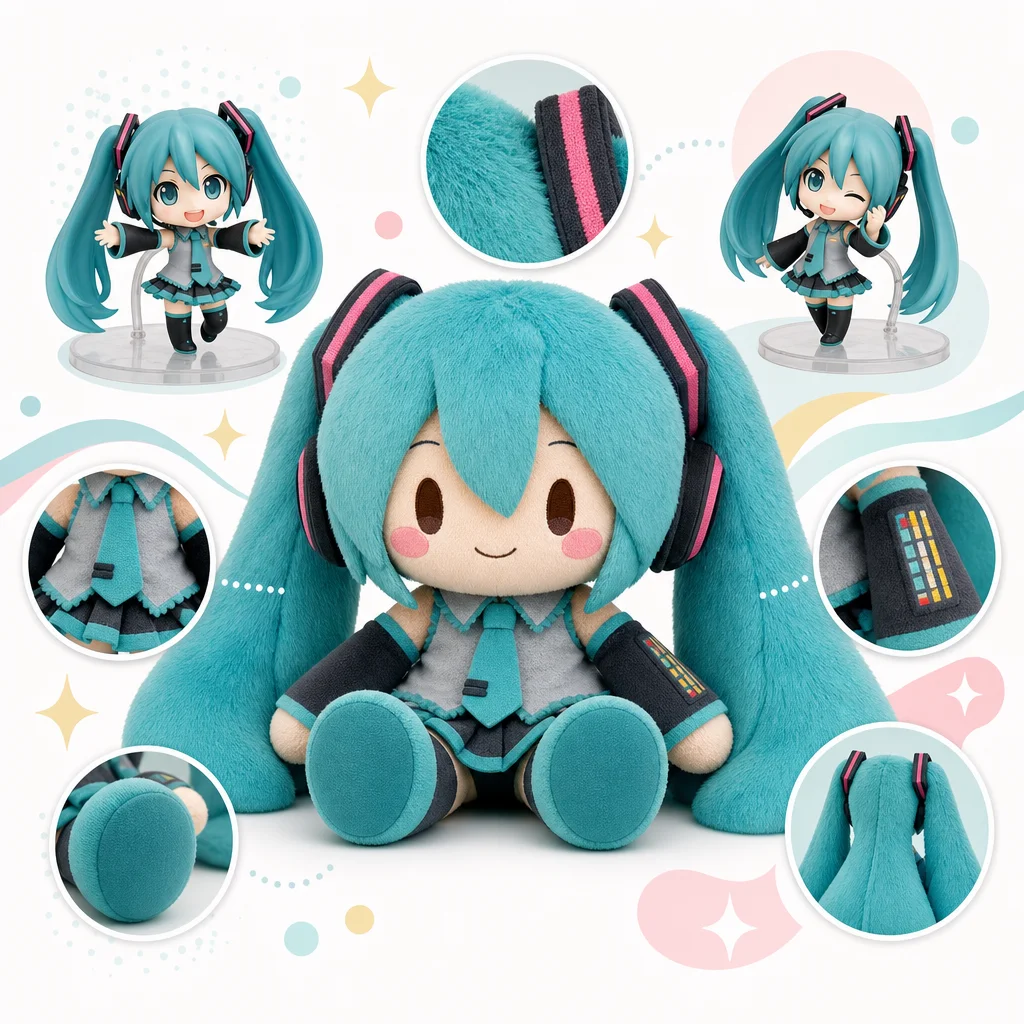
Evaluating a used jumbo plush requires a different eye than assessing a boxed figure. We inspected this piece hands-on for the specific defects that plague plush of this age and size. First, examine the twintails — they are the heaviest part of the sculpt and often show creasing or permanent bend from years of being stored on a shelf leaning against a wall. Second, run a hand across the fabric nap in multiple directions; healthy fuwa-fuwa fleece should recover its loft, while heavily played-with examples feel matted and thin. Third, look closely at the printed face under bright light. Miku’s eye printing uses layered inks, and rubbing typically begins at the outer eye corners before spreading.
Also check the seams around the neck tie and arm sleeves, which are stress points during handling, and inspect the base of each twintail for loose stitching. Any hang-tag or manufacturer tag adds meaningful value, so confirm both the sewn-in JAN/catalog tag inside the seam and the external paper prize tag if it exists. Smell matters too — arcade storage environments and smoking households leave odors that are difficult to remove from fleece. Browse more collector guides on our blog for deeper condition-grading references across other plush categories.
Condition Checklist
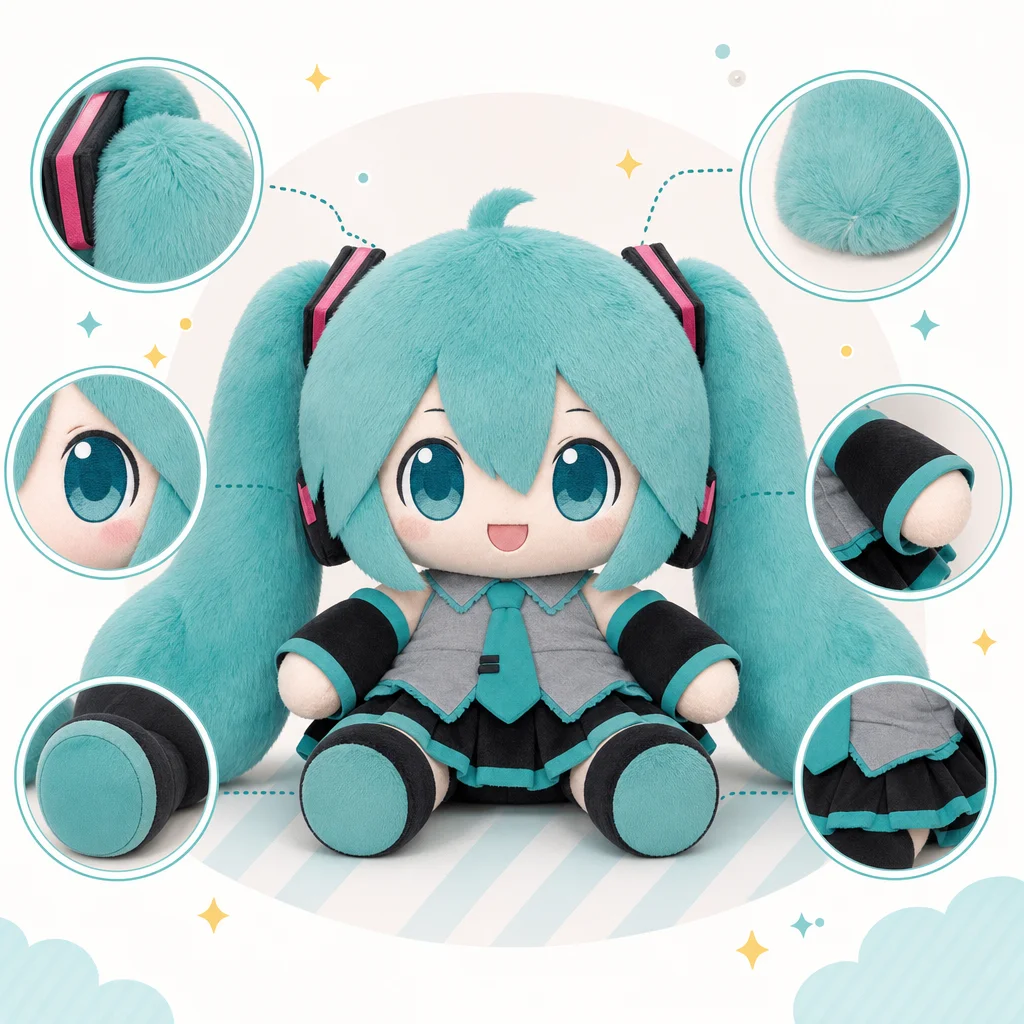
- Fabric loft: Nap should recover when brushed; matting indicates heavy handling
- Color fidelity: Compare teal hair against reference photos for UV fade
- Face print: Check eyes and blush marks for rubbing or ink transfer
- Seams and twintails: Verify stitching integrity at stress points
- Tags: Original sewn-in tag and paper hang-tag significantly affect value
Price Guide
For SEGA 2016 Miku jumbo plush in the Japanese second-hand market, typical price bands run roughly as follows. Played-with condition with visible wear or missing tags: approximately $35–55. Good condition with clean fabric and intact face print: $60–95. Near-mint with original paper prize tag still attached: $110–160, sometimes higher for particularly clean examples that surface years after release. The biggest single price driver is the paper hang-tag, followed by fabric loft and face-print integrity. Shipping weight is also worth budgeting for — these plush are bulky, and international carriage from Japan usually adds meaningful cost.

Similar Items Worth Exploring
Collectors drawn to this piece typically build outward in a few directions. Taito’s competing “Kuji” and “SPM” (Super Premium) figure lines produced parallel Miku prize releases in the same era and complement SEGA plush nicely on a shelf. Furyu’s plush and figure prize items round out the third major prize manufacturer of the period. Within SEGA’s own catalog, look for the seasonal variants — sakura Miku, summer festival Miku, and Snow Miku plush releases tied to the annual Sapporo Snow Festival are particularly desirable. For fans focused on the Project DIVA game connection, the Nendoroid line by Good Smile Company and the Figma articulated figures offer scale-model counterparts that display well alongside a jumbo plush centerpiece.

Why Buy Japanese Collectibles from Japan?
Prize items like this one were only ever distributed to Japanese arcades. They never entered Western retail channels, so any example found abroad originated in Japan and travelled through the second-hand market. Buying directly from a Japan-based specialist means the item goes through fewer hands, authentication is more reliable, and Japanese sellers generally hold licensed second-hand dealer permits (our license: Tokyo No. 308942319801) that require verified provenance. Japanese collectors also tend to store plush carefully — smoke-free rooms, minimal sun exposure, tags preserved — which is why Japan-sourced examples typically grade higher than examples that have already circulated overseas.


Summary
The 2016 SEGA Big Jumbo Fuwa Fuwa Miku is a genuinely satisfying piece to own — large enough to anchor a display, faithful to KEI’s original design, and increasingly hard to find with tags intact. For Vocaloid collectors documenting the SEGA prize era, it belongs on the shortlist. Contact our team if you have questions about authenticity or condition specifics, and refer to our returns policy for inspection guarantees before purchase.
Author: Kenji Morita, HD Toys Store Japan. Published: 2016 release reference. Last reviewed: February 2025.
Explore related collections
Browse all Plush & Soft Toys →
Never Miss New Arrivals from Japan
We add new pre-owned figures, toys, and collectibles every week. Sign up to get notified about new items, collector guides, and exclusive updates.
Free · No spam · Unsubscribe anytime
コメント