Because Pokemon is one of the most collected franchises, it is also one of the most copied. This guide walks through the checks collectors commonly use to evaluate authenticity and condition — the same points our staff in Japan look at when inspecting every item before it ships.
Official Markings and Licensing Indicators

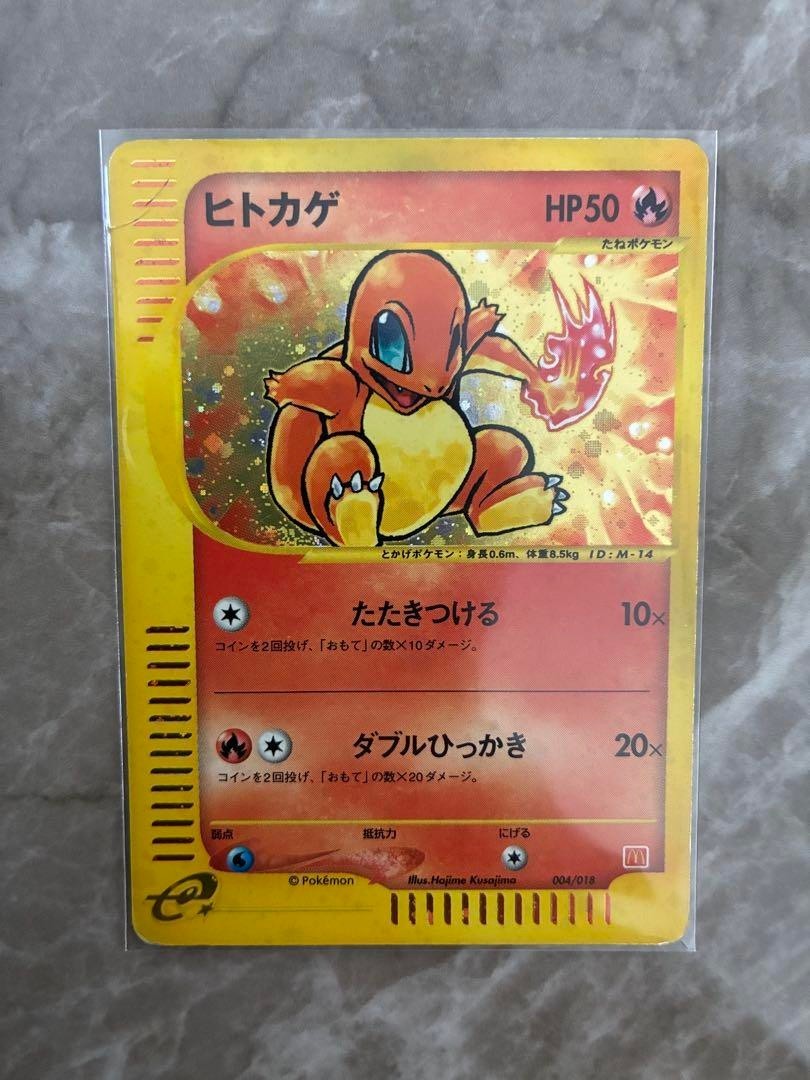
On authentic Pokémon Trading Cards, the copyright line on the card face is commonly printed in fine, crisp text and typically reads along the lines of “©[year] Pokémon / Nintendo / Creatures / GAME FREAK” for Japanese releases, with the exact wording varying by era. Modern Japanese cards also usually carry a small illustrator credit and, on many sets, a set symbol or collector number printed cleanly near the bottom edge.
Japanese-language cards are often distinguishable from English or other regional prints by the “ポケモンカードゲーム” branding on the back, and holo cards commonly show the pattern beneath the artwork rather than as a sticker on top. When comparing a suspect card, checking these markings against a known-genuine card from the same set is generally a useful first step, though markings alone are rarely conclusive.
Packaging and Print Quality

Sealed Japanese booster packs and boxes typically feature sharp, high-resolution printing with saturated but not oversaturated colors, and the foil accents on packaging are usually smooth and evenly reflective. Genuine sealed booster boxes commonly have a factory shrink wrap that fits tightly, and the flaps are often sealed with clean glue points rather than tape. Booster pack seams tend to be straight and consistent across a print run.
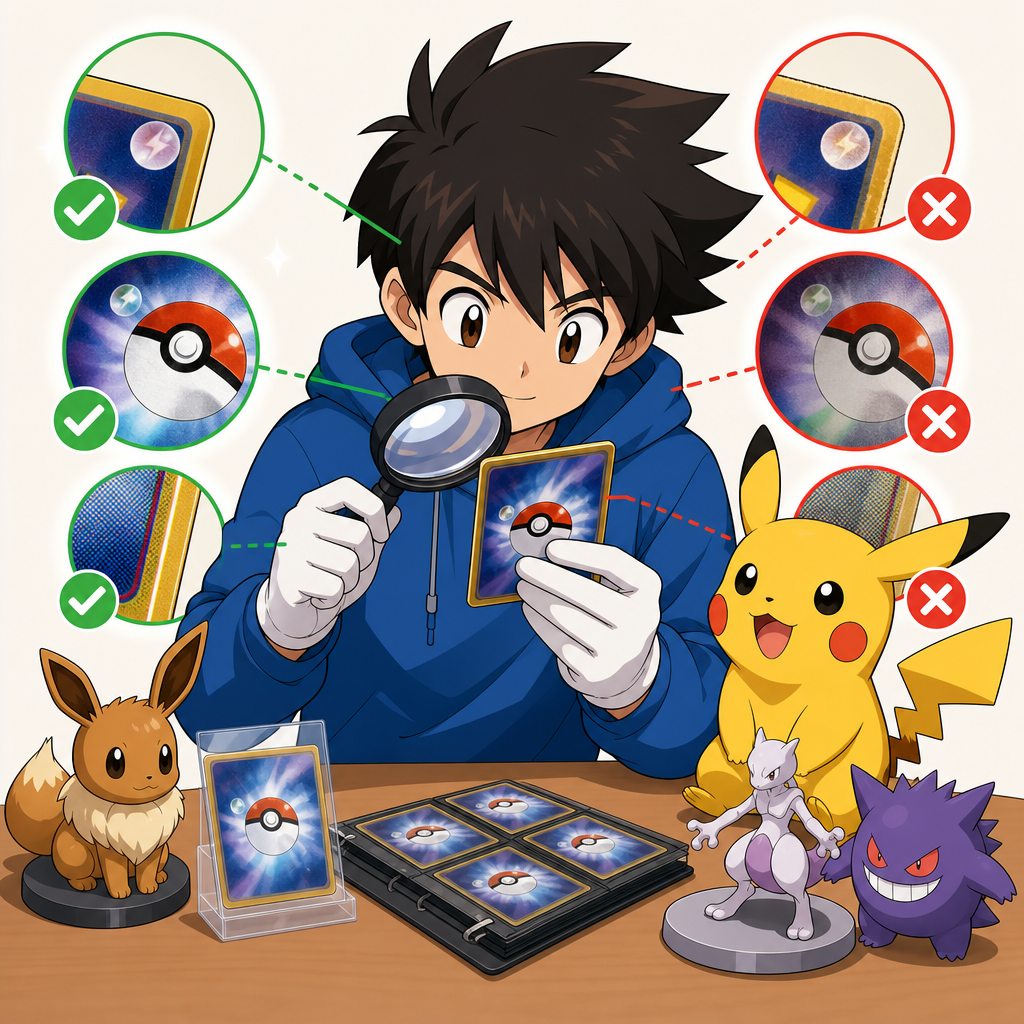
For individual cards, authentic prints commonly show crisp text edges under magnification, with dot patterns that appear regular rather than blurry or pixelated. The card back’s blue color is often a specific shade that collectors describe as consistent within a print era; noticeable purple, green, or washed-out tones can be a red flag worth investigating further.
Material, Edges, and Holo Tells

Genuine Pokémon cards are commonly built with a black or very dark core layer sandwiched between the printed faces. A useful signal many collectors use is the “light test” — holding a card up to a bright light; authentic cards typically block most of the light due to that dark core, while many counterfeits let noticeably more light through. Edges on real cards often appear smooth and uniform, with a subtle dark line visible when viewed from the side.
Holographic and full-art cards usually have a distinctive texture or gloss that varies by era: older Japanese holos commonly show a swirling or cosmos-style pattern under the artwork, while modern textured cards often have raised patterns you can feel with a fingernail. Cards that feel unusually thin, overly glossy on both sides, or slippery may warrant closer inspection.
Common Bootleg Red Flags for Pokémon TCG

Frequently reported red flags include obviously incorrect HP values, misspelled attack names, energy symbols that look off-center or the wrong color, and cards printed in a language that doesn’t match the set’s known releases. “Oversized” jumbo cards, joke cards with impossible stats, and cards that combine artwork from different eras are also commonly counterfeit or novelty items rather than tournament-legal prints.
Bulk lots sold at prices well below typical market value for chase cards should generally be approached with caution. Reproductions of rare Japanese promos — such as classic trophy cards or early WOTC-era equivalents — circulate widely, so high-value vintage cards are often best purchased from sellers who can provide clear photos of front, back, edges, and the light test.
Japanese Secondhand Condition Grading

Japanese secondhand sellers commonly use a letter-based grading system for cards and sealed products. “Unopened” (未開封) generally indicates factory-sealed packs, boxes, or decks, though even sealed items can show shelf wear. “A” rank typically describes cards in near-mint condition with only very minor handling marks, while “B” rank often covers cards with light play wear such as small edge nicks, minor whitening, or slight surface scratches visible under angled light.
“C” rank commonly indicates noticeable wear — creases, heavier whitening, scuffs, or writing — and “junk” (ジャンク) is generally reserved for cards with significant damage, water marks, or heavy play wear that are typically sold as-is. Grading standards vary between shops, so reviewing the seller’s photos and item description carefully is usually more reliable than relying on the letter grade alone.
Disclaimer: This guide shares general knowledge points that collectors commonly use to evaluate items. It is educational content, not a formal authentication service, and individual items should always be judged on their own evidence. Details can vary by production run and era.
Free Download: Our Full Authenticity Guide (PDF)

Download the free Japanese Figure Authenticity Guide (PDF) →
The complete checklist we use in-house, in a printable format.
Frequently Asked Questions
How can I tell if a Pokemon figure is a bootleg?
Check the manufacturer and copyright markings moulded into the base or the back of the figure, compare paint edges and seam lines against official product photos, and look at the print quality of the box. Bootlegs usually fail on several of these at once, not just one.
Is a cheap listing automatically a fake?
No. Price on its own proves nothing — genuine pieces sell cheaply when they are opened, incomplete or from an over-produced run. Judge by markings, finish and packaging rather than by price.
What should I ask a seller for before buying?
Ask for photos of the base markings, the box barcode and any damage in natural light. A seller who handles the item themselves can take these quickly; stock-photo-only listings are the ones worth questioning.
What does Japanese secondhand condition wording mean?
Japanese listings grade strictly: a piece described as used can still be display-quality, while notes about yellowing, paint transfer or box crush are stated explicitly rather than glossed over. Read the condition notes as literal, not as sales copy.

コメント