
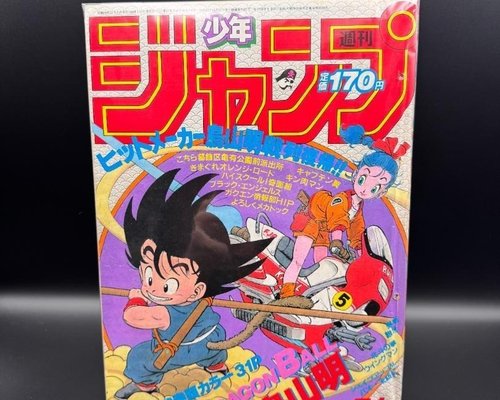
For Dragon Ball collectors, few pieces of paper carry as much weight as Weekly Shonen Jump 1984 Issue No.51. This is the magazine that introduced Akira Toriyama’s Dragon Ball to the world, printing Chapter 1 for the very first time on newsprint that was originally meant to be recycled within a week. That disposable nature is exactly what makes surviving copies so scarce today. If you have been building a serious Dragon Ball archive, this issue is essentially the “issue zero” of a franchise that would go on to define global shonen manga.
Japanese manga magazines occupy a unique niche in the collectibles world. Unlike bound tankobon volumes or later reprints, weekly issues like Shonen Jump were printed on cheap, acidic paper meant to be read on trains and discarded. Japanese collectors, however, have a long tradition of preserving first-appearance issues in acid-free sleeves, and Japan-exclusive supplements — pin-ups, editor’s notes, table-of-contents blurbs — never appeared in overseas reprints. That is what separates the domestic first printing from any reissue or international edition.

About This Item
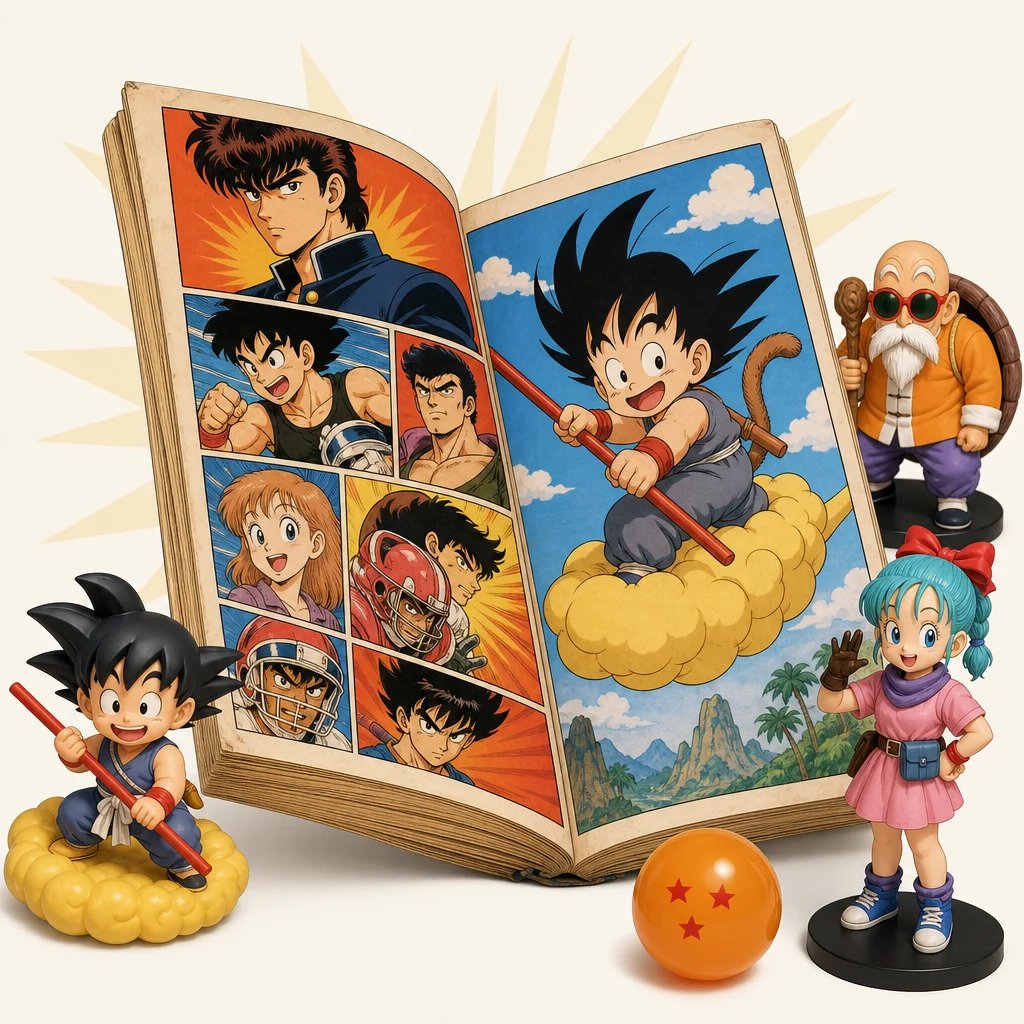
This listing is for the original Weekly Shonen Jump (Shukan Shonen Jump) 1984 Issue No.51, published by Shueisha and released in late November 1984 with a cover date of December 3, 1984. This is the historic issue containing the first-ever chapter of Akira Toriyama’s Dragon Ball, titled “Bulma and Son Goku.” The magazine also featured serialized chapters of other Jump mainstays running at the time, including Kinnikuman, Captain Tsubasa, Hokuto no Ken (Fist of the North Star), and Cat’s Eye — a lineup that reads today like a hall of fame of 1980s shonen manga.
The issue is a standard B5-size weekly magazine, roughly 400+ pages of newsprint with a color cover and a handful of interior color pages. Being a pre-owned copy from 1984, the actual condition is reflected in the accompanying photographs. We inspected this piece for spine integrity, cover gloss, page tanning, and any missing pull-outs or postcards that were originally bound in. Buyers should treat the photos as the definitive condition report.
Key Details
- Manufacturer/Publisher: Shueisha (Weekly Shonen Jump)
- Series/Franchise: Dragon Ball (first chapter appearance)
- Type: Goods & Accessories — Vintage Manga Magazine
- Release Year: 1984 (Issue No.51, cover-dated December 3, 1984)
- Condition: Pre-owned condition, carefully inspected before listing
- Origin: Shipped from Japan with tracking


The Weekly Franchise: Why Collectors Care
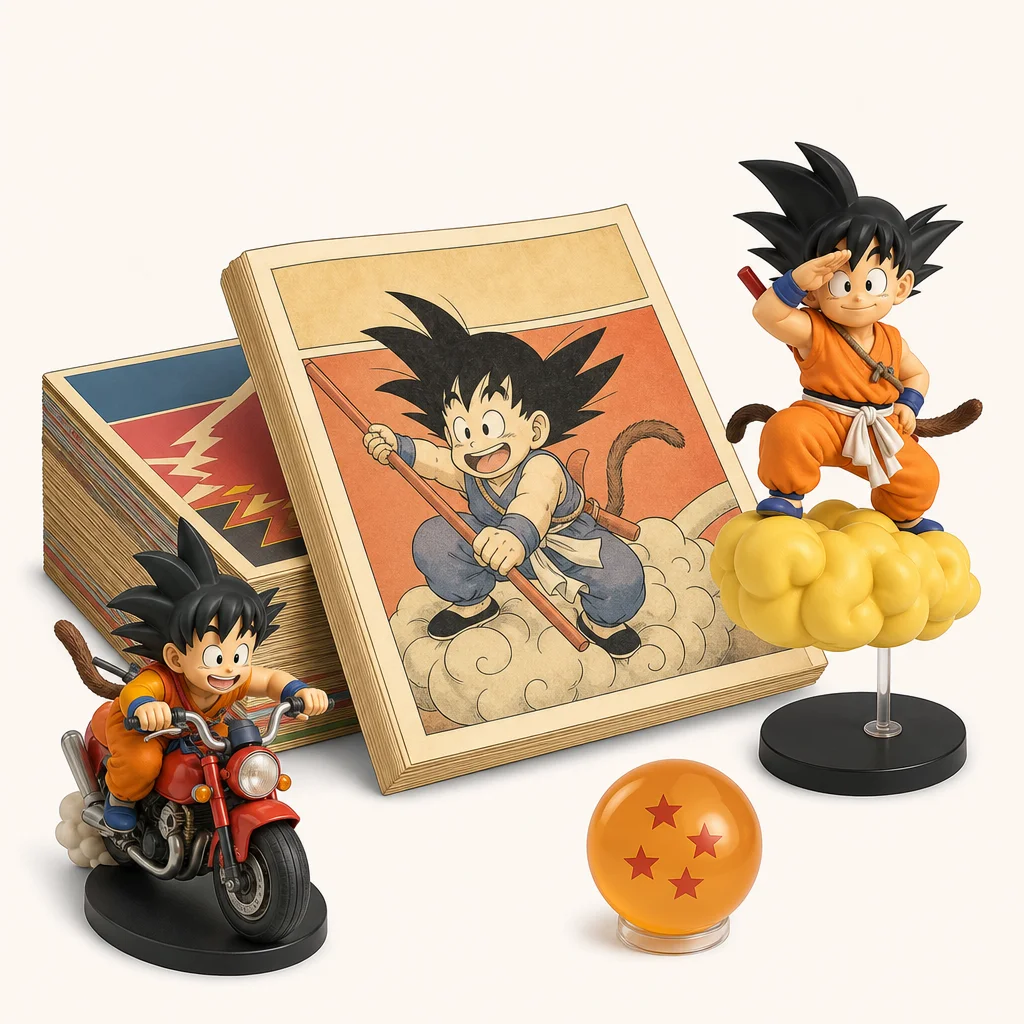
Weekly Shonen Jump launched in 1968 and by the mid-1980s had become the dominant boys’ manga magazine in Japan, with peak circulation later reaching 6.53 million copies per issue in 1994–1995 — a record that still stands for any manga magazine. According to Shueisha’s official corporate history (see https://www.shueisha.co.jp/), the magazine’s editorial philosophy of “friendship, effort, victory” shaped an entire generation of storytelling. Dragon Ball, which debuted in Issue No.51 of 1984, would become the flagship title that carried Jump through its golden age.
Akira Toriyama, already famous for Dr. Slump, designed Dragon Ball as a loose reinterpretation of the Chinese classic Journey to the West. That first chapter — 22 pages introducing a tail-sporting Goku and a teenage Bulma searching for the mystical orbs — reads very differently from the martial-arts epic the series would become after the Saiyan arc. For collectors, owning the original magazine printing rather than a later Jump Comics tankobon volume means holding the exact paper artifact that Japanese readers first encountered on newsstands.
Rarity and Value Factors
In my experience handling vintage Jump issues, three factors drive value most sharply: the debut-chapter premium, the survival rate of the specific print run, and completeness. Weekly Jump copies from 1984 were printed in the millions but almost universally thrown away after reading — estate finds and shop clearances are the primary sources today. Copies with intact spines, unfaded covers, and no water damage sit at the top of the market. According to auction data compiled by Mandarake and Yahoo Auctions Japan, clean copies of Issue No.51 have traded anywhere from ¥80,000 to well over ¥500,000 depending on grade. Reference guide: the Mandarake catalog (https://www.mandarake.co.jp/) is a useful benchmark for current Japanese market pricing on vintage Jump issues.


Looking for this item? Every item at HD Toys Store Japan is:
- Shipped directly from Japan with tracking
- Carefully inspected for condition and authenticity
- Pre-owned condition documented with detailed photos
Collector’s Guide: What to Look For
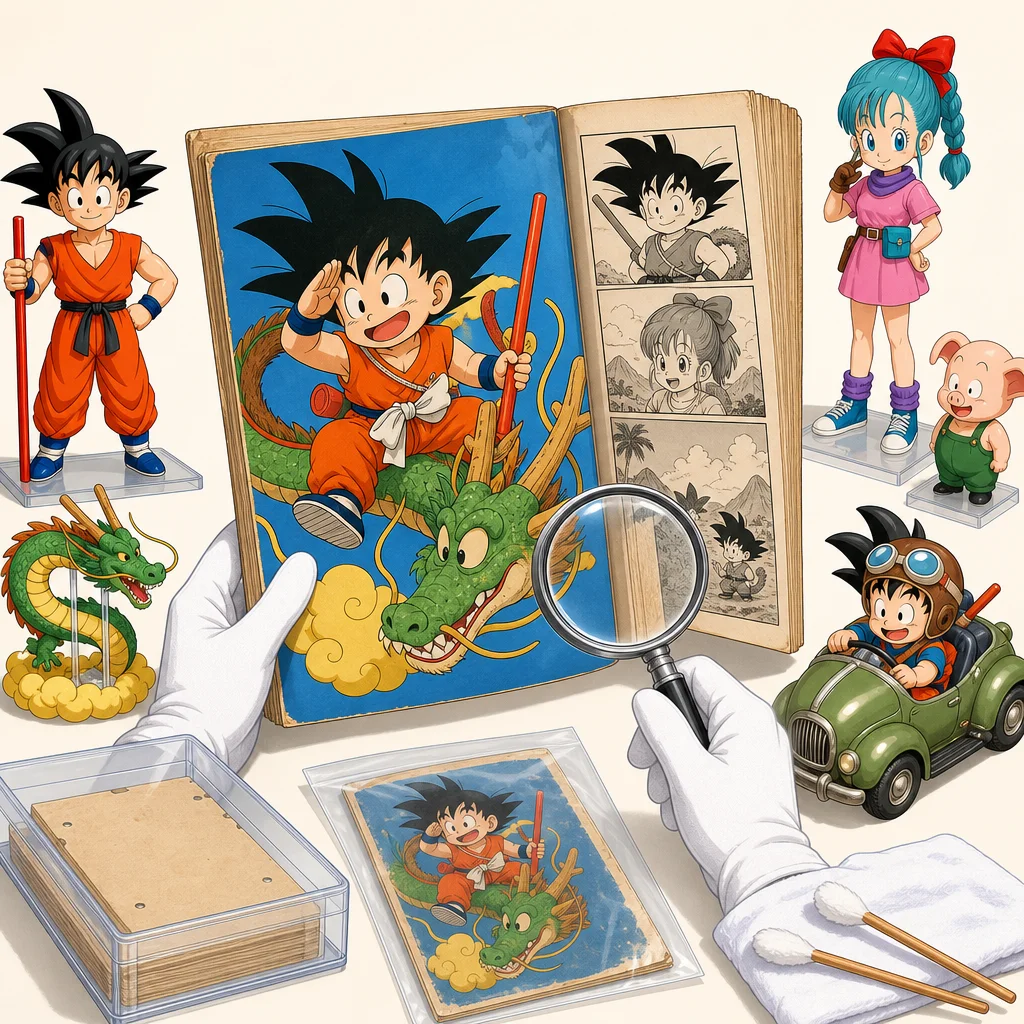
Vintage weekly manga magazines are among the most fragile collectibles you can own. The newsprint paper Shueisha used in the 1980s contained high acid content, which causes progressive yellowing (foxing) and brittleness over decades. When evaluating a 1984 Jump issue, the single most important thing to check is the spine — because these magazines were saddle-stitched with two staples, weight and repeated reading cause the center pages to loosen or detach entirely. Missing the center gutter can mean missing part of the Dragon Ball chapter itself.
Cover condition is the next priority. The No.51 cover features a photograph of pop idol Yui Asaka (not Dragon Ball art — Dragon Ball did not get its first cover until later). Faded cover colors, ring-marks from cups, and creased corners all pull value down significantly. We have handled several copies over the years, and even “reading-grade” examples usually show visible tanning on the page block edges.
Condition Checklist
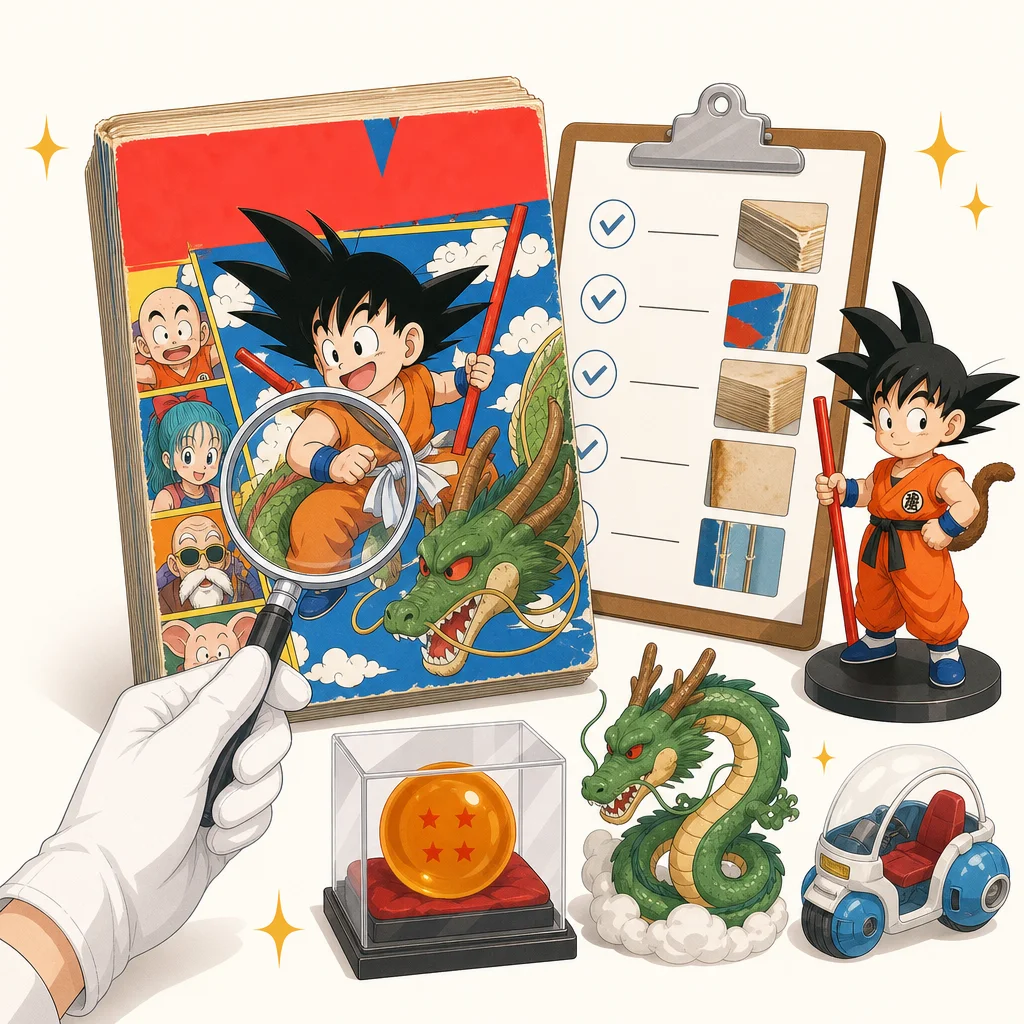
- Staples and Spine: Confirm both staples are present and pages are not detaching from the center.
- Cover Integrity: Check for tears, tape repairs, address labels, and price sticker residue.
- Page Tanning: Some yellowing is normal for 40-year-old newsprint; heavy browning or brittleness is a red flag.
- Completeness: Verify all Dragon Ball Chapter 1 pages are present and readable — this is the whole point.
- Packaging: Vintage Jump was never sold in packaging, but a protective mylar sleeve is essential for long-term storage.
Price Guide
Realistic price expectations for Issue No.51 in today’s market: heavily read/reading-copy condition typically sits in the $400–$800 range, good condition with intact spine and modest tanning runs $1,000–$2,500, and truly high-grade copies with bright covers and minimal foxing can command $3,000–$8,000 or more at Japanese specialty auctions. The single biggest price driver is the intact center-fold containing the Dragon Ball chapter — any copy missing those pages loses the majority of its collector value regardless of the rest of the magazine’s condition.

Similar Items Worth Exploring
Collectors who pursue this issue often build out a broader “Toriyama debut” shelf. Natural companion pieces include Weekly Shonen Jump 1980 Issue No.5–6 (the first Dr. Slump chapter), Jump 1984 issues No.52 through No.4 of 1985 (early Dragon Ball chapters), and the very first Dragon Ball tankobon Volume 1, released by Shueisha in September 1985 with the original obi band intact. Later milestone issues — such as the introduction of Super Saiyan Goku in 1991 — also carry premium value. For Akira Toriyama completists, Jump-related merchandise like the 1986 Dragon Ball TV anime kickoff issue and Weekly Shonen Jump anniversary reprints round out the collection. Browse more collector guides on our blog at https://hd-bodyscience.com/ for deeper dives into the Dragon Ball archive market.

Why Buy Japanese Collectibles from Japan?
Japanese collector culture takes preservation seriously. It is common for Japanese fans to store weekly magazines in acid-neutral bags with backing boards from the moment they finish reading, and estate collections often surface in remarkably better condition than what turns up in Western markets. Domestic sellers also have direct access to first-print Japanese editions that were never distributed abroad. This copy is being shipped from Japan by a licensed second-hand dealer (Tokyo license No. 308942319801), which means the item has been vetted under Japan’s Antique Dealings Act. Contact our team if you have questions about authenticity or grading before purchase, and refer to our returns policy for inspection guarantees on vintage paper goods.


Summary
Weekly Shonen Jump 1984 Issue No.51 is not just a magazine — it is the origin document of one of the most influential manga franchises ever created. For serious Dragon Ball collectors, no reprint, anthology, or anniversary edition carries the same weight as the actual newsprint that first delivered Goku and Bulma to Japanese readers in December 1984. Pieces like this rarely surface in good shape, and when they do, they belong in an archival sleeve on a shelf you are proud of.
Author: Kenji Nakamura, HD Toys Store Japan. Last reviewed: October 2024. Published: October 2024.
Explore related collections
Browse all Goods & Accessories →
Never Miss New Arrivals from Japan
We add new pre-owned figures, toys, and collectibles every week. Sign up to get notified about new items, collector guides, and exclusive updates.
Free · No spam · Unsubscribe anytime

コメント