Because Saint Seiya is one of the most collected franchises, it is also one of the most copied. This guide walks through the checks collectors commonly use to evaluate authenticity and condition — the same points our staff in Japan look at when inspecting every item before it ships.
Official Markings and Licensing Indicators

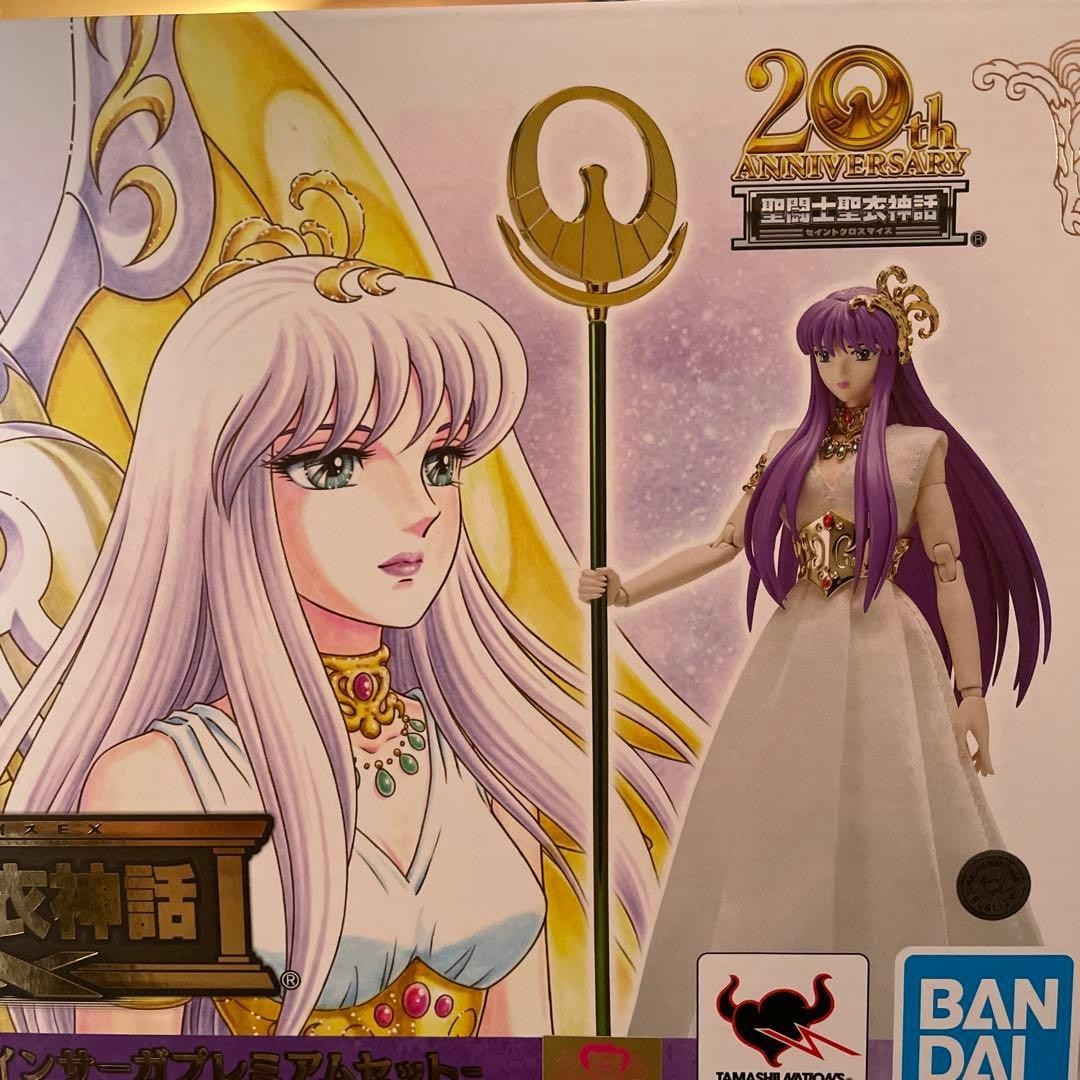
On authentic Saint Seiya goods and accessories, collectors commonly look for clear copyright imprints such as references to Masami Kurumada, Toei Animation, and — depending on the era — Bandai. On genuine pieces, these markings are usually molded, printed, or stamped cleanly on the item itself (often on the underside of a base, inside a cloth part, or on the back of a package), with legible, evenly spaced characters. Older Bandai releases often show a small stamped logo, while newer Tamashii Nations items (Myth Cloth, Myth Cloth EX, D.D. Panoramation) typically carry the Tamashii Nations logo on the packaging and sometimes on the stand.
Licensing stickers or seals — such as the Tamashii Nations hologram sticker on the outer box — are a useful signal, though not proof by themselves, since stickers can be reproduced. It often helps to cross-check the copyright line, factory stamps, and any distributor markings (for example, region-specific text for Asian releases) against known authentic references or the official Tamashii Nations catalog archive.
Packaging and Print Quality

Genuine Saint Seiya boxes — especially Myth Cloth and Myth Cloth EX — commonly feature crisp, high-resolution artwork, deep and consistent color, and clean Japanese text without spelling errors or awkward kerning. On authentic pieces, the cardboard usually feels sturdy, the window plastic is clear and cleanly cut, and the internal blister tray holds each part snugly with proper cutouts. Fonts on the spine, side panels, and character name plates are typically sharp even under magnification.
Warning signs often include blurry printing, washed-out or overly saturated colors, misaligned logos, thin or flimsy cardboard, and Japanese text with odd character choices. Reprints and later runs do exist officially, so minor packaging variations are not automatically suspicious — but combined with other red flags, print quality is one of the more reliable checkpoints.
Paint, Seams, and Material Tells

Saint Seiya Cloth figures rely heavily on die-cast metal armor parts combined with ABS and PVC. On authentic Myth Cloth and Myth Cloth EX pieces, the die-cast sections commonly have noticeable weight, a smooth painted or plated finish, and cleanly cut edges without heavy flashing. Chrome and gold plating is usually even, without cloudy patches, and paint applications on faces and small details tend to be neat, with pupils centered and skin tones consistent between head sculpts included in the set.
Bootleg or unlicensed copies often feel noticeably lighter (more plastic where metal should be), show rough seam lines, uneven chrome, gritty paint, or slightly off proportions. Joints on authentic figures generally move with a firm, controlled click rather than feeling loose or gritty out of the box, though wear from play or age can naturally soften this over time.
Common Bootleg Red Flags in the Saint Seiya Line
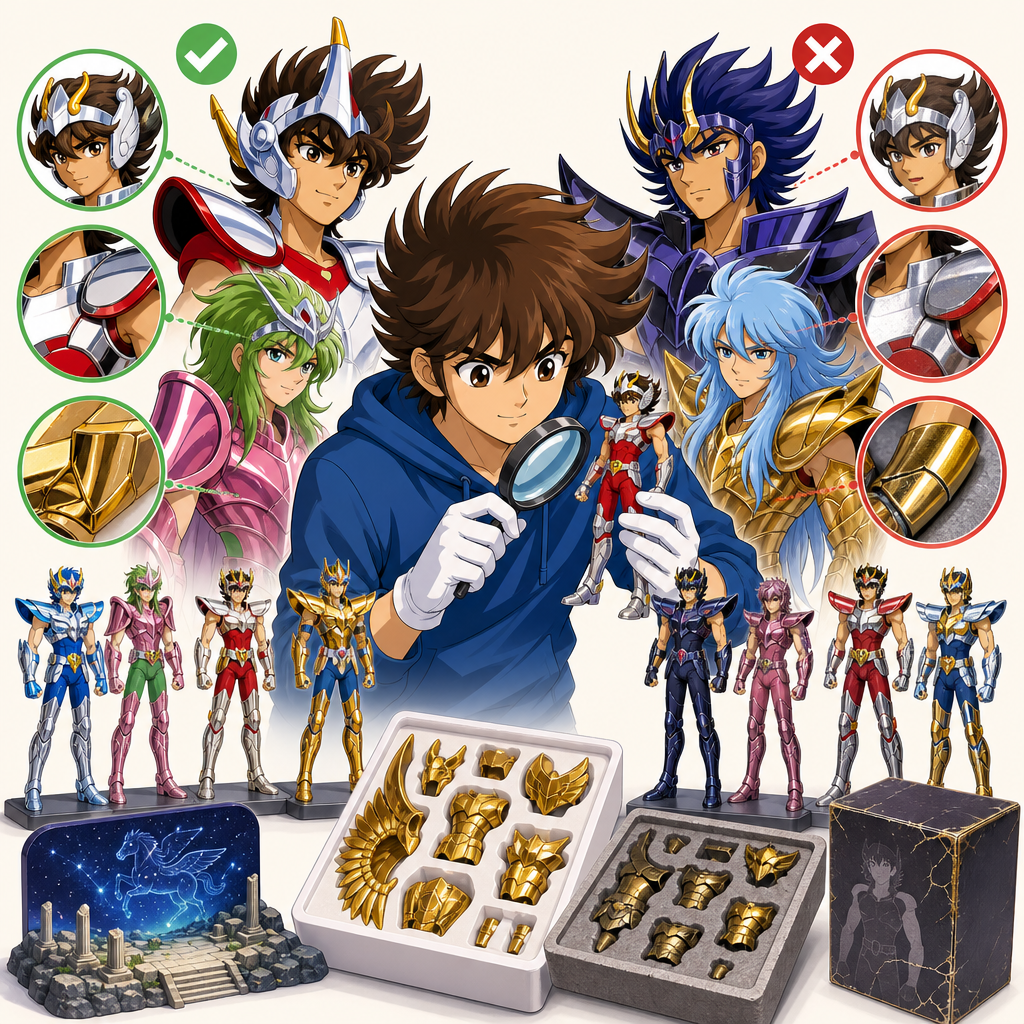
Because Myth Cloth EX and older Vintage Cloth figures are highly sought after, they are a frequent target for unlicensed reproductions. Common red flags include prices that seem far below typical secondhand market ranges, sellers offering large stock of long-sold-out figures in brand-new condition, and boxes that lack the expected Tamashii Nations branding or show generic barcodes. On suspect pieces, the object stand, name plate, or extra hands are sometimes missing or made from a visibly different plastic than the main figure.
Another useful signal is comparing the Cloth Object (the totem/statue form the armor assembles into) against reference photos: on authentic releases it typically has clean panel lines, accurate proportions, and correctly placed decals, while copies often show simplified sculpting or crooked stickers. When in doubt, comparing multiple angles against Tamashii Nations product pages or established collector databases is generally more reliable than trusting a single seller photo.
Japanese Secondhand Condition Grading
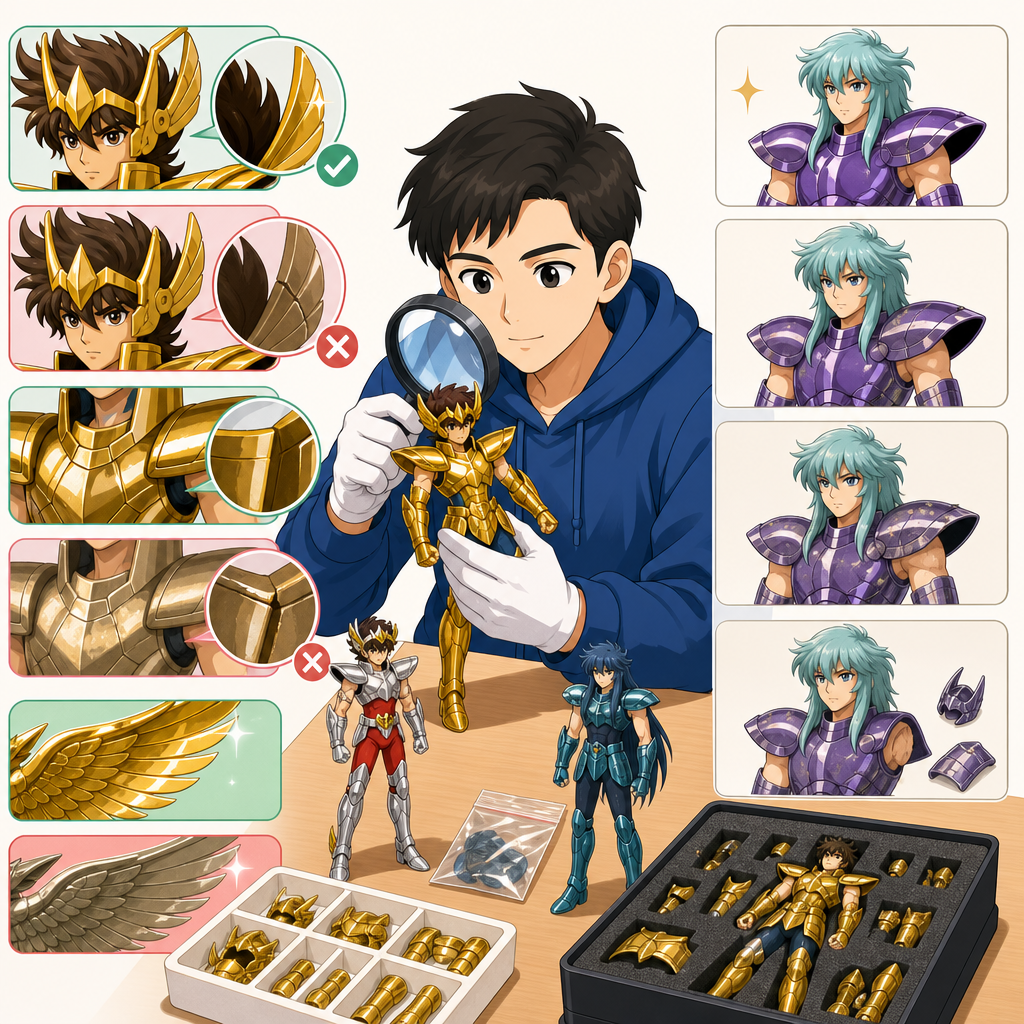
Japanese resellers commonly use a grading system that collectors should understand before buying. Unopened / Shinpin (新品) usually means the outer shrink or seal is intact and contents are untouched. Grade A is often described as opened but in excellent, display-only condition with complete accessories and a clean box. Grade B typically indicates visible play or display wear — minor paint rubs, small box dents, slightly loose joints — while still being complete. Grade C commonly means noticeable wear, yellowing, or missing minor parts, and Junk (ジャンク) generally signals significant issues such as broken armor tabs, heavy plating loss, missing key accessories, or no box.
Grading varies between shops, so it helps to read the specific condition notes rather than relying on the letter alone. For Saint Seiya specifically, watch for mentions of chrome peeling, die-cast oxidation, loose shoulder or hip joints, and completeness of small parts such as Cloth Object pegs, extra hands, effect parts, and the character name plate — these are the details that most affect long-term value.
Disclaimer: This guide shares general knowledge points that collectors commonly use to evaluate items. It is educational content, not a formal authentication service, and individual items should always be judged on their own evidence. Details can vary by production run and era.
Free Download: Our Full Authenticity Guide (PDF)
Download the free Japanese Figure Authenticity Guide (PDF) →
The complete checklist we use in-house, in a printable format.
Frequently Asked Questions
How can I tell if a Saint Seiya figure is a bootleg?
Check the manufacturer and copyright markings moulded into the base or the back of the figure, compare paint edges and seam lines against official product photos, and look at the print quality of the box. Bootlegs usually fail on several of these at once, not just one.
Is a cheap listing automatically a fake?
No. Price on its own proves nothing — genuine pieces sell cheaply when they are opened, incomplete or from an over-produced run. Judge by markings, finish and packaging rather than by price.
What should I ask a seller for before buying?
Ask for photos of the base markings, the box barcode and any damage in natural light. A seller who handles the item themselves can take these quickly; stock-photo-only listings are the ones worth questioning.
What does Japanese secondhand condition wording mean?
Japanese listings grade strictly: a piece described as used can still be display-quality, while notes about yellowing, paint transfer or box crush are stated explicitly rather than glossed over. Read the condition notes as literal, not as sales copy.
コメント