Because Sailor Moon is one of the most collected franchises, it is also one of the most copied. This guide walks through the checks collectors commonly use to evaluate authenticity and condition — the same points our staff in Japan look at when inspecting every item before it ships.
Official Markings and Licensing Indicators

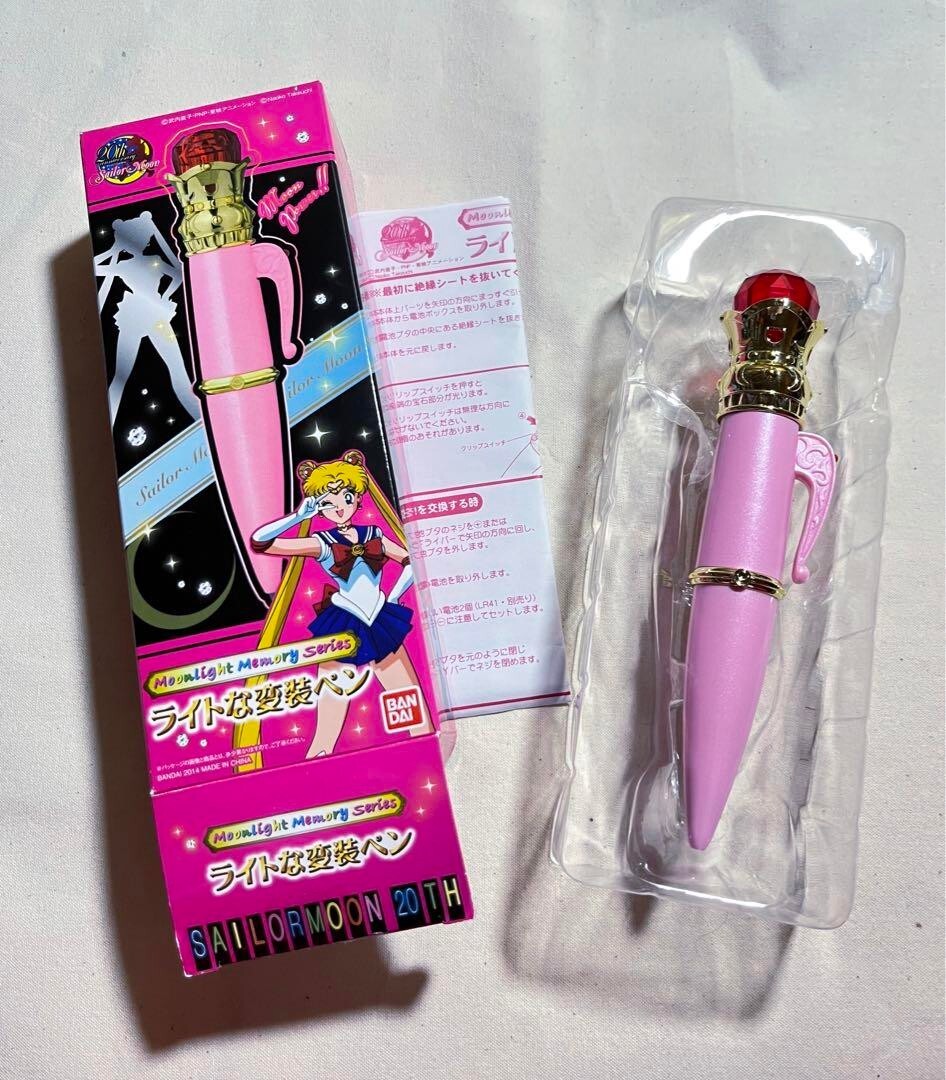
On authentic Sailor Moon goods, you can commonly expect to see a copyright line referencing Naoko Takeuchi along with the relevant licensors — often shown as “© Naoko Takeuchi” together with PNP, Kodansha, Toei Animation, or Bandai depending on the era and product line. This text is usually printed cleanly and legibly on the item itself, on a hangtag, or on the base of a figure. Older 1990s merchandise frequently carries a Bandai mark and a Japanese-language production credit, while modern reissues such as Proplica, Figuarts ZERO, or S.H.Figuarts pieces typically show Tamashii Nations or Bandai Spirits branding.
A useful signal is consistency: the copyright text on the box, the manual, and the item itself generally matches. Licensed Japanese-market goods often include a small ロゴ (logo) or catalog number and, on newer items, a Tamashii Web Shop or Premium Bandai indication for exclusives. Missing, misspelled, or partially obscured copyright text is commonly considered a warning sign worth investigating further.
Packaging and Print Quality

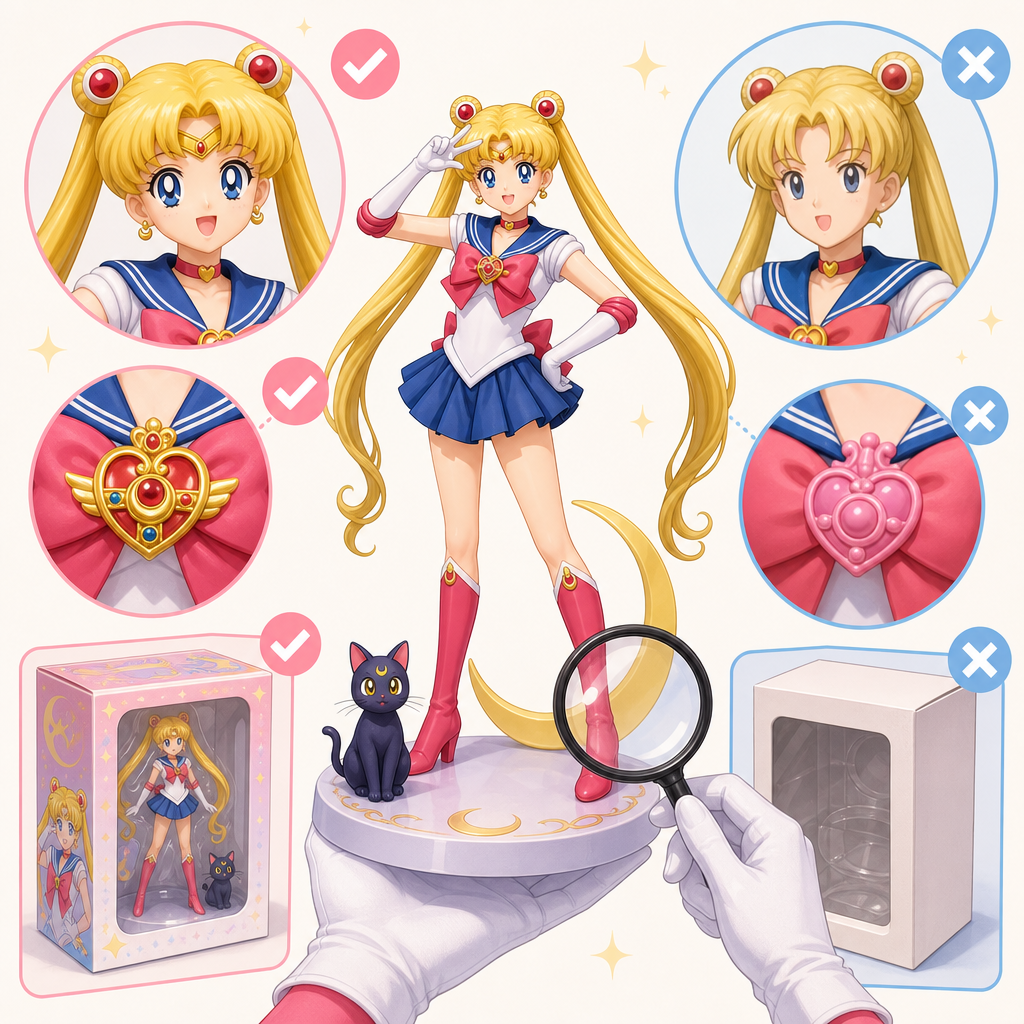
Genuine Sailor Moon packaging is usually printed with crisp registration, saturated colors, and sharp Japanese text. On authentic pieces, character art tends to be reproduced from official illustrations with smooth gradients rather than visible dot patterns or blurring. Windows are commonly cut cleanly, plastic blisters fit the tray snugly, and inserts such as instruction sheets or collectible cards are printed on appropriate paper stock. Vintage 1990s Bandai boxes often show their age with light shelfwear, but the printing itself typically remains sharp under inspection.
Barcodes, JAN codes, and small legal text on the back panel are commonly a good area to examine. On authentic items these are generally clean and readable, and the box flaps close properly without warped cardboard. Fuzzy logos, off-center printing, oddly bright or washed-out colors, and English-only text on items that should carry Japanese labeling are frequently red flags.
Paint, Seams, and Material Tells

For figures, prize items, and accessories such as transformation compacts or wands, authentic pieces commonly show tidy paint application: tampo-printed eyes and mouth details are usually crisp, and metallic or pearl finishes tend to look even. Seam lines on official PVC figures are generally minimized and cleanly finished, and joints on articulated lines like S.H.Figuarts move smoothly without excessive stress marks. Roleplay items such as Proplica compacts typically have solid weight, aligned hinges, and consistent electronic function where applicable.
On jewelry, keychains, and plush, official goods often use materials appropriate to their price tier — reasonable metal weight on charms, embroidered facial features on plush rather than only printed ones on higher-end lines, and clean stitching. Sticky residue, brittle plastic, uneven paint pooling around the eyes, or a strong chemical smell can be signals that the item warrants closer comparison against known-authentic reference photos.
Common Bootleg Red Flags in the Sailor Moon Market

Sailor Moon has been widely bootlegged since the 1990s, so a few patterns come up repeatedly. Unlicensed compacts and wands are often sold as “replicas” with no copyright text, generic packaging, and lighter plastic than the Bandai Proplica or vintage Bandai originals. Bootleg figures frequently show softer sculpt detail, misaligned eye prints, incorrect hair color, and boxes with pixelated character art or English-only labeling. Listings that bundle many characters together at unusually low prices are commonly recasts.
Another frequent tell is the source imagery: bootleggers often reuse official promotional photos rather than showing the actual item. If the seller cannot provide clear photos of the copyright stamp, the base, and the back of the packaging, it is generally worth asking before purchase. Cross-referencing with archived listings from Bandai, Premium Bandai, or established Japanese hobby retailers is a useful habit.
Buying Safely from Japan
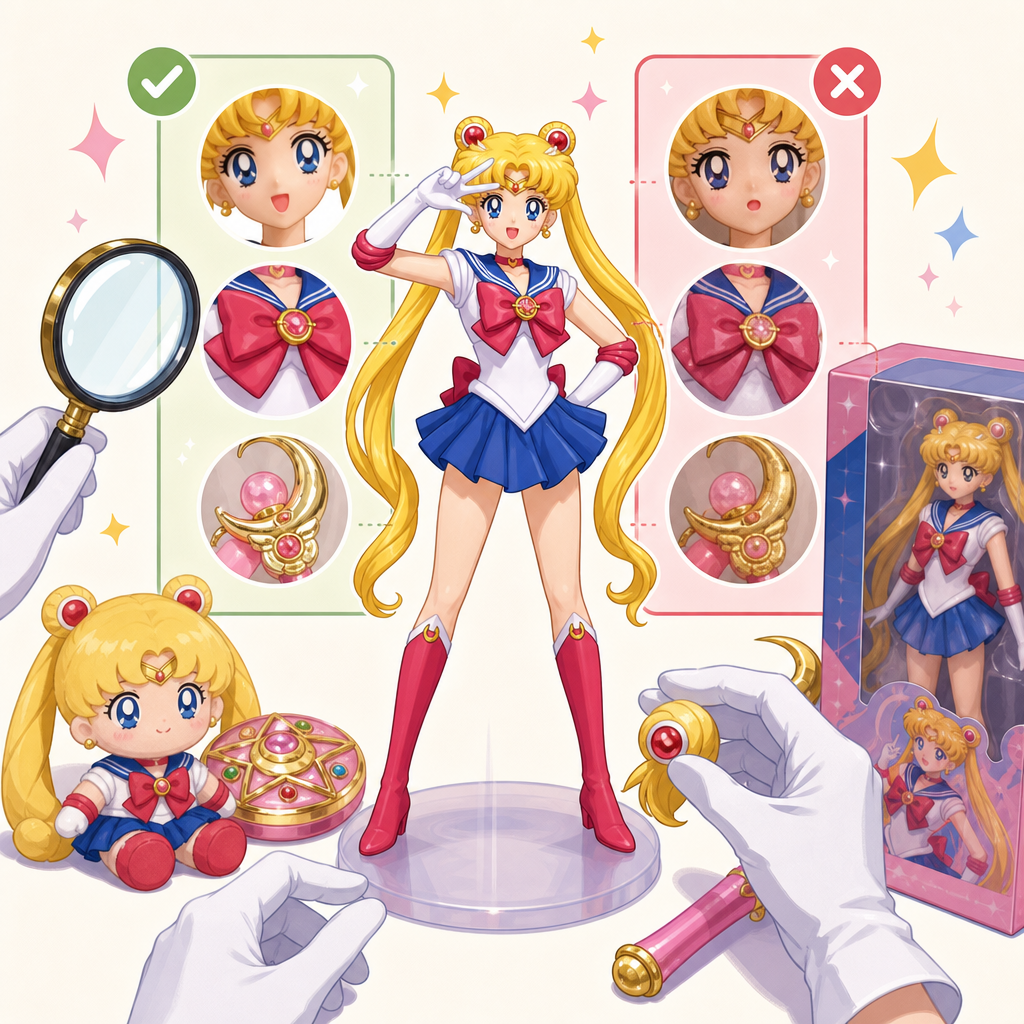
When sourcing Sailor Moon goods from Japan, it is generally safer to buy from established secondhand specialists, hobby chains, and sellers who provide detailed photos of copyright marks, packaging backs, and any flaws. Reading the item description carefully for terms like 中古 (used), 難あり (has issues), and the grade letters mentioned above helps set accurate expectations. Asking the seller for additional photos before purchase is common practice and usually welcomed.
For higher-value pieces such as Proplica compacts, vintage Bandai wands, or sealed 1990s prize figures, comparing against reference images from Bandai’s official archives and long-running collector communities is a useful final check. No single test confirms authenticity on its own, but combining copyright inspection, print quality, material feel, and seller reputation gives collectors a reasonably reliable overall picture.
Disclaimer: This guide shares general knowledge points that collectors commonly use to evaluate items. It is educational content, not a formal authentication service, and individual items should always be judged on their own evidence. Details can vary by production run and era.
Free Download: Our Full Authenticity Guide (PDF)
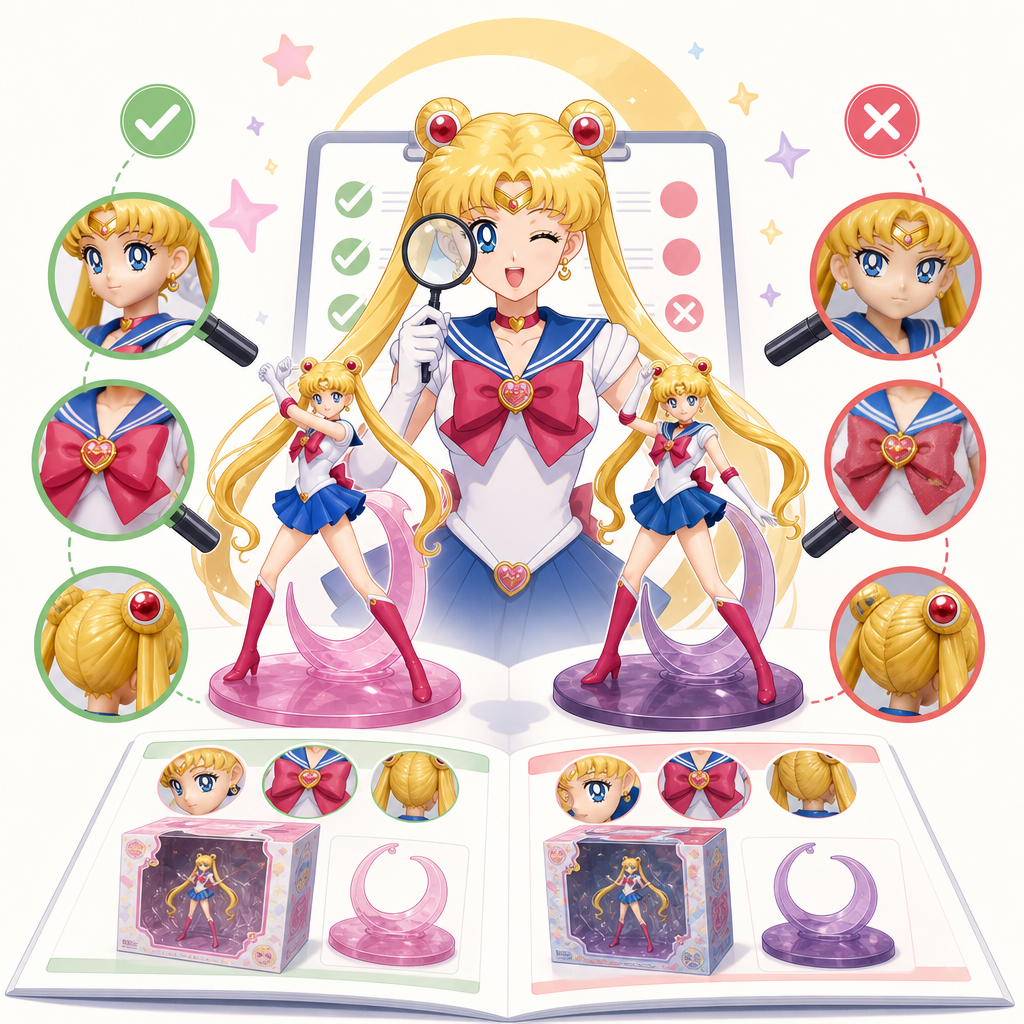
Download the free Japanese Figure Authenticity Guide (PDF) →
The complete checklist we use in-house, in a printable format.
Frequently Asked Questions
How can I tell if a Sailor Moon figure is a bootleg?
Check the manufacturer and copyright markings moulded into the base or the back of the figure, compare paint edges and seam lines against official product photos, and look at the print quality of the box. Bootlegs usually fail on several of these at once, not just one.
Is a cheap listing automatically a fake?
No. Price on its own proves nothing — genuine pieces sell cheaply when they are opened, incomplete or from an over-produced run. Judge by markings, finish and packaging rather than by price.
What should I ask a seller for before buying?
Ask for photos of the base markings, the box barcode and any damage in natural light. A seller who handles the item themselves can take these quickly; stock-photo-only listings are the ones worth questioning.
What does Japanese secondhand condition wording mean?
Japanese listings grade strictly: a piece described as used can still be display-quality, while notes about yellowing, paint transfer or box crush are stated explicitly rather than glossed over. Read the condition notes as literal, not as sales copy.
コメント