Because Dragon Ball is one of the most collected franchises, it is also one of the most copied. This guide walks through the checks collectors commonly use to evaluate authenticity and condition — the same points our staff in Japan look at when inspecting every item before it ships.
- Identifying Authenticity: Official Markings and Licensing Stickers
- The First Clue: Packaging and Print Quality
- Examining the Figure Itself: Paint, Seams, and Materials
- Common Red Flags: Spotting Dragon Ball Bootlegs
- Navigating the Secondhand Market: Japanese Condition Grading
- Buying Authentically and Safely from Japan
- Free Download: Our Full Authenticity Guide (PDF)
- Frequently Asked Questions
Identifying Authenticity: Official Markings and Licensing Stickers

Official Dragon Ball figures, particularly those from Bandai Spirits (formerly Banpresto), commonly feature specific licensing stickers. These stickers, often from Toei Animation and sometimes Shueisha, typically appear on the product packaging. Their presence and quality can be a useful signal of authenticity, though their exact appearance, such as gold or silver Toei stickers, may vary depending on the product’s intended market (e.g., Japan vs. international releases).
It’s beneficial to familiarize yourself with the common appearance of these stickers, paying close attention to their crispness, color, and placement. While the absence of a sticker on very old or specific prize figures isn’t always an automatic red flag, a sticker that appears blurry, off-color, or poorly applied can often be an indicator of a non-authentic product. Always compare with images of known genuine products when possible.
The First Clue: Packaging and Print Quality

The packaging itself offers many initial clues about a figure’s authenticity. Genuine Dragon Ball figure boxes commonly exhibit high-quality printing, characterized by vibrant colors, sharp text, and clear, non-pixelated images of the character. The fonts used should be consistent and correctly aligned with official branding.
Conversely, bootleg packaging often features blurry images, inconsistent or incorrect fonts, washed-out colors, or even grammatical errors in any accompanying text. The material quality of the box might also feel noticeably flimsier or have an unusual finish compared to official releases. Authentic boxes usually have clean folds, precise cuts, and sturdy construction.
Examining the Figure Itself: Paint, Seams, and Materials

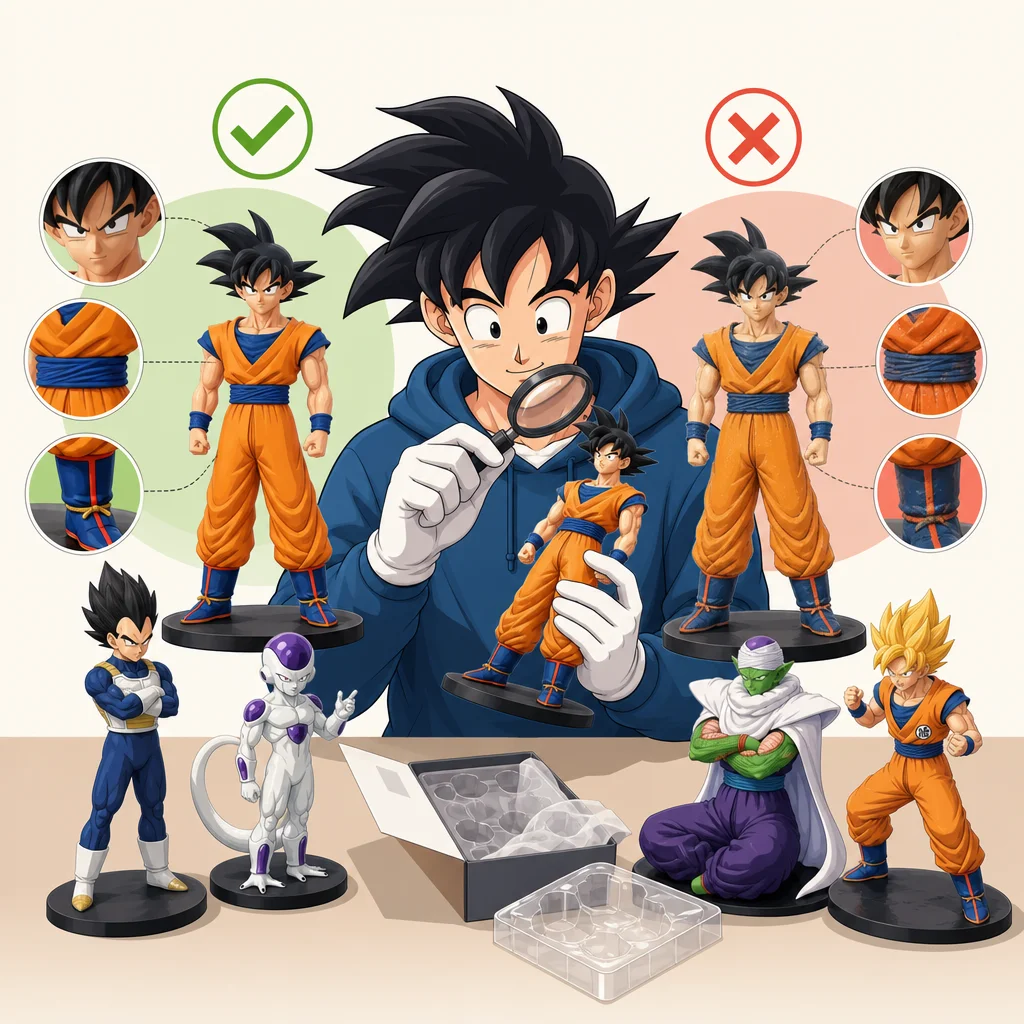
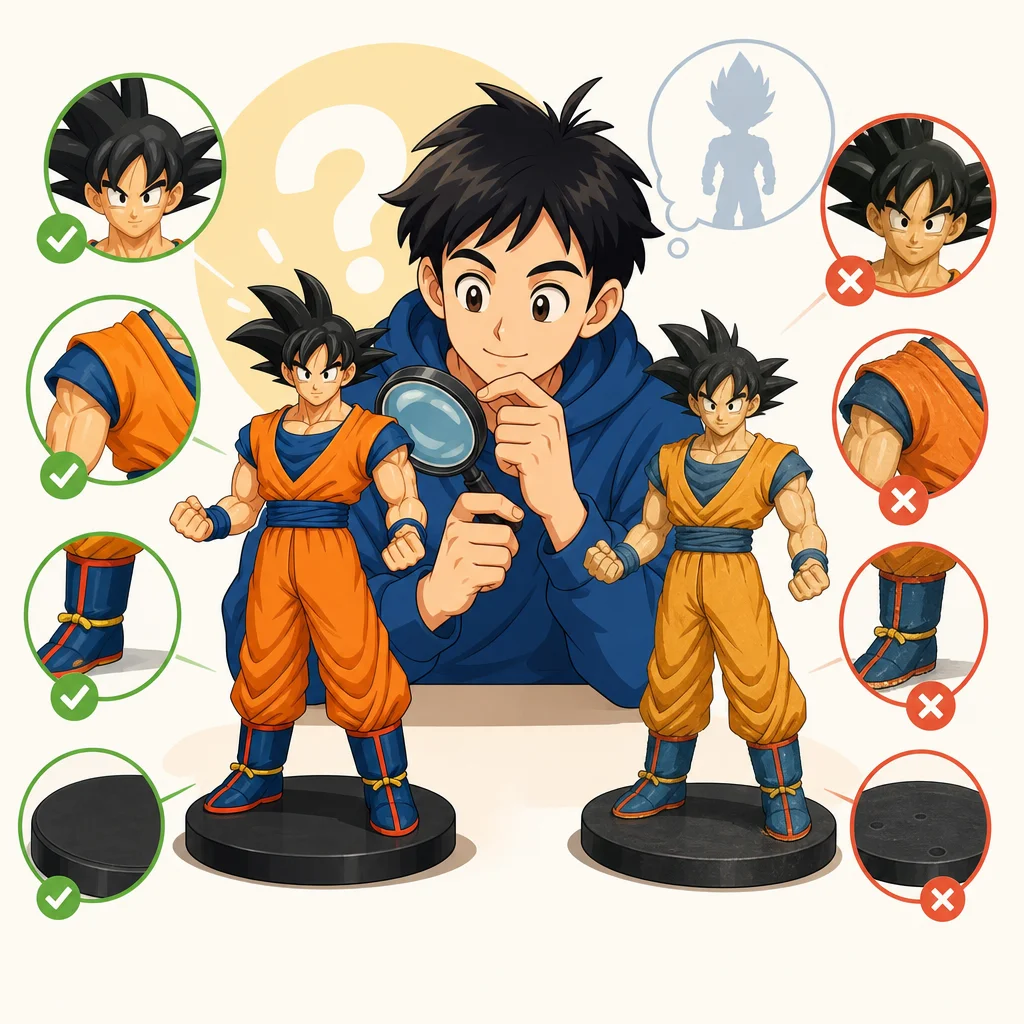
A closer inspection of the figure’s physical attributes can often reveal its authenticity. Genuine Dragon Ball figures typically boast clean, precise paint applications with sharp lines, appropriate shading, and consistent color tones, especially in intricate areas like faces, hair, and clothing details. Counterfeit figures commonly display sloppy paintwork, overspray, missing paint details, or incorrect color palettes that do not match the character’s official design.
Furthermore, examine the seam lines where different plastic parts of the figure are joined. Authentic figures generally have tight, minimal, and well-aligned seams, whereas bootlegs often exhibit prominent, poorly aligned seam lines, visible glue residue, or excessive plastic flashing. The overall feel, weight, and texture of the plastic can also differ significantly; genuine figures commonly use higher-quality, more durable materials.
Common Red Flags: Spotting Dragon Ball Bootlegs

Beyond general quality concerns, certain red flags are frequently associated with Dragon Ball bootlegs. A strong, unpleasant chemical smell emanating from the figure or its packaging is often a common indicator of non-authentic materials. For articulated figures, unusually loose or stiff joints that hinder posing or feel fragile can suggest a counterfeit product. Disproportionate sculpting, incorrect character details (e.g., wrong facial expressions, missing accessories, or incorrect costume elements), or poor articulation are also common issues.
Additionally, stands that do not fit properly, are flimsy, or differ significantly from official stands often point to a bootleg. A price that appears unusually low or ‘too good to be true’ compared to market value for genuine items is perhaps one of the most significant and immediate indicators of a potential counterfeit product, warranting extreme caution.
Navigating the Secondhand Market: Japanese Condition Grading

When purchasing secondhand figures from Japan, collectors commonly encounter a standardized grading system. An item listed as “Unopened” or “New” generally implies it is still factory sealed within its original packaging, though the outer box might show minor shelf wear. Grade “A” typically indicates an item in excellent condition, often near-mint, with possibly very minor signs of box wear but the figure itself is pristine.
Grade “B” usually suggests good condition, where the figure might have minor signs of wear or paint imperfections, or the box could have more noticeable damage. Grade “C” generally denotes items with more significant wear, noticeable defects, or potentially missing minor accessories. “Junk” (ジャンク) is a category for items with considerable damage, missing major parts, or other severe issues, often sold as-is for parts or repair and is usually not recommended for collectors seeking display-ready pieces.
Buying Authentically and Safely from Japan

To minimize risks when collecting, it is commonly recommended to purchase from reputable sellers with a strong track record and positive customer reviews, such as hdtoysjapan.com. Always pay close attention to the seller’s descriptions, which should be detailed and transparent, noting any imperfections. Clear, numerous photographs from various angles are also essential, allowing you to thoroughly inspect the item’s condition and authenticity markers.
Utilizing secure payment methods that offer buyer protection and understanding the seller’s return or dispute resolution policies can provide additional peace of mind. While vigilance is always a wise approach, buying from established Japanese retailers specializing in authentic secondhand goods generally offers a higher degree of confidence in receiving genuine products in the condition described, contributing to a more enjoyable collecting experience.
Disclaimer: This guide shares general knowledge points that collectors commonly use to evaluate items. It is educational content, not a formal authentication service, and individual items should always be judged on their own evidence. Details can vary by production run and era.
Free Download: Our Full Authenticity Guide (PDF)
Download the free Japanese Figure Authenticity Guide (PDF) →
The complete checklist we use in-house, in a printable format.
Frequently Asked Questions
How can I tell if a Dragon Ball figure is a bootleg?
Check the manufacturer and copyright markings moulded into the base or the back of the figure, compare paint edges and seam lines against official product photos, and look at the print quality of the box. Bootlegs usually fail on several of these at once, not just one.
Is a cheap listing automatically a fake?
No. Price on its own proves nothing — genuine pieces sell cheaply when they are opened, incomplete or from an over-produced run. Judge by markings, finish and packaging rather than by price.
What should I ask a seller for before buying?
Ask for photos of the base markings, the box barcode and any damage in natural light. A seller who handles the item themselves can take these quickly; stock-photo-only listings are the ones worth questioning.
What does Japanese secondhand condition wording mean?
Japanese listings grade strictly: a piece described as used can still be display-quality, while notes about yellowing, paint transfer or box crush are stated explicitly rather than glossed over. Read the condition notes as literal, not as sales copy.
コメント