Because Pokemon is one of the most collected franchises, it is also one of the most copied. This guide walks through the checks collectors commonly use to evaluate authenticity and condition — the same points our staff in Japan look at when inspecting every item before it ships.
Official Markings and Licensing Indicators

On authentic Pokémon scale figures, collectors commonly look for clear copyright text molded, stamped, or printed on the figure itself — often on the underside of the base or along an inconspicuous edge. Typical markings include references to Nintendo, Creatures, Game Freak, and The Pokémon Company, alongside the manufacturer name (such as Kotobukiya, Bandai, or Good Smile Company) and the sculpt or production year. The lettering is usually crisp, evenly spaced, and neatly aligned with the surface it sits on.
Licensing stickers or seals — when present on the box — tend to appear consistently placed across a given production run, with sharp printing and legible small text. A useful signal is checking that the copyright line matches the era of the figure (older releases will not credit companies that did not yet exist under that name). Missing, blurred, or misspelled licensing text is often a warning sign worth investigating further.
Packaging and Print Quality

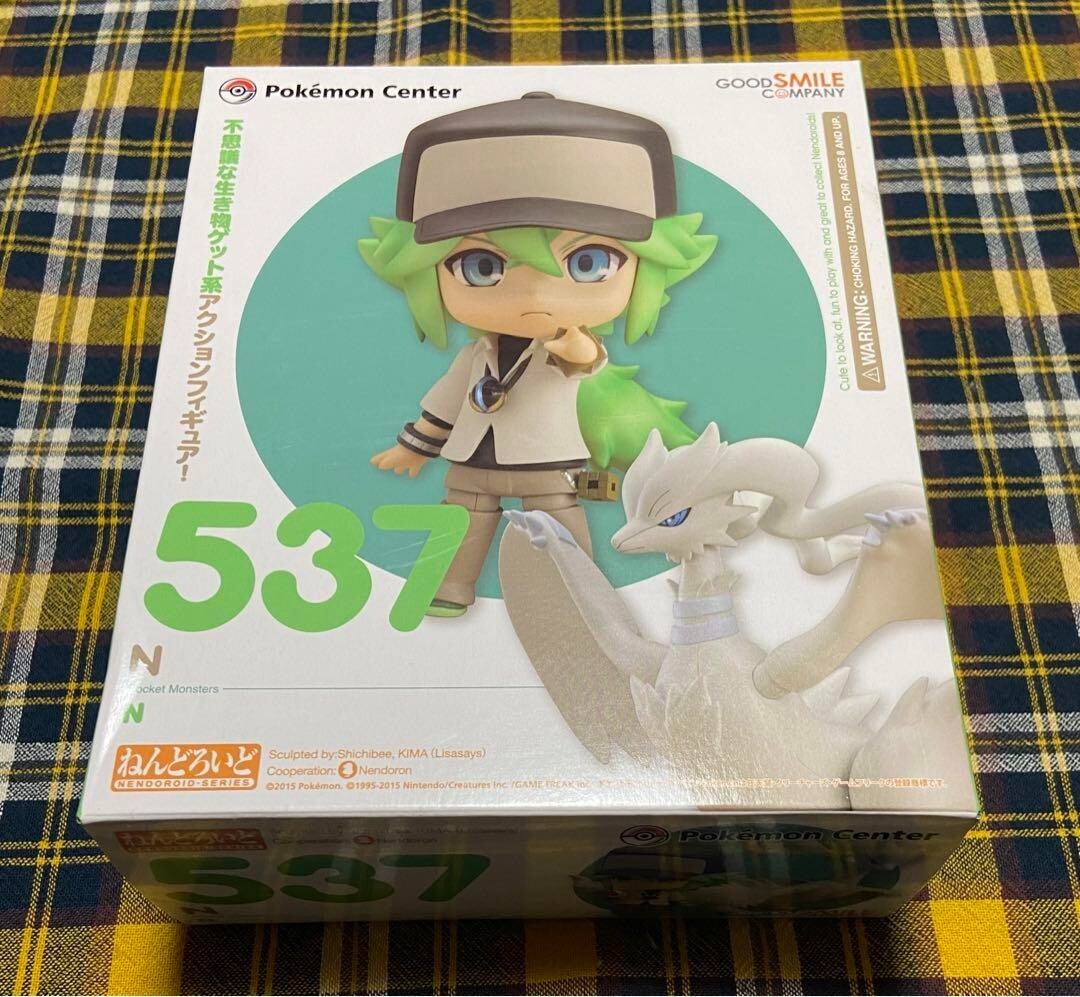
Genuine Pokémon scale figure boxes are commonly printed on sturdy, well-finished cardstock with clean color separation, sharp Japanese text, and consistent gloss or matte finishes depending on the line. Window plastic (PET blister) is usually clear and free from heavy scratches out of the factory, and interior trays tend to fit the figure snugly without excessive rattling. Product photography on the box is generally high resolution, with accurate color reproduction of the actual figure inside.
Barcodes, JAN codes, and manufacturer logos on authentic packaging are typically crisp and readable. Warning text, age indicators, and importer/distributor information are often printed in Japanese (and sometimes additional languages for export SKUs). Fuzzy printing, off-register colors, washed-out artwork, or unusually thin cardboard are red flags that collectors frequently note when comparing suspect boxes to reference photos of confirmed authentic releases.
Paint, Seams, and Material Tells

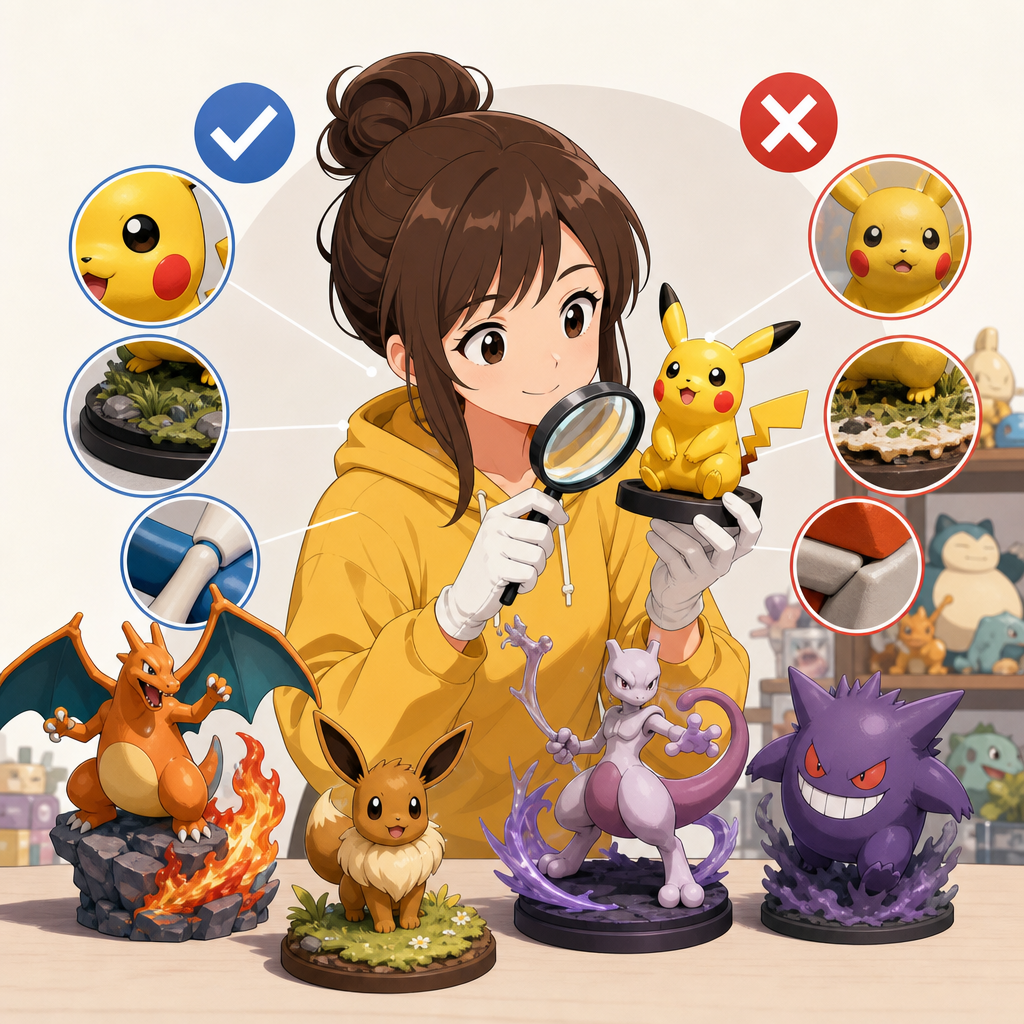
On authentic Pokémon scale figures, paint application is commonly clean along the edges of color transitions — for example, the boundary between a Pikachu’s cheeks and body, or the eye whites and pupils. Factory paint tends to be evenly saturated, with shading and gradients (airbrushed cheeks, glossy eyes) applied consistently across production. Eye printing in particular is a well-known checkpoint: pupils are usually centered, symmetrical, and sharp, with the correct catch-light placement matching official promotional images.
Seam lines on genuine pieces are generally minimized and placed in less visible areas, and the PVC/ABS material typically has a consistent weight and finish appropriate for the size of the figure. Excessive flashing, greasy or overly soft plastic, chalky matte surfaces where gloss should be, or a noticeably lighter-than-expected weight are traits collectors often flag when comparing an item against known-authentic examples.
Common Bootleg Red Flags for Pokémon Figures

Because Pokémon is one of the most heavily counterfeited franchises, collectors have built up a useful list of recurring bootleg tells. These commonly include off-model proportions (heads too large or small compared to the official sculpt), incorrect pose angles, wrong base shape or color, and eyes that look ‘flat’ or misaligned. Colors on bootlegs often skew slightly — Pikachu yellow can appear too pale or too orange, and Charizard flames may lack the layered shading seen on the authentic release.
Other frequent red flags are missing or altered copyright text, generic ‘Pokemon Figure’ packaging without a specific line branding (e.g., ARTFX J, Figuarts, Scale World), and prices that seem far below typical secondhand market ranges. Cross-checking the sculpt against the manufacturer’s official product page and archived promotional photos is a widely recommended step before committing to a purchase.
Buying Safely from Japan

When sourcing Pokémon scale figures from Japan, collectors often prioritize sellers who provide clear multi-angle photos of the actual item (not stock images), disclose flaws openly, and specify whether the box, inserts, and accessories are included. Buying from established secondhand shops — whether physical chains or dedicated online stores like hdtoysjapan.com — commonly reduces the risk of encountering bootlegs, since these sellers typically inspect stock before listing and have a reputation to maintain.
It is also a good idea to confirm shipping methods that include tracking and adequate insurance, since scale figures can be fragile in transit. Keep in mind that no seller can offer absolute certainty on every piece, but transparent listings, responsive communication, and clear return or inquiry policies are strong signals of a trustworthy source. When in doubt, asking for additional photos of copyright stamps, eye prints, and seams before purchase is a widely accepted practice in the hobby.
Disclaimer: This guide shares general knowledge points that collectors commonly use to evaluate items. It is educational content, not a formal authentication service, and individual items should always be judged on their own evidence. Details can vary by production run and era.
Free Download: Our Full Authenticity Guide (PDF)

Download the free Japanese Figure Authenticity Guide (PDF) →
The complete checklist we use in-house, in a printable format.
Frequently Asked Questions
How can I tell if a Pokemon figure is a bootleg?
Check the manufacturer and copyright markings moulded into the base or the back of the figure, compare paint edges and seam lines against official product photos, and look at the print quality of the box. Bootlegs usually fail on several of these at once, not just one.
Is a cheap listing automatically a fake?
No. Price on its own proves nothing — genuine pieces sell cheaply when they are opened, incomplete or from an over-produced run. Judge by markings, finish and packaging rather than by price.
What should I ask a seller for before buying?
Ask for photos of the base markings, the box barcode and any damage in natural light. A seller who handles the item themselves can take these quickly; stock-photo-only listings are the ones worth questioning.
What does Japanese secondhand condition wording mean?
Japanese listings grade strictly: a piece described as used can still be display-quality, while notes about yellowing, paint transfer or box crush are stated explicitly rather than glossed over. Read the condition notes as literal, not as sales copy.
コメント