Because One Piece is one of the most collected franchises, it is also one of the most copied. This guide walks through the checks collectors commonly use to evaluate authenticity and condition — the same points our staff in Japan look at when inspecting every item before it ships.
Official Markings and Licensing Indicators

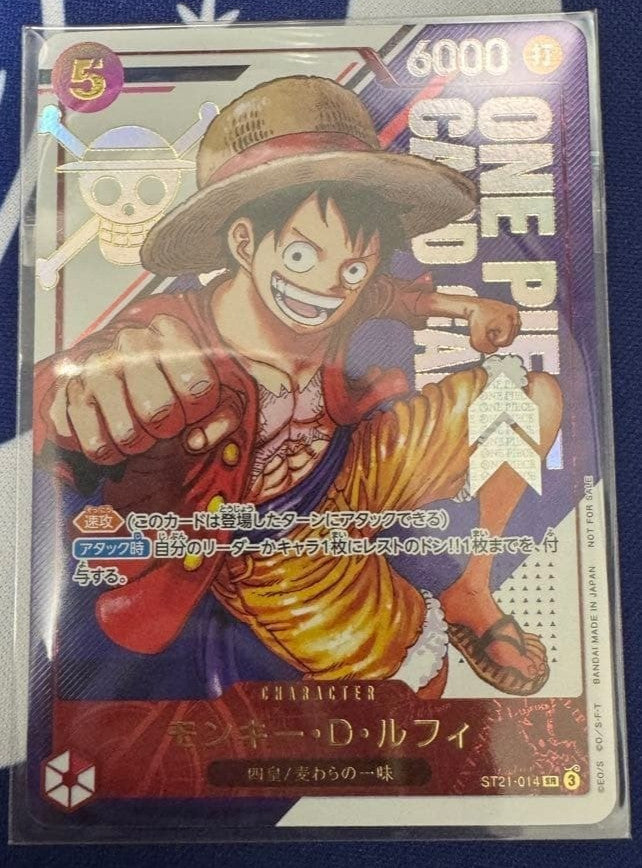
On authentic One Piece trading cards, the copyright line commonly reads something along the lines of “©尾田栄一郎/集英社・フジテレビ・東映アニメーション” together with a Bandai or publisher mark, and it is usually printed cleanly along the bottom edge or lower border of the card face. The text is typically small but crisp, and the logo of the specific product line (for example the OP TCG logo, or a Premium Card Collection banner) is generally rendered with sharp kerning and correct kanji.
A useful signal is to cross-check the copyright text, set symbol, and card number layout against images of a known-genuine card from the same set. On official pieces the set code and rarity mark are commonly placed in a consistent position across the whole set, so missing marks, blurry kanji, or altered publisher credits are often worth investigating further.
Packaging and Print Quality

Authentic One Piece TCG booster packs and sealed products commonly show tight, even foil seams, uniform color saturation, and clean Japanese text with no obvious typos. Booster box shrink wrap is usually snug rather than baggy, and the outer box print tends to have deep blacks and sharp character linework. On cards themselves, holographic and rainbow foil patterns are typically consistent within a rarity tier, and the cardstock generally feels firm with a slight snap rather than flimsy or overly glossy.
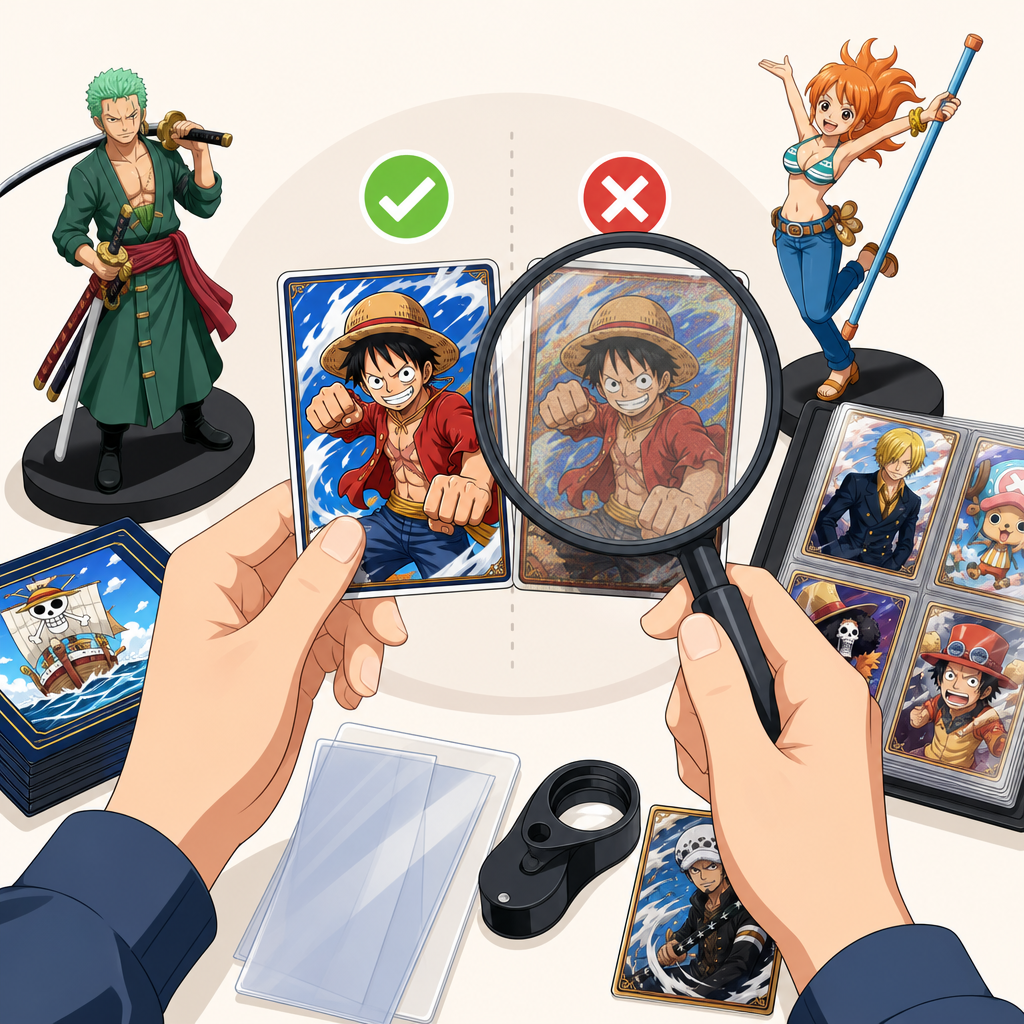
Under closer inspection, genuine prints often reveal a fine, regular rosette dot pattern when magnified, while text edges remain smooth. Fuzzy edges, banding in gradients, off-register color, or a waxy surface finish are commonly flagged by collectors as reasons to look more carefully, especially on higher-rarity cards like SR, SEC, or Manga Rare parallels.
Material, Cut and Surface Tells

On authentic One Piece cards, the edges are typically cut cleanly and squarely, with a thin dark core sometimes visible on the side profile depending on the set. The back design (the classic Straw Hat flag pattern for the OP TCG) is usually well-centered relative to the card outline, and the front-to-back registration is generally close, though minor factory variance is common and not by itself a sign of a fake.
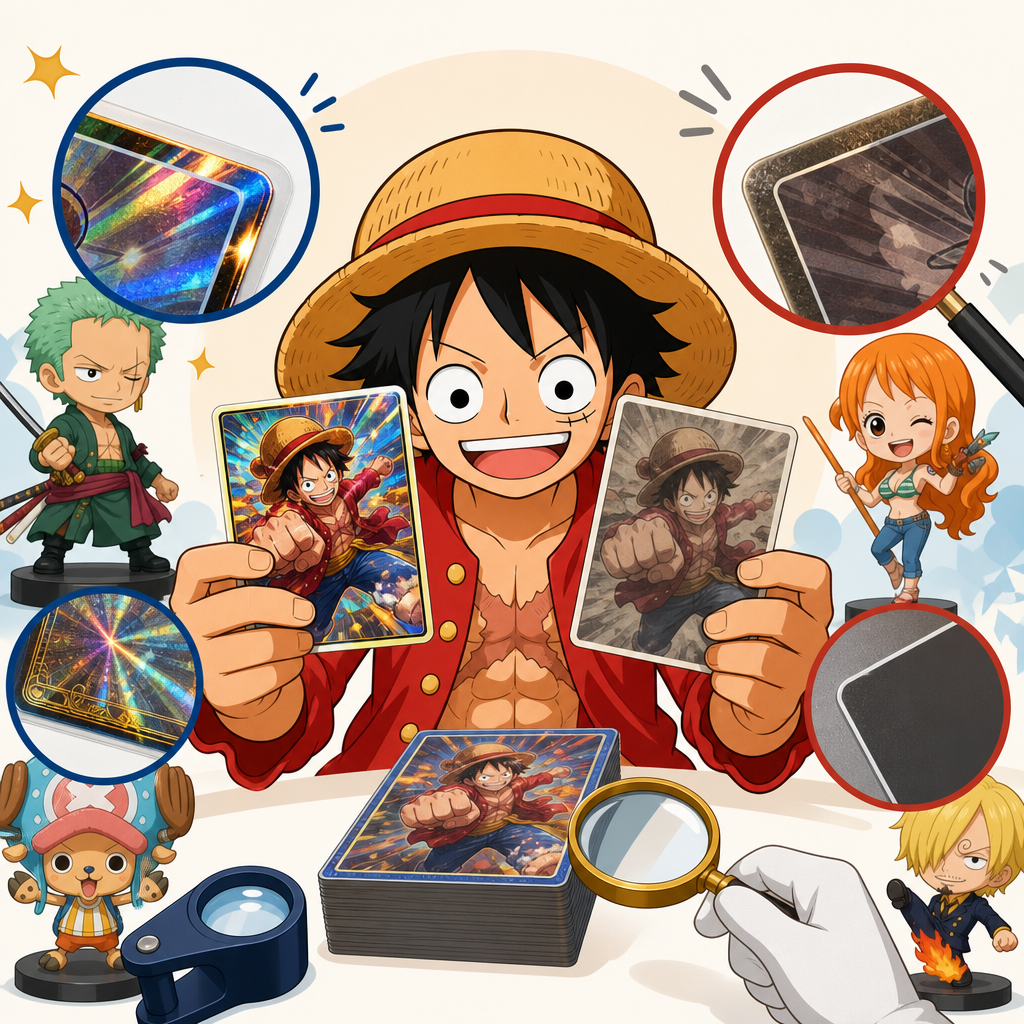
Foil treatment is another useful checkpoint: genuine holo and alternate-art cards commonly show a smooth, directional shimmer that follows the artwork, rather than a flat glitter layer sitting on top of the image. Surfaces that feel sticky, smell strongly of solvent, or show ink that scratches off easily are often considered red flags worth a second look.
Common Bootleg Red Flags for One Piece Cards

Because One Piece TCG chase cards can command high prices, reproductions and “proxy” prints circulate. Frequently reported red flags include overly vivid or overly dull colors compared to reference images, incorrect card back proportions, missing or misaligned set symbols, and rarity stamps that look painted on rather than foil-stamped. Sealed products sold loose without any outer case, or booster packs with weights that feel noticeably off compared to others from the same box, are also commonly discussed as warning signs.
Listings that bundle many high-rarity cards at unusually low prices, or that reuse stock photos instead of showing the actual item, are generally treated with caution by experienced buyers. No single trait confirms a fake on its own, but a combination of print, feel, and packaging inconsistencies is usually what prompts collectors to request more photos or pass on a deal.
Japanese Secondhand Condition Grading

Japanese resellers commonly use a tiered condition scale for trading cards and sealed product. “未開封” (unopened) indicates factory-sealed packs, boxes, or promo items with original shrink intact. Grade A generally refers to near-mint singles or like-new sealed items with only very minor handling marks. Grade B typically covers cards with light play wear such as small edge nicks, minor surface scuffs, or slight whitening on the back, while still displaying well.
Grade C is often used for clearly played cards with noticeable creases, scratches, or corner wear, and “ジャンク” (junk) usually denotes heavily damaged items — bends, water marks, writing, or missing pieces from sealed lots — sold as-is for parts, playsets, or display filler. These grades are guidelines rather than a strict standard, so photos and seller notes are commonly the most reliable reference.
Disclaimer: This guide shares general knowledge points that collectors commonly use to evaluate items. It is educational content, not a formal authentication service, and individual items should always be judged on their own evidence. Details can vary by production run and era.
Free Download: Our Full Authenticity Guide (PDF)
Download the free Japanese Figure Authenticity Guide (PDF) →
The complete checklist we use in-house, in a printable format.
Frequently Asked Questions
How can I tell if a One Piece figure is a bootleg?
Check the manufacturer and copyright markings moulded into the base or the back of the figure, compare paint edges and seam lines against official product photos, and look at the print quality of the box. Bootlegs usually fail on several of these at once, not just one.
Is a cheap listing automatically a fake?
No. Price on its own proves nothing — genuine pieces sell cheaply when they are opened, incomplete or from an over-produced run. Judge by markings, finish and packaging rather than by price.
What should I ask a seller for before buying?
Ask for photos of the base markings, the box barcode and any damage in natural light. A seller who handles the item themselves can take these quickly; stock-photo-only listings are the ones worth questioning.
What does Japanese secondhand condition wording mean?
Japanese listings grade strictly: a piece described as used can still be display-quality, while notes about yellowing, paint transfer or box crush are stated explicitly rather than glossed over. Read the condition notes as literal, not as sales copy.
コメント