Because Pokemon is one of the most collected franchises, it is also one of the most copied. This guide walks through the checks collectors commonly use to evaluate authenticity and condition — the same points our staff in Japan look at when inspecting every item before it ships.
Official Markings and Licensing Indicators

On authentic Pokémon video games, the cartridge or disc label commonly carries clear licensing text such as “© Nintendo”, “© Game Freak”, “© Creatures”, and “© The Pokémon Company”, often alongside a small “Nintendo” or platform-specific logo (for example, the official Nintendo Switch, 3DS, DS, or Game Boy branding). The printing is usually crisp, evenly aligned, and the copyright block sits in a consistent location relative to the title art.
Genuine Japanese releases typically show a product code printed on the label and matching the code on the spine of the case or the back of the packaging. On cartridges, an official Nintendo seal or region marking is often present, and text tends to be in Japanese with correct kana/kanji rendering. Mismatched fonts, missing copyright lines, or logos that look stretched are often a useful signal that further inspection is warranted.
Packaging and Print Quality

Authentic Japanese Pokémon game boxes and cases are commonly printed on sturdy stock with sharp, high-resolution artwork. Colors tend to be saturated but not overly bright, and small text — such as legal notices, save-data warnings, and platform requirements on the back — is usually legible under close inspection rather than blurry or pixelated. Inserts, manuals, and any included promotional cards typically use consistent paper weight and print quality across the set.
On Switch and 3DS titles, the case is often the standard Nintendo clear or tinted plastic with a properly seated cover sheet; on DS and Game Boy titles, the original cardboard boxes commonly show precise fold lines and clean flap glue. Wavy printing, off-register colors, missing manuals where they would normally be included, or a case that feels unusually thin or brittle are common red flags worth checking against reference photos.
Cartridge, Disc, and Material Tells

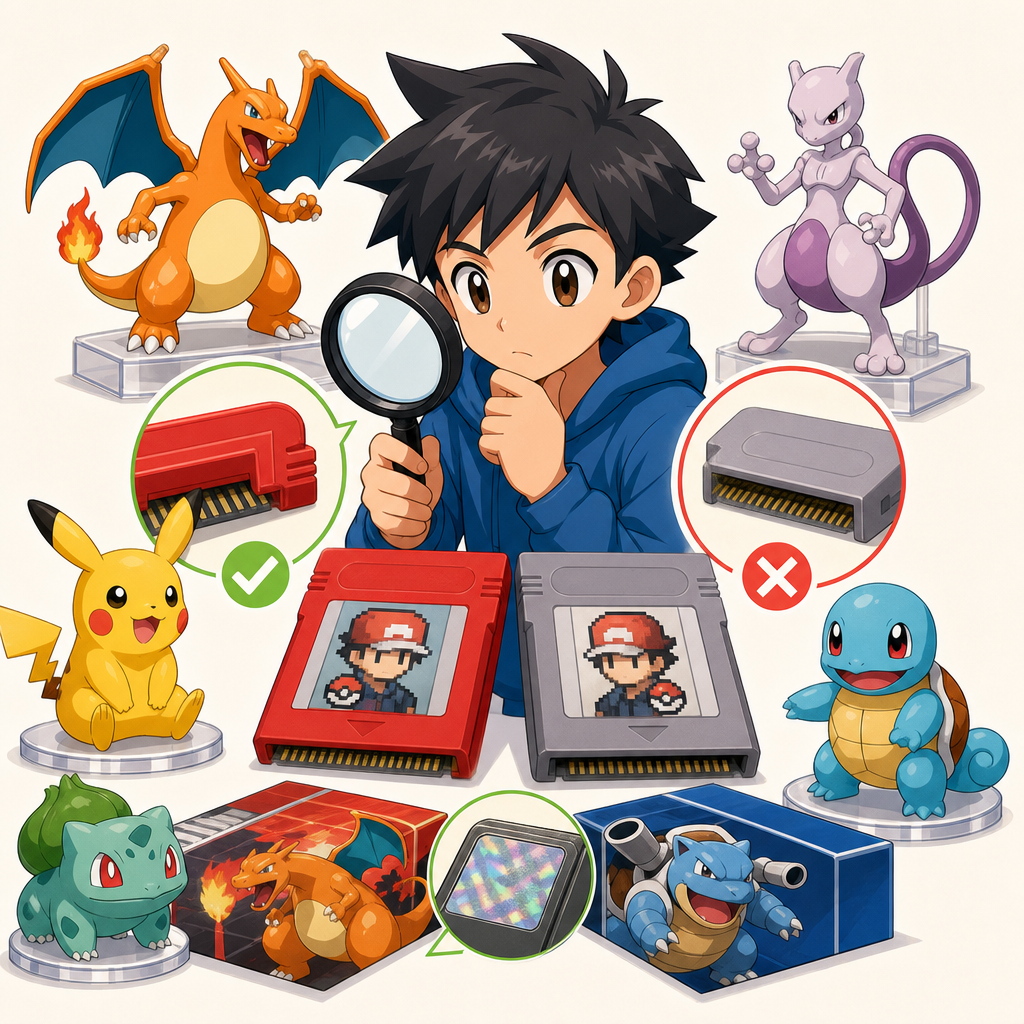
Genuine Nintendo cartridges are commonly molded from consistent, slightly matte plastic with clean seams and no visible flashing. On Game Boy and DS-era Pokémon carts, the label is usually well-adhered, sits flush in its recess, and the back shell often shows a molded Nintendo logo along with a small stamp or code. Screws on older carts are typically the tri-wing type used by Nintendo, and the internal PCB, if inspected, generally shows professional soldering and official chip markings.
For disc-based titles such as Pokémon Colosseum or XD on GameCube, authentic discs commonly have a mirrored inner ring with etched serial and mastering codes, and the printed side shows sharp silk-screened artwork. Cartridges that feel unusually light, have crooked labels, non-standard screws, glossy or grainy plastic, or discs with inkjet-style printing are frequently associated with reproductions rather than official releases.
Common Bootleg Red Flags for Pokémon Games

Pokémon is one of the most widely counterfeited game series, so a few patterns come up often. Reproduction Game Boy and DS cartridges frequently show slightly off label colors, fonts that look thicker or thinner than the official print, and back shells missing the molded Nintendo text. Save batteries that are freshly soldered on old titles, or in-game menus that display in the wrong language or with graphical glitches, are also commonly reported signals of reproduction carts.
For newer 3DS and Switch Pokémon titles, warning signs commonly include shrink wrap that looks loose or re-sealed, security seals with unusual fonts, and download-code inserts that appear photocopied. Prices that sit far below the typical Japanese secondhand market rate for a given title are, on their own, a useful signal to slow down and compare the item carefully against known-authentic references.
Buying Safely from Japan

When sourcing Pokémon games from Japan, it is generally safer to buy from established secondhand shops and sellers who provide clear photos of the front and back of the cartridge or case, the spine, and any inserts. Listings that specify region (Japanese release), condition rank, and whether the box and manual are included tend to reduce surprises. Asking for additional photos of the cartridge back, label edges, or disc mirror band is a reasonable request and is commonly accommodated by reputable sellers.
Because no visual check can fully confirm authenticity from photos alone, buyers often combine several signals — seller reputation, market-consistent pricing, correct Japanese packaging details, and matching product codes — rather than relying on any single feature. At hdtoysjapan.com we focus on authentic Japanese secondhand stock and aim to describe condition transparently, but we always encourage collectors to inspect items on arrival and compare them against trusted reference images before adding them to a long-term collection.
Disclaimer: This guide shares general knowledge points that collectors commonly use to evaluate items. It is educational content, not a formal authentication service, and individual items should always be judged on their own evidence. Details can vary by production run and era.
Free Download: Our Full Authenticity Guide (PDF)
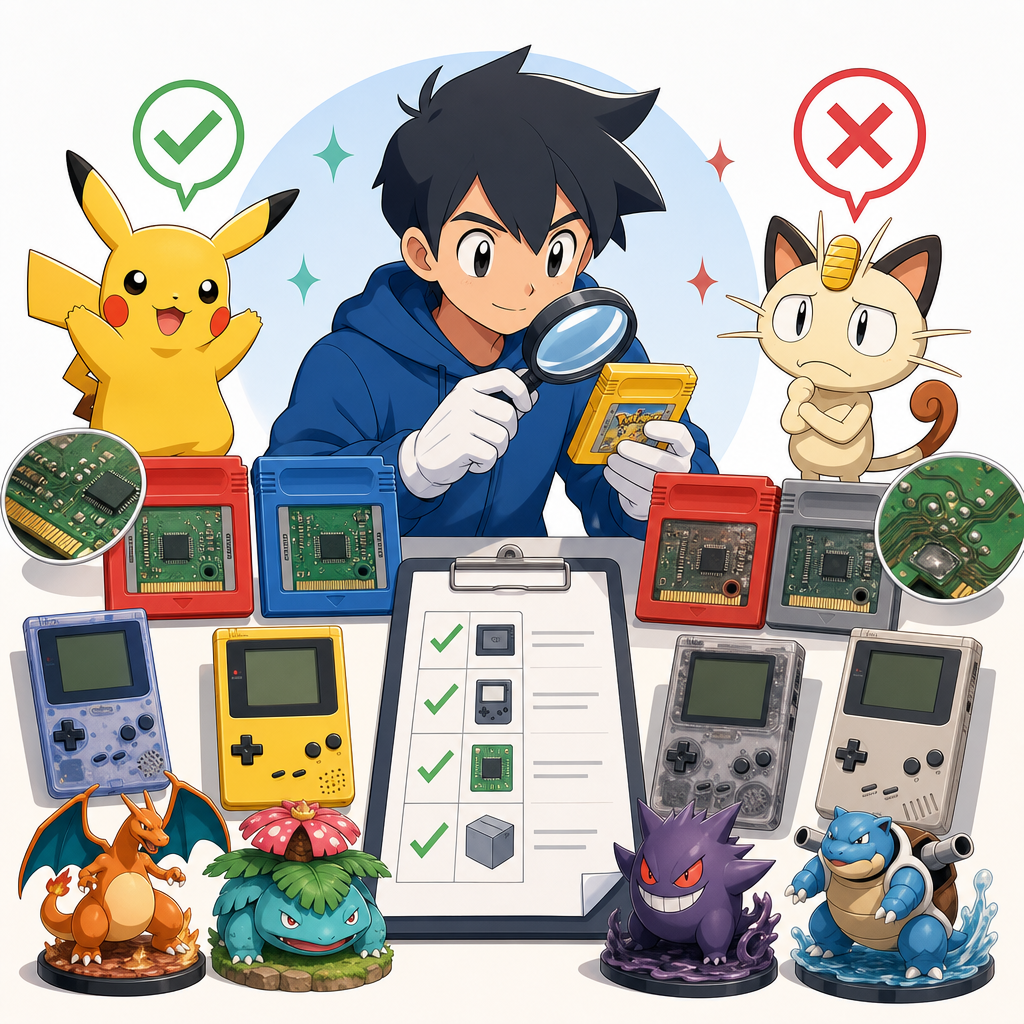
Download the free Japanese Figure Authenticity Guide (PDF) →
The complete checklist we use in-house, in a printable format.
Frequently Asked Questions
How can I tell if a Pokemon figure is a bootleg?
Check the manufacturer and copyright markings moulded into the base or the back of the figure, compare paint edges and seam lines against official product photos, and look at the print quality of the box. Bootlegs usually fail on several of these at once, not just one.
Is a cheap listing automatically a fake?
No. Price on its own proves nothing — genuine pieces sell cheaply when they are opened, incomplete or from an over-produced run. Judge by markings, finish and packaging rather than by price.
What should I ask a seller for before buying?
Ask for photos of the base markings, the box barcode and any damage in natural light. A seller who handles the item themselves can take these quickly; stock-photo-only listings are the ones worth questioning.
What does Japanese secondhand condition wording mean?
Japanese listings grade strictly: a piece described as used can still be display-quality, while notes about yellowing, paint transfer or box crush are stated explicitly rather than glossed over. Read the condition notes as literal, not as sales copy.
コメント