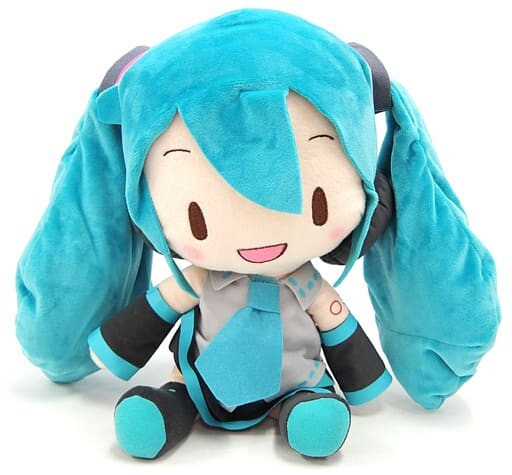
Because Hatsune Miku is one of the most collected franchises, it is also one of the most copied. This guide walks through the checks collectors commonly use to evaluate authenticity and condition — the same points our staff in Japan look at when inspecting every item before it ships.
Official Markings and Licensing Stickers

On authentic Hatsune Miku plush, the sewn-in tag is usually the single most useful signal. Genuine pieces commonly carry a Crypton Future Media / Piapro copyright line (often noted as © Crypton Future Media, INC.) together with the manufacturer’s name — familiar makers in this space include SEGA, Taito, FuRyu, Banpresto, Gift, and Movic. The tag is typically neatly stitched into a seam, printed on clean white or off-white fabric, with crisp small text, a country of origin (often China or Vietnam), and material/care symbols.
Prize-machine plush (often labeled as “Prize” or “amusement item”) frequently include a small square hologram or foil sticker on the wrist tag, and the wrist tag itself commonly shows the character name in both Japanese and English, the series (for example “Hatsune Miku Series” or a collaboration title), and the release month. Mismatched fonts, missing copyright lines, or a tag that lists only “Miku” without a licensor are commonly considered warning signs.
Packaging and Print Quality

Boxed or bagged Miku plush from Japan are usually sealed in a clear OPP bag, and larger releases (such as Gift or Taito Mega Jumbo plush) often ship in a printed outer box. On authentic pieces, printing is commonly sharp with accurate teal/turquoise hair color, clean registration on logos, and no visible pixelation on small text like the copyright line. The Piapro or Hatsune Miku logo, when present, usually appears in the correct proportions and official colorway.
Wrist tags on genuine items tend to use slightly heavier card stock with a clean cut, and any Japanese text is typically free of obvious typos. Faded colors, blurry logos, off-tone hair (too green or too blue), or packaging that feels unusually thin are often cited by collectors as reasons to look more closely.
Stitching, Material, and Paint Tells

Authentic Miku plush commonly use consistent short-pile fabric with even seams, symmetrical twin-tail placement, and embroidered facial features rather than cheaply printed ones on most modern releases. The signature hair color is usually a specific teal shade; the tie is often black or gray with pink/magenta accents, and the sleeve and skirt trims typically show clean stripe alignment. Embroidered eyes on official plush generally have smooth, dense stitching without loose threads or gaps that expose the base fabric.
Common tells on questionable pieces include uneven eye embroidery, hair that leans lime green, sloppy or asymmetric twin tails, exposed hot glue, stuffing that clumps immediately, and seams that pucker. On plush with printed faces (such as certain nesoberi or lying-down styles), authentic prints are usually crisp and centered, while off-center or streaky prints can be a useful warning signal.
Common Bootleg Red Flags for the Miku Franchise
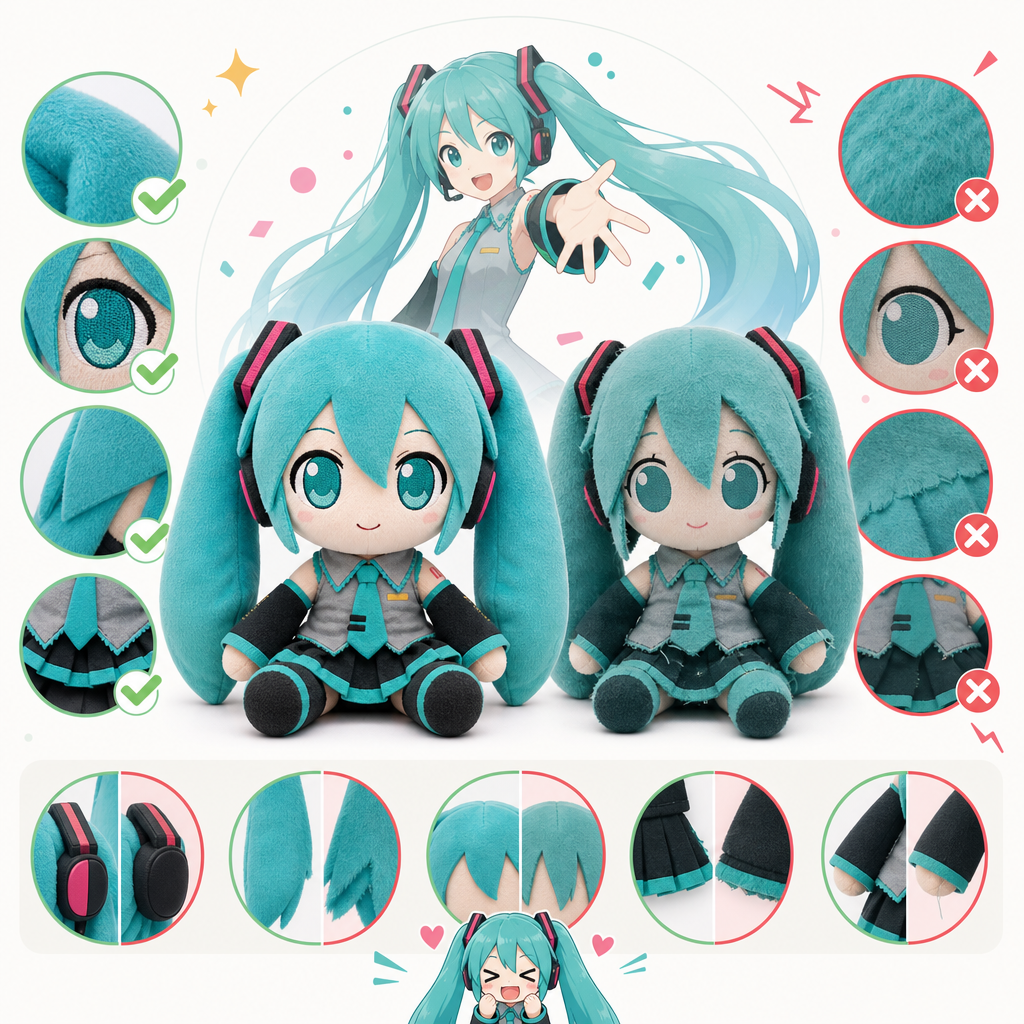
Because Hatsune Miku is one of the most widely counterfeited characters, a few patterns come up repeatedly. Listings that show a very large plush at an unusually low price, offer “any size, any pose” from one seller, or use only stock renders rather than real photos are commonly treated with caution. Bootlegs frequently omit the Crypton copyright line, use a generic “anime girl” hang tag, or attach a wrist tag that references a different character entirely.
Other frequent red flags include hair fiber that sheds heavily on first handling, a chemical smell, tags printed on glossy thin paper, and “SEGA” or “Taito” branding that is misspelled or uses the wrong logo style. When in doubt, comparing the wrist tag, sewn tag, and overall silhouette against known reference photos of the same specific release is generally the most reliable approach.
Japanese Secondhand Condition Grading
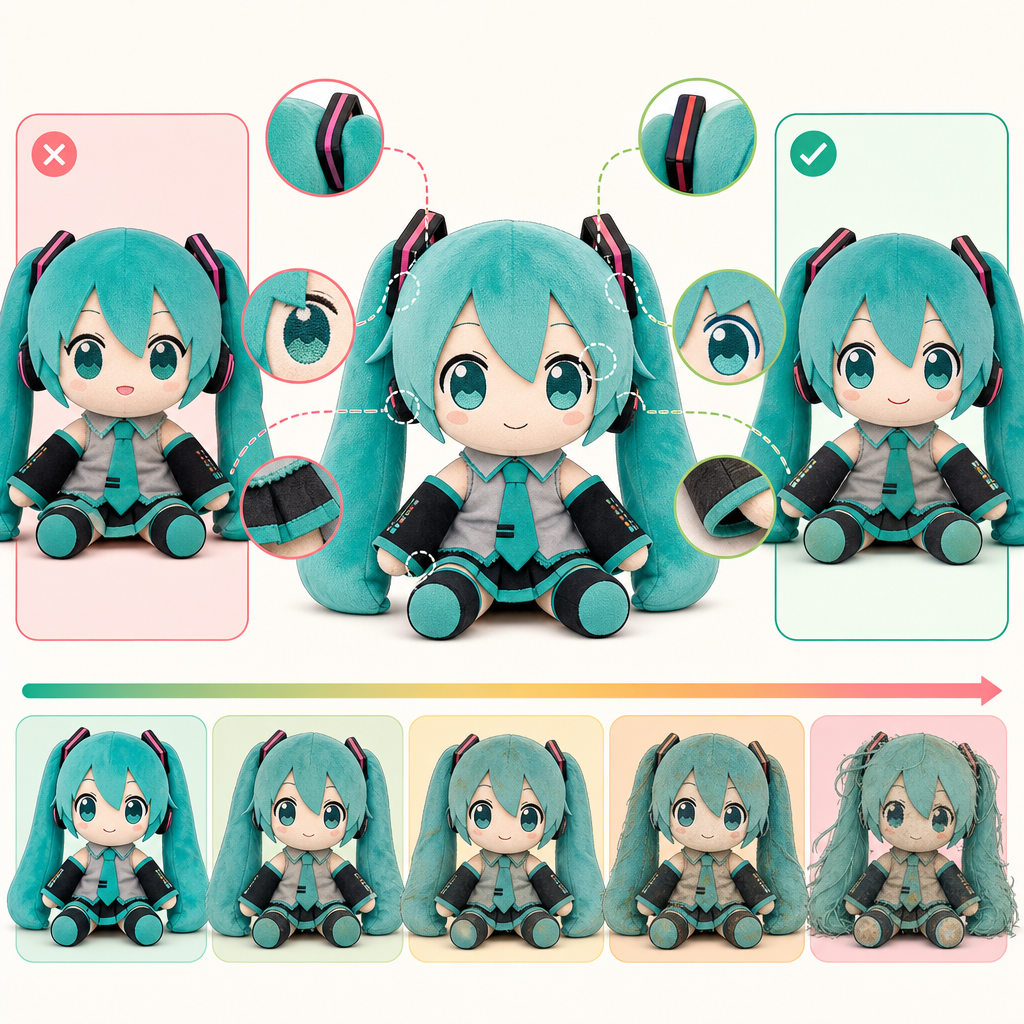
Japanese resellers commonly use a shorthand grading system that is helpful to understand before buying. Unopened / 未開封 means the OPP bag or box seal is intact, though collectors should note that prize plush were often bagged rather than boxed. A rank typically indicates near-mint used condition: tags attached, minimal display wear, clean fabric. B rank usually means noticeable but minor wear — light dust, softened pile, or a missing wrist tag. C rank often points to visible stains, fading, or heavier fur matting.
“Junk” (ジャンク) is commonly used for items with significant issues such as strong odor, repairs, missing parts, or unknown authenticity, and these are usually sold as-is. For plush specifically, tag presence, sun fading on the hair, and cleanliness of the white areas (sleeves, boots) are the details most often reflected in the assigned grade.
How to Buy Safely from Japan
Buying from Japan-based sellers is generally considered one of the more reliable routes for authentic Miku plush, since prize items are distributed domestically through licensed arcade operators. Useful habits include asking for clear photos of the sewn tag and wrist tag, confirming the release year and manufacturer, and checking that the listed series (for example “SEGA Fuwa Fuwa” or “Taito AMP+”) matches the plush’s actual size and pose. Reputable shops typically disclose condition honestly using the A/B/C system and note whether tags are present.
No single checkpoint can confirm authenticity on its own, but a plush that passes several — correct copyright line, clean stitching, accurate colors, sensible pricing, and a seller with a verifiable track record — is commonly considered a safe purchase. When something feels off, requesting additional photos or choosing a store that specializes in secondhand Japanese figures and plush, such as hdtoysjapan.com, is often the most practical safeguard.
Disclaimer: This guide shares general knowledge points that collectors commonly use to evaluate items. It is educational content, not a formal authentication service, and individual items should always be judged on their own evidence. Details can vary by production run and era.
Free Download: Our Full Authenticity Guide (PDF)
Download the free Japanese Figure Authenticity Guide (PDF) →
The complete checklist we use in-house, in a printable format.
Frequently Asked Questions
How can I tell if a Hatsune Miku figure is a bootleg?
Check the manufacturer and copyright markings moulded into the base or the back of the figure, compare paint edges and seam lines against official product photos, and look at the print quality of the box. Bootlegs usually fail on several of these at once, not just one.
Is a cheap listing automatically a fake?
No. Price on its own proves nothing — genuine pieces sell cheaply when they are opened, incomplete or from an over-produced run. Judge by markings, finish and packaging rather than by price.
What should I ask a seller for before buying?
Ask for photos of the base markings, the box barcode and any damage in natural light. A seller who handles the item themselves can take these quickly; stock-photo-only listings are the ones worth questioning.
What does Japanese secondhand condition wording mean?
Japanese listings grade strictly: a piece described as used can still be display-quality, while notes about yellowing, paint transfer or box crush are stated explicitly rather than glossed over. Read the condition notes as literal, not as sales copy.
コメント