Because Hatsune Miku is one of the most collected franchises, it is also one of the most copied. This guide walks through the checks collectors commonly use to evaluate authenticity and condition — the same points our staff in Japan look at when inspecting every item before it ships.
Official Markings and Licensing Indicators

On authentic Hatsune Miku scale figures, the base or an inconspicuous area of the sculpt is commonly stamped or printed with copyright text referencing Crypton Future Media, often shown as ©Crypton Future Media, INC. www.piapro.net or a similar variation. The manufacturer’s name — such as Good Smile Company, Max Factory, FREEing, Taito, SEGA, or Wing — is also typically molded, stamped, or printed nearby, and many pieces carry a small country-of-origin marking like ‘MADE IN CHINA’ in clean, evenly spaced type.
A useful signal of authenticity is consistency between the base marking, the box print, and any included paperwork. On genuine pieces, the licensor credit, sculptor or illustrator credit, and manufacturer logo generally match across all surfaces. Missing copyright text, misspellings of ‘Crypton’ or ‘Miku’, or a base that looks suspiciously blank are often worth a closer look.
Packaging and Print Quality

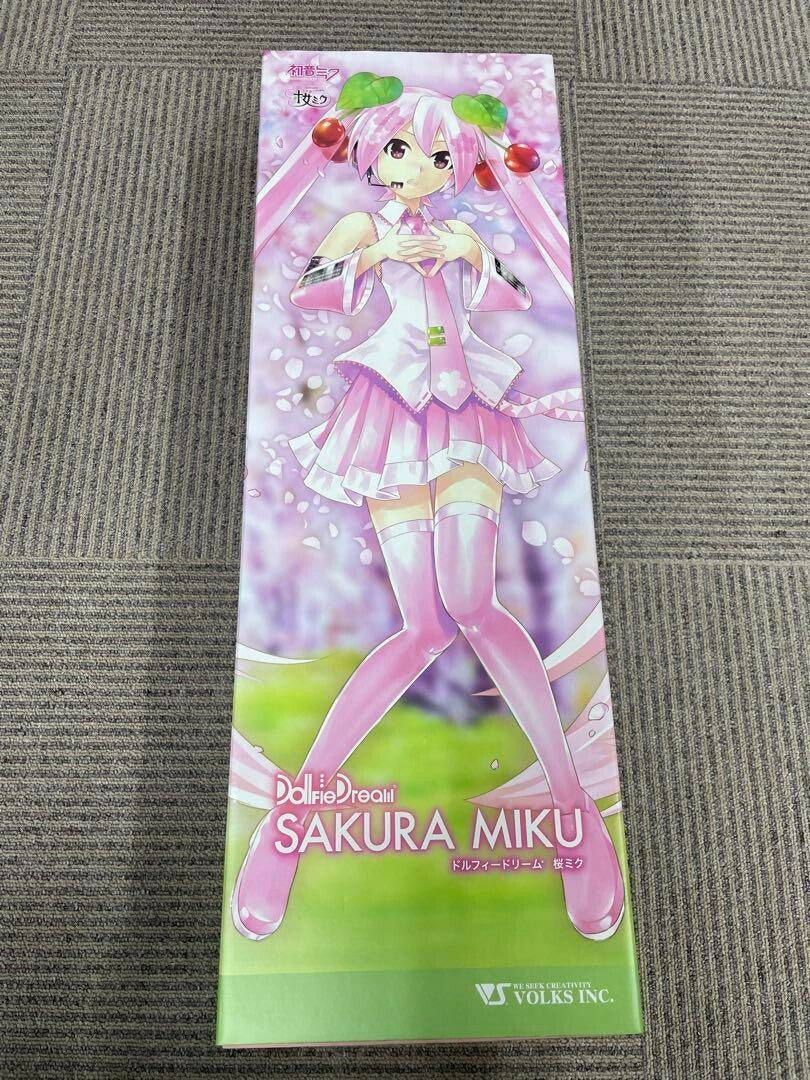
Authentic Miku figure boxes commonly feature crisp, high-resolution photography of the actual painted product, sharp Japanese and English text, and consistent color reproduction across all panels. The cardboard is usually thick and rigid, with clean die-cuts on any window portions and a smooth, uniformly applied finish. Barcodes, JAN codes, and manufacturer logos are typically printed cleanly without smudging or halos, and the inner plastic blister is generally clear, well-fitted to the figure, and free of heavy scratches or warping.
Common red flags include blurry or pixelated photos, off-register colors (where cyan, magenta, or black appears shifted), overly glossy or overly dull cardboard compared to reference images, and inner trays that don’t match the figure’s pose. Boxes that feel unusually thin or flimsy for a scale figure are also worth scrutinizing.
Paint, Seams, and Material Tells

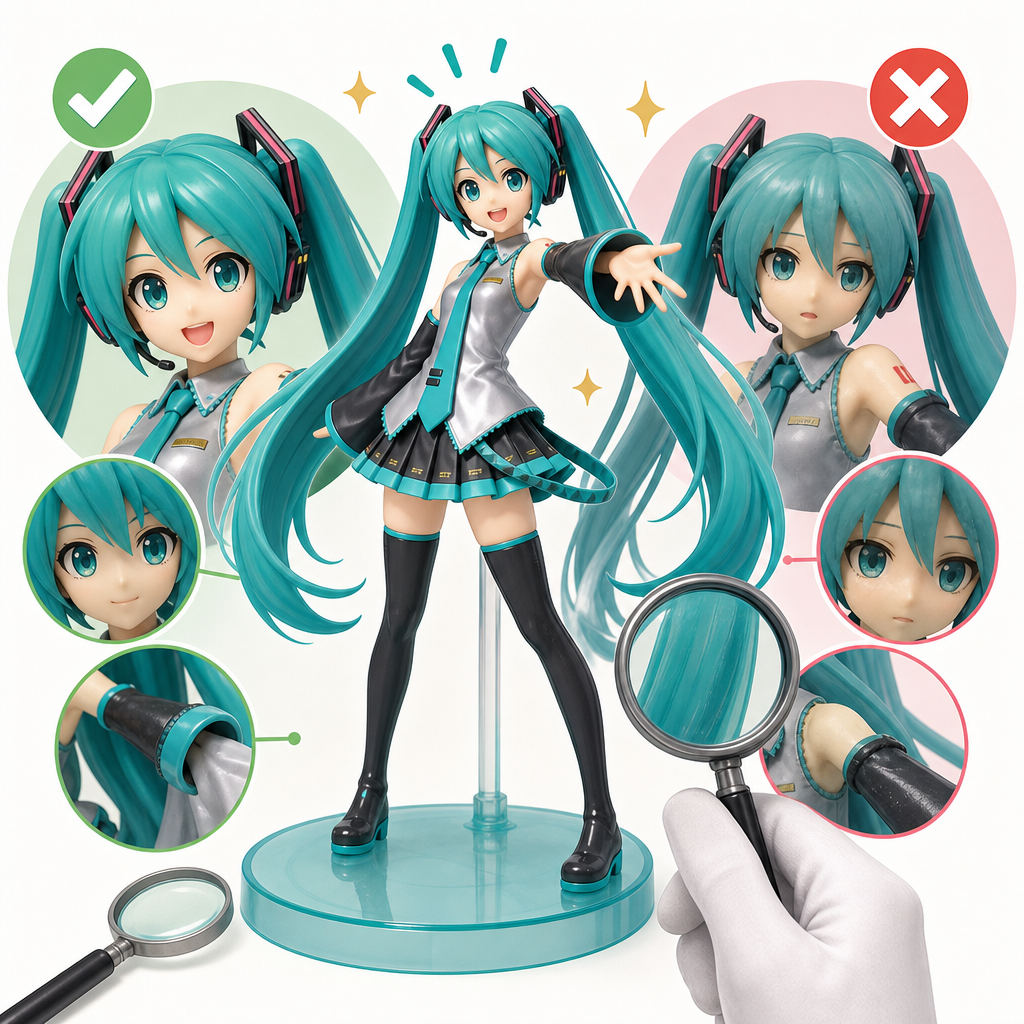
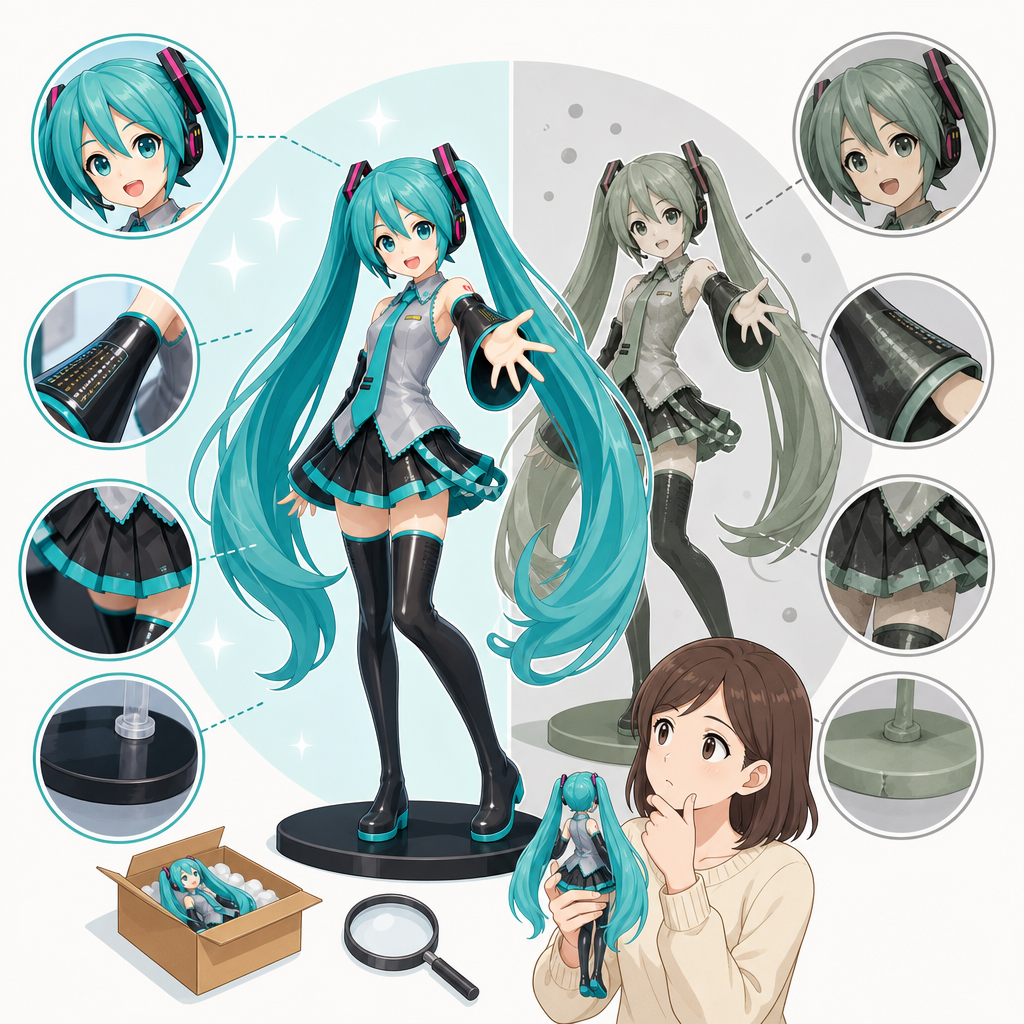
On authentic Miku scale figures, the face print — especially the eyes — is usually sharp, symmetrical, and cleanly layered, with Miku’s signature teal irises showing distinct highlights. Skin tones are commonly smooth with subtle shading or blush airbrushing rather than flat single-tone paint. Hair, often molded in translucent or pearlescent teal PVC, tends to have clean color transitions and minimal visible mold lines along the twintails. Seams where parts meet are generally tight, and joins at the base peg are typically snug without excessive wobble.
Tells that often point to a bootleg or heavily damaged piece include crooked or asymmetrical eye prints, visible overspray on the skin, sloppy paint bleed at the boundary between hair and face, chalky or greasy-feeling plastic, and hair colors that look off — for example, an overly saturated green or a dull grey-teal rather than the intended vivid shade.
Common Bootleg Red Flags for Miku Figures

Because Hatsune Miku is one of the most widely produced characters in the hobby, she is also one of the most frequently bootlegged. Recasts often show softened sculpt details — hair strands and costume trim can look mushy compared to reference photos — and the base may lack proper copyright text or feature a slightly wrong logo. Colors are commonly off, with skin sometimes appearing pinkish or waxy and the teal hair leaning either too blue or too neon.
Other frequent warning signs include a suspiciously low price for a well-known release, sellers using stock photos rather than photos of the actual item, missing or generic-looking inner plastic, and boxes shrink-wrapped in ways that differ from how the manufacturer originally shipped the product. Cross-referencing the piece against the manufacturer’s official product page and known reviews is generally a good habit before buying.
Japanese Secondhand Condition Grading

Japanese resellers commonly use a tiered grading system that collectors should understand before purchasing. ‘Unopened’ or ‘shinpin mikaifū’ typically means the box is still factory-sealed, though on older figures the shrink wrap may show shelf wear. Grade A generally refers to an opened figure in excellent condition with the box, blister, and any accessories intact and minimal display wear. Grade B usually indicates noticeable wear such as light box damage, minor paint rubs, or a missing minor accessory, while Grade C often means significant issues — heavy box damage, yellowing, visible paint chips, or missing parts.
‘Junk’ (ジャンク) is a category reserved for items with major defects: broken parts, heavy discoloration, missing base, or unknown functional issues. On reputable Japanese secondhand listings, the grade is generally accompanied by detailed photos and notes, so reading the description carefully is a useful habit rather than relying on the grade letter alone.
Disclaimer: This guide shares general knowledge points that collectors commonly use to evaluate items. It is educational content, not a formal authentication service, and individual items should always be judged on their own evidence. Details can vary by production run and era.
Free Download: Our Full Authenticity Guide (PDF)
Download the free Japanese Figure Authenticity Guide (PDF) →
The complete checklist we use in-house, in a printable format.
Frequently Asked Questions
How can I tell if a Hatsune Miku figure is a bootleg?
Check the manufacturer and copyright markings moulded into the base or the back of the figure, compare paint edges and seam lines against official product photos, and look at the print quality of the box. Bootlegs usually fail on several of these at once, not just one.
Is a cheap listing automatically a fake?
No. Price on its own proves nothing — genuine pieces sell cheaply when they are opened, incomplete or from an over-produced run. Judge by markings, finish and packaging rather than by price.
What should I ask a seller for before buying?
Ask for photos of the base markings, the box barcode and any damage in natural light. A seller who handles the item themselves can take these quickly; stock-photo-only listings are the ones worth questioning.
What does Japanese secondhand condition wording mean?
Japanese listings grade strictly: a piece described as used can still be display-quality, while notes about yellowing, paint transfer or box crush are stated explicitly rather than glossed over. Read the condition notes as literal, not as sales copy.
コメント